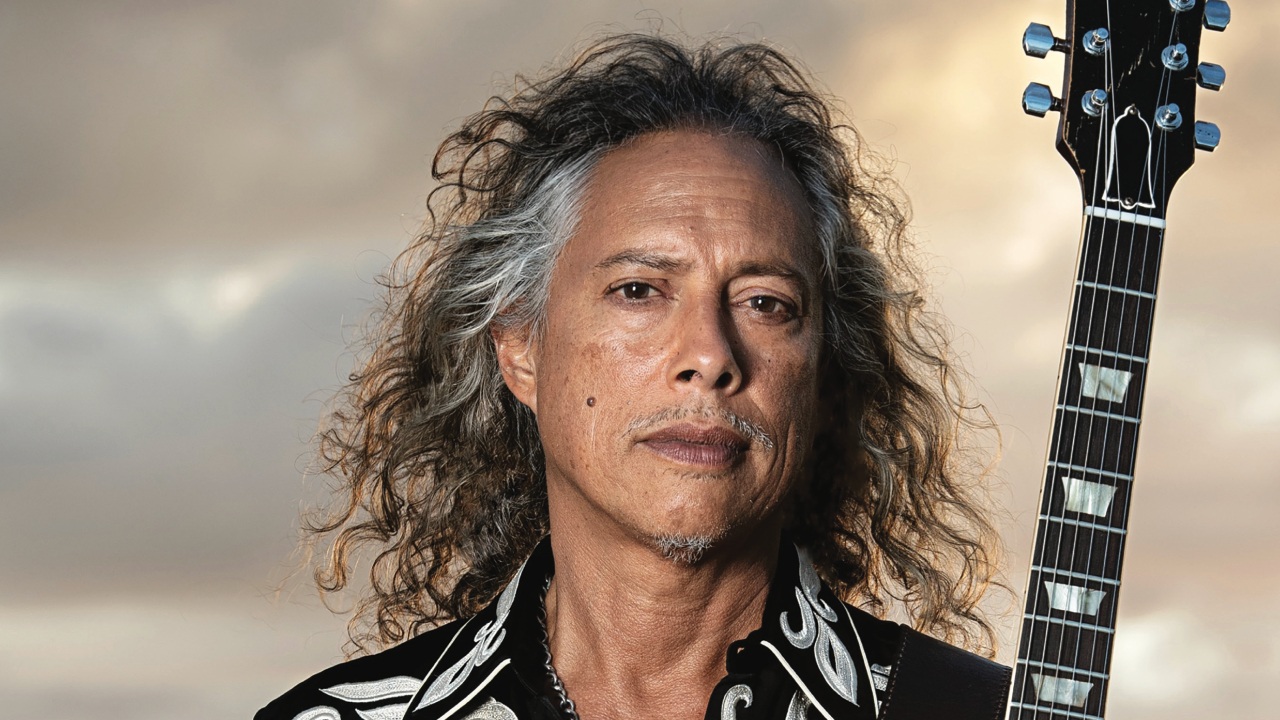

Some guitarists play notes. Others play feelings. And then there is a very small group — the ones whose playing becomes so embedded in the cultural fabric that entire generations of musicians trace their own first serious moments with an instrument back to a single riff, a single solo, a single record that changed what they thought music could do. Kirk Hammett belongs to that group. As the lead guitarist of Metallica for over four decades, he has played on some of the most significant albums in the history of recorded music — and his combination of aggressive technique, emotional expressiveness, and an almost childlike love for the visceral power of heavy guitar has made him one of the most influential musicians of the last fifty years.
For readers looking for a quick answer — Kirk Lee Hammett is an American musician born on November 18, 1962, in San Francisco, California, best known as the lead guitarist of Metallica — one of the best-selling and most critically acclaimed heavy metal bands in history. He joined Metallica in 1983 after the dismissal of Dave Mustaine and has since played on every Metallica album, contributing some of the most recognisable guitar solos in rock history. He was ranked 11th on Rolling Stone’s list of the 100 Greatest Guitarists and is widely regarded as one of the architects of the thrash metal genre.
Quick Facts
| Field | Details |
|---|---|
| Full Name | Kirk Lee Hammett |
| Born | November 18, 1962 |
| Birthplace | San Francisco, California, USA |
| Nationality | American |
| Occupation | Musician, Songwriter, Guitarist |
| Known For | Lead guitarist — Metallica |
| Spouse | Lani Hammett (m. 1998) |
| Children | Vincenzo Kainalu Hammett, Angelo Hammett |
| Genres | Heavy Metal, Thrash Metal, Hard Rock |
| Influences | Jimi Hendrix, Michael Schenker, UFO, Tony Iommi |
| Active Years | 1979 – Present |
| Guitar | ESP KH series signature guitars |
Early Life: San Francisco, Heritage and the Guitar
Kirk Lee Hammett was born on November 18, 1962, in San Francisco, California — a city whose musical history is so dense and so varied that it almost doesn’t matter what genre you eventually end up in. San Francisco in the 1960s and 1970s was a place where music was ambient, where the boundaries between genres were porous, and where the idea that a kid from a working-class neighbourhood could become a serious musician was not an abstract aspiration but a visible local reality.
His heritage is a combination that is both specific and representative of the Bay Area’s demographic complexity — Filipino on his mother’s side, Irish on his father’s. That multicultural background gave Kirk an early relationship with the idea that identity is not singular — that you can contain multiple things simultaneously without contradiction — a perspective that would eventually feed the eclecticism of his musical approach.
His childhood was not without difficulty. His father Dennis Hammett struggled with alcoholism — a presence in the household that created instability and the particular kind of emotional vigilance that children in those environments develop as a survival mechanism. Kirk has spoken about his father’s alcoholism with the measured candour of someone who has had decades to process it — acknowledging the difficulty without weaponising it for public sympathy.
What gave young Kirk an escape — and eventually a direction — was a guitar.
He discovered the instrument in his early teens and the connection was immediate and total. He has described picking up the guitar for the first time with the language of someone who found something they had always been looking for without knowing they were looking for it. He was self-taught initially — learning by ear, playing along with records, developing the instincts and the muscle memory that formal training would later refine but couldn’t have created from scratch.
His early influences were the classic rock and blues-rock guitarists of the late 1960s and 1970s — Jimi Hendrix above all, but also Michael Schenker, Tony Iommi, and the British hard rock tradition that was crossing the Atlantic and finding devoted audiences in Bay Area teenagers who wanted music with more voltage and more aggression than the mainstream was providing.
He also developed, early and deeply, a love for horror films — a passion that would become one of the most distinctive aspects of his public persona and that fed directly into the darkness and intensity of the music he would eventually make.
Exodus: The Bay Area Thrash Apprenticeship
Before Metallica, before the arena tours and the platinum albums and the place in rock history, Kirk Hammett was the guitarist in a Bay Area thrash band called Exodus — and what he built there was the foundation for everything that followed.
He formed Exodus in 1979 — at seventeen — in the San Francisco Bay Area that was simultaneously producing one of the most significant regional music scenes in American rock history. The Bay Area thrash scene of the early 1980s — which also produced Metallica, Slayer, and Megadeth — was a specific and identifiable cultural moment, driven by the collision of heavy metal’s power with punk’s aggression and speed.
| Exodus — Key Facts | Details |
|---|---|
| Founded | 1979 — San Francisco Bay Area |
| Kirk’s Role | Lead guitarist; founding member |
| Genre | Thrash metal; Bay Area scene |
| Significance | One of the foundational thrash metal bands |
| Kirk’s Years | 1979–1983 |
| After Kirk Left | Band continued; Gary Holt replaced him |
| Legacy | Considered one of thrash’s Big Four adjacent acts |
In Exodus, Kirk developed the aggressive picking technique, the speed, and the riff-driven approach to guitar that would define his early Metallica work. He was playing in small venues to dedicated audiences who cared deeply about the music and had very specific expectations about heaviness, precision, and intensity.
He was also, by the accounts of people who knew him during this period, already the most technically gifted guitarist in the local scene — someone whose ability was visible enough that when Metallica needed a replacement guitarist in early 1983, Kirk Hammett was the name that came up.
The Call from Metallica: Replacing Dave Mustaine
The circumstances surrounding Kirk Hammett’s recruitment into Metallica are one of rock history’s better-known stories — but the human reality of what it meant for the people involved deserves proper acknowledgment.
Dave Mustaine — Metallica’s original lead guitarist — was dismissed from the band in April 1983 during a tour stop in New York City. The dismissal was driven by a combination of personal conflicts, substance abuse issues, and the accumulated tensions of touring in close quarters with people who had decided the relationship was no longer workable.
Mustaine was put on a bus back to California the same day — a dismissal that generated the anger and competitive drive that would eventually fuel the creation of Megadeth and one of rock’s most celebrated rivalries.
With a record deal in place and recording sessions approaching, Metallica needed a replacement immediately. They auditioned several guitarists — and Kirk Hammett, whose reputation in the Bay Area scene had reached them, was among them.
| The Metallica Audition | Details |
|---|---|
| Why There Was a Vacancy | Dave Mustaine dismissed — April 1983 |
| How Kirk Was Considered | Bay Area reputation; recommendation |
| Audition Location | New York City |
| What He Played | His own material plus Metallica songs |
| Decision | Offered the position immediately |
| Kirk’s Decision | Left Exodus to join Metallica |
| Impact on Exodus | Gary Holt became lead guitarist |
The audition was, by multiple accounts, not a close decision. Kirk played with the combination of technical ability and raw aggression that Metallica’s music required — and the offer was made and accepted quickly. He left Exodus, joined Metallica, and flew to New York to begin recording what would become Kill ‘Em All.
The decision to leave a band he had founded for an opportunity that was larger but less certain was not a trivial one. It required the self-belief to bet on himself at a moment when the outcome was genuinely unknown.
Joe Satriani: The Lesson That Defined a Career
One of the most revealing things about Kirk Hammett’s approach to his craft is a decision he made shortly after joining Metallica — one that required a specific kind of humility that many musicians in his position would not have demonstrated.
Despite already being good enough to replace the guitarist in one of the most promising metal bands in America, Kirk decided he needed formal lessons. He sought out Joe Satriani — a Bay Area guitar teacher who would himself go on to become one of the most celebrated instrumental guitarists in rock history — and began studying seriously.
The decision reflects something important about Kirk’s character and professional intelligence. He was already good. He wanted to be better. And he was secure enough in himself to acknowledge that there were things he didn’t know and to go find someone who could teach them to him.
| Kirk and Joe Satriani | Details |
|---|---|
| Teacher | Joe Satriani — Bay Area guitarist and teacher |
| Period | Early 1980s — while already in Metallica |
| What Kirk Learned | Music theory; technique refinement; scale work |
| Satriani’s Assessment | Described Kirk as exceptionally dedicated student |
| Impact on Playing | Added theoretical foundation to natural instincts |
| Satriani’s Own Career | Later became a celebrated solo artist |
Satriani has spoken about Kirk as a student in consistently warm terms — describing his dedication, his quick absorption of new concepts, and the obvious love for the instrument that made teaching him genuinely rewarding. The lessons gave Kirk a theoretical vocabulary for what he had been doing intuitively — allowing him to understand the mechanics of his own playing well enough to develop it more deliberately.
The result of that investment is visible across every Metallica album — in the increasing sophistication of Kirk’s solos, in the harmonic intelligence of his melodic choices, and in the ability to construct a guitar solo that serves the song rather than simply showcasing the player.
Kill ‘Em All and Ride the Lightning: Arriving at the Starting Line
Kirk Hammett’s first recorded work with Metallica appeared on Kill ‘Em All (1983) — the album that announced the band to the world and established thrash metal as a genuine and distinct genre rather than simply an extreme variant of heavy metal.
His contribution to Kill ‘Em All was immediate and significant — the solos throughout the album carry the energy and aggression of someone who has something to prove, which he did. As the newest member of the band, playing on a record that Dave Mustaine had helped write, Kirk needed to establish himself as a worthy replacement rather than a stopgap.
| Kill ‘Em All (1983) | Details |
|---|---|
| Kirk’s Status | Newest member; replacing Mustaine |
| Notable Solos | Seek and Destroy; Whiplash; Hit the Lights |
| Recording Style | Raw; aggressive; high energy |
| Critical Reception | Immediate recognition as landmark thrash record |
| Kirk’s Assessment | Has described it as an exciting but pressured recording |
Ride the Lightning (1984) showed immediate growth — the album’s greater compositional ambition required more sophisticated guitar work, and Kirk’s solos on tracks like “Fade to Black” — one of his most celebrated early performances — demonstrated a melodic and emotional intelligence that went beyond the pure aggression of the debut.
“Fade to Black” was significant in multiple ways. It was Metallica’s first ballad — a slow, emotionally heavy track that generated controversy among fans who felt it represented a commercial compromise — and Kirk’s solo on the track is one of his finest early performances, combining technical facility with genuine emotional expression in a way that the faster material didn’t always require.
Master of Puppets: Playing on a Masterpiece
Master of Puppets (1986) is, by the consensus of critics, fans, and the musicians who have cited it across four decades of subsequent rock history, one of the greatest heavy metal albums ever recorded. Possibly the greatest.
Kirk Hammett’s guitar work on the album is a central part of why that consensus exists.
The title track — “Master of Puppets” — contains what many consider his finest extended solo performance. The solo section moves through multiple distinct phases — from aggressive thrash playing to a melodic middle section that opens the track up emotionally before returning to the assault — and each transition is handled with the musical intelligence that his Satriani training had helped develop.
| Master of Puppets (1986) | Details |
|---|---|
| Release Date | March 3, 1986 |
| Label | Elektra Records |
| Chart Position | #29 US Billboard 200 (without radio play) |
| Notable Kirk Moments | Master of Puppets solo; Battery; Disposable Heroes |
| Legacy | Consistently ranked among greatest metal albums ever |
| US Library of Congress | Selected for preservation in 2016 |
| Touring | Supporting Ozzy Osbourne; then headlining |
The album was recorded and released during a period of intense creative momentum — and the guitar performances throughout reflect a player who had arrived at a moment of genuine peak confidence and technical ability. Every solo on the record serves the song. None of them feel self-indulgent. All of them feel necessary.
Cliff Burton’s Death and …And Justice for All
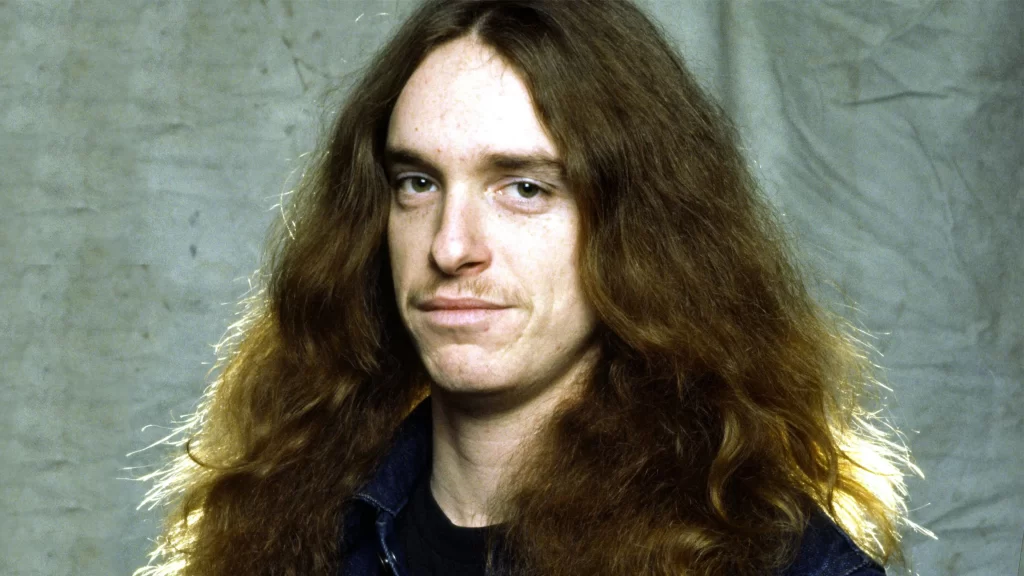
On September 27, 1986, Metallica’s bass player Cliff Burton died when the band’s tour bus crashed in Sweden. He was twenty-four years old.
The loss of Burton — who was widely regarded as the band’s most musically gifted member and whose friendship with Kirk was deep and genuine — was a devastating personal and creative blow. Kirk has spoken about Burton’s death with the kind of grief that doesn’t diminish with time — the specific, irreplaceable loss of a friend and musical partner whose absence permanently changed what the band was.
The album that followed — …And Justice for All (1988) — was recorded in the shadow of that grief and carries its weight throughout. It is also famous for a production decision that remains controversial to this day — the virtual absence of bass in the mix, which buried new bassist Jason Newsted’s contributions almost entirely.
| …And Justice for All (1988) | Details |
|---|---|
| Context | First album after Cliff Burton’s death |
| Bass Controversy | Jason Newsted’s bass nearly inaudible in mix |
| Kirk’s Notable Solos | One; Blackened; Eye of the Beholder |
| Grammy Nomination | Lost to Jethro Tull — infamous Grammy moment |
| Commercial Performance | #6 US Billboard 200 |
| Tone | Darker; more complex; longer tracks |
For Kirk specifically, the album represented a continuation of the musical development that Master of Puppets had established — the solos are technically sophisticated and emotionally weighted in ways that reflect both the grief of the period and the growing confidence of a guitarist who had found his voice.
The Black Album: Global Domination
Metallica — universally known as The Black Album — released in 1991, was the commercial and cultural breakthrough that transformed the band from a beloved metal act into one of the biggest rock bands on earth.
Produced by Bob Rock, the album represented a significant sonic shift — slower tempos, more accessible song structures, cleaner production, and a deliberate attempt to reach beyond the existing metal audience. It worked beyond anyone’s expectations.
| The Black Album (1991) | Details |
|---|---|
| Producer | Bob Rock |
| Release Date | August 12, 1991 |
| US Chart Position | #1 Billboard 200 |
| Weeks at #1 | 4 weeks initially; returned multiple times |
| Copies Sold | Over 16 million US; 35 million+ worldwide |
| Notable Tracks | Enter Sandman; The Unforgiven; Nothing Else Matters; Sad But True |
| Kirk’s Contributions | Enter Sandman riff co-written; solos throughout |
| Legacy | Best-selling album in SoundScan era (US) |
Kirk’s guitar work on the Black Album adapted to the new sonic environment without losing its identity. The solos are more controlled than the thrash-era performances — more focused on serving the commercial structures of the songs — but they retain the emotional expressiveness that had always been his defining characteristic.
The Enter Sandman riff — one of rock’s most instantly recognisable opening figures — has a complicated creative history. Kirk has discussed its development in interviews, describing the riff’s evolution from a more complex original version to the simplified, maximally effective form it takes on the record. The simplification was the right call — and the willingness to make it reflects the musical intelligence that distinguished the Black Album sessions from earlier recordings.
The Wah Pedal: Kirk’s Sonic Signature
No discussion of Kirk Hammett’s guitar style is complete without addressing his relationship with the wah pedal — the effect that has become as much his sonic signature as any particular technique or scale choice.
The wah pedal creates a characteristic vocal-like filtering effect by rocking a foot pedal back and forth while playing — and Kirk has used it on virtually every solo he has recorded with Metallica. The association became so complete that when he didn’t use it — on St. Anger (2003) — its absence was one of the most noted aspects of that album’s reception.
| Kirk Hammett’s Guitar Style | Details |
|---|---|
| Signature Effect | Wah pedal — used on virtually every solo |
| Primary Scale | Pentatonic minor; blues scale |
| Influences | Jimi Hendrix; Michael Schenker; Tony Iommi |
| Technique | Alternate picking; legato; aggressive vibrato |
| Signature Guitar | ESP KH series |
| Tone Characteristic | High gain; expressive; emotional |
| Notable Absence | No wah on St. Anger — widely noted |
His primary melodic vocabulary draws heavily from the pentatonic minor scale — the foundation of blues and rock lead playing — which he deploys with a fluency and creativity that transforms familiar harmonic material into something that sounds distinctly like him. The pentatonic scale is what every guitarist learns first. What Kirk does with it is what separates him from people who also know it.
The Horror Collection: More Than a Hobby
Kirk Hammett’s passion for horror films and memorabilia is one of the most genuinely distinctive aspects of his public identity — and it goes considerably deeper than celebrity hobby territory.
He has assembled one of the largest and most significant collections of horror and science fiction memorabilia in the world — including original film props, vintage posters, monster models, and artefacts from the history of the horror genre that serious collectors and film historians regard with genuine respect.
The collection has been exhibited publicly and documented in a book — It’s Alive: Classic Horror and Sci-Fi Art from the Kirk Hammett Collection (2012) — that brought serious critical attention to both the collection’s scope and Kirk’s genuine expertise in the field.
| Kirk’s Horror Collection | Details |
|---|---|
| Scale | One of the world’s largest horror memorabilia collections |
| Contents | Original props, vintage posters, monster models, film artefacts |
| Book | It’s Alive (2012) — documented the collection |
| Exhibition | Publicly exhibited in multiple venues |
| Influence on Music | Horror aesthetic fed directly into Metallica’s visual identity |
| Expert Status | Regarded by collectors as a genuine expert |
The horror passion is not separate from his music — it feeds directly into it. The darkness, the aggression, the willingness to engage with fear and mortality as creative material — these are qualities that Metallica’s music and classic horror cinema share, and Kirk has always been conscious of the connection.
Personal Life: Family and the Men Behind the Music
Kirk Hammett’s personal life has been lived with a deliberate privacy that reflects a genuine preference for keeping the important things separate from the public dimensions of being in one of the world’s most famous bands.
His first marriage ended in divorce. He married Lani Hammett in 1998 — a relationship that has provided the stable personal foundation from which his creative life operates.
Together they have two sons — Vincenzo Kainalu Hammett and Angelo Hammett — whose names reflect the multicultural heritage that runs through Kirk’s own background. Vincenzo is an Italian name; Kainalu is Hawaiian, meaning “rolling seas.” (For those interested in Vincenzo’s own story and life, we have a dedicated piece available.)
| Kirk Hammett’s Family | Details |
|---|---|
| First Marriage | Ended in divorce |
| Second Wife | Lani Hammett (m. 1998) |
| Son | Vincenzo Kainalu Hammett |
| Son | Angelo Hammett |
| Family Approach | Deliberate privacy; children kept from spotlight |
| Heritage Reflected | Sons’ names reflect multicultural background |
He has spoken about fatherhood with genuine warmth in interviews — describing the particular experience of raising children while being in a band of Metallica’s profile and the conscious effort required to give them as normal a childhood as the circumstances allow.
Death Magnetic, 72 Seasons and the Return to Form
After the divisive St. Anger (2003) — an album that deliberately stripped away many of the production elements that defined Metallica’s sound, including Kirk’s wah pedal — the band returned to more familiar sonic territory with Death Magnetic (2008).
For Kirk specifically, Death Magnetic represented a return to the extended, expressive guitar solos that St. Anger had eliminated entirely. The album’s reception confirmed that those solos had been missed — audiences and critics welcomed their return with enthusiasm that reflected just how central Kirk’s guitar voice is to what Metallica actually sounds like.
| Later Metallica Discography | Year | Notable Kirk Contributions |
|---|---|---|
| St. Anger | 2003 | No guitar solos; no wah; controversial |
| Death Magnetic | 2008 | Solos return; extended playing |
| Hardwired…to Self-Destruct | 2016 | Aggressive return to form |
| 72 Seasons | 2023 | Latest album; strong guitar work |
72 Seasons (2023) — Metallica’s most recent album — received strong reviews and confirmed that the band’s creative energy remained genuine rather than archival. Kirk’s guitar work throughout is among his most confident late-career playing — a guitarist in his sixties performing with the engagement and technical facility of someone who has never stopped caring deeply about getting it right.
Solo Work: Portals
In 2022, Kirk Hammett released Portals — a solo EP that represented his first significant solo project and gave him space to explore musical ideas outside the Metallica framework.
The EP is primarily instrumental — a collection of pieces that draw on his horror film love, his atmospheric sensibilities, and the melodic guitar work that doesn’t always find space within Metallica’s heavier structures. It was well received by critics and fans as a genuine artistic statement rather than a celebrity side project — evidence of a musical intelligence that exceeds what any single band context can fully contain.
Metallica’s Legacy and Kirk’s Place In It
Metallica’s place in music history is secure and substantial — over 125 million albums sold worldwide, multiple Grammy Awards, induction into the Rock and Roll Hall of Fame in 2009, and a cultural influence on subsequent rock and metal music that is virtually impossible to overstate.
Within that legacy, Kirk Hammett’s specific contribution is the melodic and emotional voice — the lead guitar work that gives Metallica’s music its expressiveness and that distinguishes it from the purely aggressive metal that occupies the same genre space.
| Kirk Hammett’s Legacy | Details |
|---|---|
| Rolling Stone Ranking | 11th Greatest Guitarist of All Time |
| Hall of Fame | Inducted with Metallica — 2009 |
| Albums Sold | Part of 125 million+ Metallica worldwide sales |
| Influence | Generations of metal guitarists cite him as primary influence |
| Signature Sound | Wah pedal; pentatonic expressiveness; emotional soloing |
| Longevity | 40+ years as one of rock’s premier lead guitarists |
He has been ranked 11th on Rolling Stone’s list of the 100 Greatest Guitarists — a ranking that reflects both his technical ability and his cultural impact. The ranking is, if anything, conservative — the specific combination of influence, longevity, and sonic identity that Kirk Hammett represents is comparable to the guitarists who rank above him on that list.
Frequently Asked Questions
1. Who is Kirk Hammett? Lead guitarist of Metallica since 1983. Born in San Francisco in 1962, he is one of the most influential heavy metal guitarists in history.
2. When did Kirk Hammett join Metallica? He joined in 1983 after Dave Mustaine was dismissed, just before the recording of Kill ‘Em All.
3. What band was Kirk Hammett in before Metallica? He co-founded Exodus in 1979 — one of the foundational Bay Area thrash metal bands.
4. Who taught Kirk Hammett guitar? He took formal lessons from Joe Satriani in the early 1980s after joining Metallica, which significantly developed his technique and theoretical knowledge.
5. What is Kirk Hammett’s signature guitar? He plays ESP KH series signature guitars and is strongly associated with his wah pedal use on virtually every solo.
6. Does Kirk Hammett have children? Yes — two sons, Vincenzo Kainalu and Angelo Hammett, with his wife Lani Hammett.
7. What is Kirk Hammett’s horror collection? One of the world’s largest horror memorabilia collections — documented in his 2012 book It’s Alive.
8. What is Kirk Hammett’s solo project? He released Portals in 2022 — an instrumental solo EP exploring atmospheric and melodic guitar work outside Metallica.
Conclusion: Forty Years of Getting It Right
Kirk Hammett picked up a guitar in San Francisco as a teenager trying to find something that made sense in a household that didn’t always. He found it. And then he spent the next forty-plus years pursuing that thing with a consistency and genuine passion that has never fully resolved into routine.
He played in Exodus and built the foundation. He joined Metallica and helped build something that changed what heavy music could be. He studied with Joe Satriani because he wanted to be better, not just good. He collected horror memorabilia because he genuinely loved it. He raised sons with names that carry his multicultural heritage. He released a solo EP at sixty because he still had things to say that didn’t fit anywhere else.
The wah pedal solos are there in the catalogue — hundreds of them, across forty years of recording, each one a specific emotional moment captured in real time by a guitarist who never stopped caring whether it was right.
That care — sustained across four decades, through commercial pressure and critical controversy and personal loss and the ordinary difficulty of remaining creative inside an institution as large and complex as Metallica — is Kirk Hammett’s real legacy.
The solos are part of it. The care behind them is the whole thing.