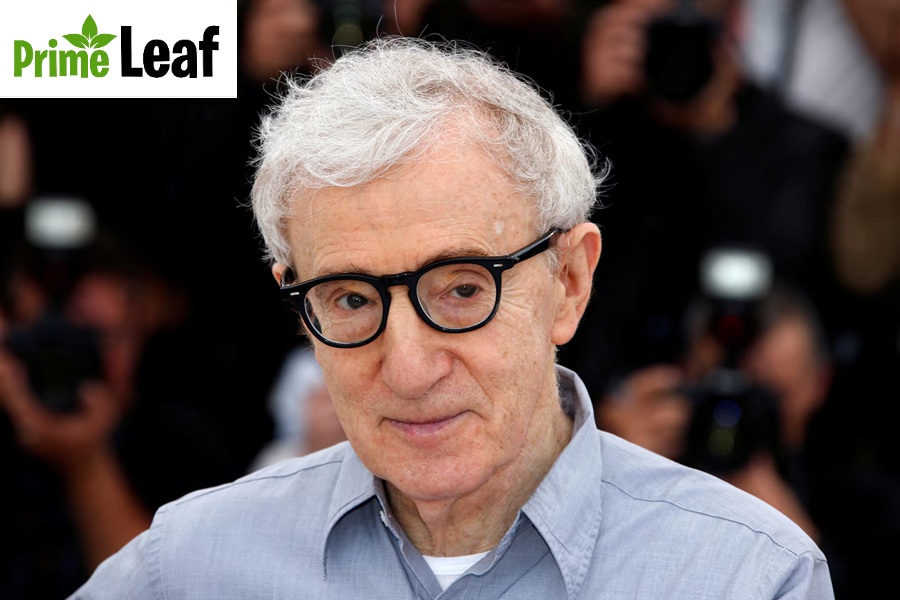

Woody Allen is an American filmmaker, screenwriter, actor, comedian, and jazz musician widely regarded as one of the most influential directors in the history of cinema. Born Allan Stewart Konigsberg on December 1, 1935, in Brooklyn, New York, he has written and directed over 50 films across six decades — producing a body of work that includes some of the most celebrated, intelligent, and emotionally resonant movies ever made. He has won four Academy Awards and is considered, by many serious film critics, to be among the greatest filmmakers who ever lived.
He is also one of the most controversial figures in modern entertainment — a man whose personal life has generated accusations, investigations, and debates that have never fully resolved and that have fundamentally complicated how the world receives his work. If you’re here for a complete picture — the films, the life, the relationships, the allegations, and the impossible question of legacy — this article covers all of it, honestly and without shortcuts.
Quick Facts — Wiki-Style Table
| Detail | Information |
|---|---|
| Full Name | Allan Stewart Konigsberg |
| Stage Name | Woody Allen |
| Date of Birth | December 1, 1935 |
| Place of Birth | Brooklyn, New York, USA |
| Nationality | American |
| Profession | Director, Writer, Actor, Comedian, Musician |
| Years Active | 1952 — present |
| Spouse | Soon-Yi Previn (married 1997) |
| Previous Partners | Harlene Rosen, Louise Lasser, Diane Keaton, Mia Farrow |
| Children | Ronan Farrow, Dylan Farrow, Moses Farrow, Bechet Allen, Manzie Allen |
| Academy Awards | 4 wins (23 nominations) |
| Most Famous Film | Annie Hall (1977) |
| Estimated Net Worth | $140 million+ |
| Known For | Annie Hall, Manhattan, Midnight in Paris, controversy |
Early Life and Background
Woody Allen was born Allan Stewart Konigsberg on December 1, 1935, in the Bronx, New York, and raised in Brooklyn. He grew up in a Jewish household — his father Martin Konigsberg worked various jobs and his mother Nettie ran a small business. By most accounts it was a working-class, modestly comfortable upbringing in a tight-knit Brooklyn neighborhood.
Allen has spoken extensively and somewhat unfavorably about his childhood in interviews and films over the decades. He describes himself as a deeply unhappy child — anxious, dissatisfied, existentially restless in a way that didn’t have a name when he was young but would later become the defining characteristic of his entire artistic output.
What saved him, or at least redirected him, was comedy. And magic. And jazz.
From a very young age, Allen was obsessed with all three. He taught himself card tricks and sleight of hand. He became devoted to jazz clarinet — an instrument he still plays today. And he discovered, relatively early, that he had an unusual ability to make people laugh through words.
By the time he was a teenager, that ability was already generating income.
Early Career — The Joke Writer
At fifteen years old, Allen began submitting jokes to New York newspaper columnists under the name Woody Allen — a name he adopted professionally and eventually legally. The jokes were sharp, neurotic, and distinctly urban in their sensibility. They got published. People noticed.
By his late teens he was earning a living as a staff writer for television — working on shows like The Tonight Show and Caesar’s Hour during the golden age of American television comedy in the 1950s. He was remarkably productive and remarkably young, working alongside some of the sharpest comedy writers of the era.
The transition to stand-up comedy came in the early 1960s. His stand-up persona was unlike anything audiences had seen before — the neurotic, self-deprecating, philosophically anxious New York intellectual who told jokes about death, sex, psychoanalysis, and the fundamental absurdity of human existence. It was comedy with genuine intellectual weight.
He became successful. He appeared on television. He released comedy albums. And then, almost inevitably, he decided he wanted to make films.
Early Career Timeline
| Year | Milestone |
|---|---|
| 1952 | Begins submitting jokes to NY newspapers at age 15 |
| Mid-1950s | Staff writer for major TV shows |
| Early 1960s | Transitions to stand-up comedy |
| 1964 | Writes screenplay for What’s New Pussycat |
| 1966 | Directs first film — What’s Up, Tiger Lily? |
| 1969 | Take the Money and Run — first major directorial effort |
| 1971 | Bananas — growing critical recognition |
| 1973 | Sleeper — establishing his comedic voice on film |
| 1975 | Love and Death — first serious European influences visible |
Transition to Filmmaking
Allen’s early films were essentially extensions of his stand-up comedy — anarchic, joke-dense, physically funny in ways that owed debts to the Marx Brothers and Buster Keaton. Take the Money and Run (1969), Bananas (1971), Sleeper (1973) — these were genuinely funny films made by someone who clearly loved cinema but was still finding his deeper voice.
That deeper voice arrived unmistakably with Love and Death (1975) — a film that blended his comedy with genuine philosophical inquiry, set against a Tolstoyan Russian backdrop. The European influences — particularly Ingmar Bergman and Federico Fellini — were becoming visible. Something was changing.
What came next changed American cinema.
The Golden Era — 1977 to the Late 1980s
Annie Hall — 1977
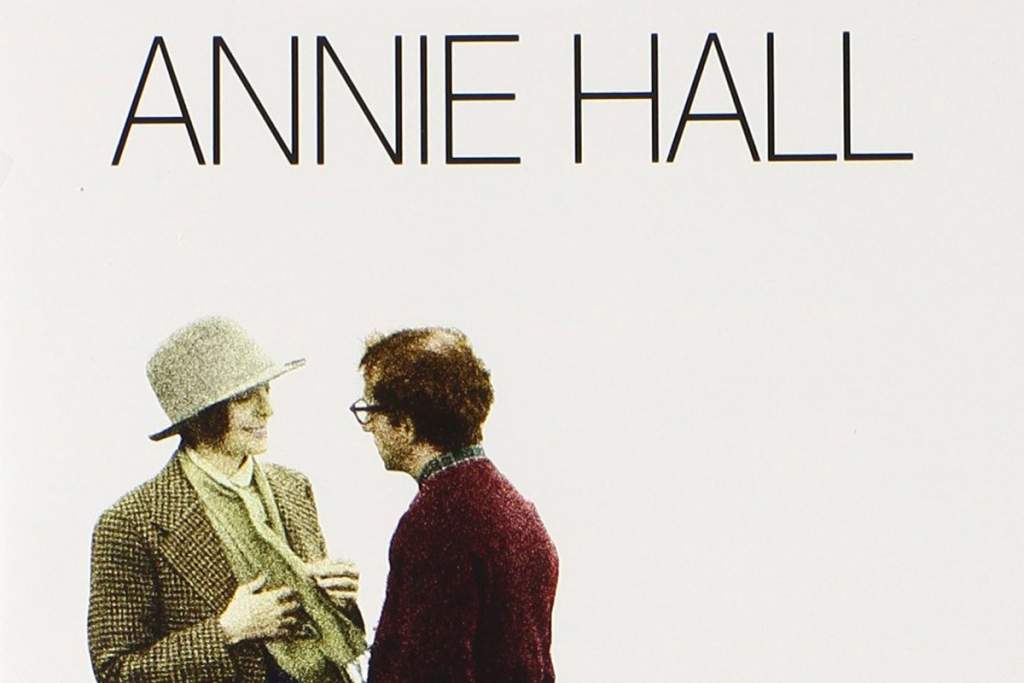
Annie Hall is, by most serious critical assessments, one of the greatest films ever made — and certainly one of the most important American films of the 20th century.
It won four Academy Awards — Best Picture, Best Director, Best Original Screenplay, and Best Actress for Diane Keaton. It essentially invented the modern romantic comedy as a serious artistic form. Its structural innovations — breaking the fourth wall, moving non-linearly through time, using split screens and subtitled inner thoughts — were genuinely radical in 1977 and remain influential today.
The film was personal in ways that Allen has both acknowledged and pushed back against. The relationship between Alvy Singer and Annie Hall drew obviously from his real relationship with Diane Keaton. The neurosis, the self-analysis, the New York obsessions — all unmistakably autobiographical in spirit even where they diverged in fact.
It announced Allen as not just a funny filmmaker but a genuinely great one.
The Films That Followed
The decade after Annie Hall represented one of the most sustained periods of high-quality filmmaking in American cinema history — from a single director, working at his own pace, on his own terms.
Filmography Highlights Table
| Film | Year | Notable Achievement |
|---|---|---|
| Annie Hall | 1977 | 4 Academy Awards including Best Picture |
| Interiors | 1978 | First serious Bergman-influenced drama |
| Manhattan | 1979 | Considered among greatest films ever made |
| Stardust Memories | 1980 | Controversial self-examination |
| Zelig | 1983 | Innovative mockumentary format |
| Broadway Danny Rose | 1984 | Warm, character-driven comedy |
| The Purple Rose of Cairo | 1985 | Magical realism at its finest |
| Hannah and Her Sisters | 1986 | Won 3 Academy Awards |
| Radio Days | 1987 | Beautifully nostalgic memoir piece |
| Crimes and Misdemeanors | 1989 | Considered his darkest masterpiece |
| Husbands and Wives | 1992 | Raw, documentary-style relationship drama |
| Bullets Over Broadway | 1994 | Won Oscar for Dianne Wiest |
| Mighty Aphrodite | 1995 | Won Oscar for Mira Sorvino |
| Sweet and Lowdown | 1999 | Sean Penn Oscar nomination |
| Match Point | 2005 | Career resurgence in London |
| Midnight in Paris | 2011 | Biggest box office hit; Oscar for screenplay |
| Blue Jasmine | 2013 | Cate Blanchett’s Oscar win |
His Filmmaking Philosophy and Style
What makes Allen’s output genuinely extraordinary is not just the quality of individual films but the consistency and volume of his production. For decades he made approximately one film per year — an almost unheard-of pace for a filmmaker of his ambition and quality.
His working methods were distinctive. He preferred modest budgets — which gave him creative control and insulation from studio interference. He cast his films with exceptional actors and gave them unusual freedom. He rewrote constantly, often handing out new pages on the day of shooting.
New York City is perhaps the most consistent character across his work — shot always in a way that makes the city feel simultaneously real and mythologized, gritty and romantic. His Manhattan cinematography, in gorgeous black and white by Gordon Willis, remains perhaps the most beautiful visual love letter to New York ever committed to film.
His literary and philosophical influences are worn openly — Dostoevsky, Tolstoy, Chekhov, Bergman, Fellini, Freud. These are not name-drops but genuine intellectual DNA that shapes how his characters think, speak, and suffer.
Jazz — The Other Life
Alongside filmmaking, jazz has been a constant and genuine passion throughout Allen’s entire adult life. He plays jazz clarinet and has performed regularly — for decades — with his band at the Carlyle Hotel in New York City on Monday nights.
This is not a celebrity hobby. He is a genuinely accomplished musician who has been devoted to the instrument since childhood. Jazz informs his films in both literal and philosophical ways — the improvisational quality, the emotional directness, the sense of working within a form while pushing against its boundaries.
In many ways, jazz is where Woody Allen is most simply himself — away from cameras, away from controversy, just a man playing music he loves in a room full of people who love it too.
Personal Life — Marriages and Relationships
The Timeline
| Partner | Years | Details |
|---|---|---|
| Harlene Rosen | 1956 – 1962 | First wife; married young |
| Louise Lasser | 1966 – 1970 | Second wife; actress; appeared in his early films |
| Diane Keaton | 1970s (relationship) | Never married; Annie Hall drew from their relationship |
| Mia Farrow | 1980 – 1992 | Long relationship; never lived together; multiple children |
| Soon-Yi Previn | 1997 – present | Current wife; married in Venice |
Diane Keaton
His relationship with Diane Keaton produced some of his greatest work and one of cinema’s most celebrated on-screen partnerships. They appeared together in multiple films, their real chemistry translating directly onto the screen. After their romantic relationship ended they remained close friends — Keaton has appeared in his films decades later and spoken warmly about their relationship publicly.
The Mia Farrow Years — And Everything That Followed
The relationship between Woody Allen and Mia Farrow began in 1980 and lasted twelve years. They never married and never lived together — Allen kept his own apartment — but they were a couple in every meaningful sense, collaborating professionally on film after film and building a family that included biological children and several adopted children.
Then, in January 1992, Mia Farrow discovered photographs of her adopted daughter Soon-Yi Previn — at that time approximately 21 years old — in a sexually explicit context, taken by Allen. The discovery ended their relationship immediately and explosively.
Who Is Soon-Yi Previn?
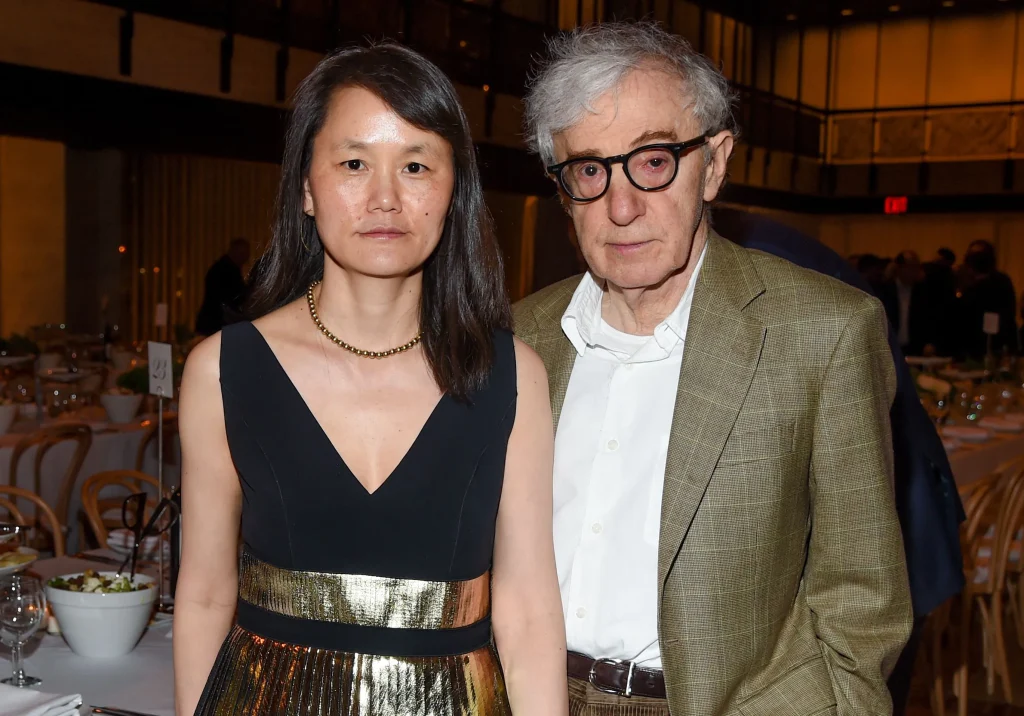
Soon-Yi Previn was born in South Korea and adopted by Mia Farrow and her then-husband André Previn. She was never legally adopted by Woody Allen and Allen has consistently maintained that he was not a father figure to her — that they met when she was already an adult and that their relationship developed between two consenting adults.
Critics of Allen argue that regardless of the legal technicality, the relationship represented a profound betrayal — that Soon-Yi had grown up knowing Allen as her mother’s partner, that the power dynamics were deeply problematic, and that the relationship was a serious violation of the family’s trust.
Allen and Soon-Yi married in Venice in 1997 and have been together since — over 25 years. They have two adopted daughters together, Bechet and Manzie. Allen has spoken about the marriage in interviews as the best thing in his personal life.
The public and the industry remain divided on how to weigh this relationship. It is not a simple question, and anyone who tells you it is probably hasn’t thought about it carefully enough.
Dylan Farrow’s Allegations
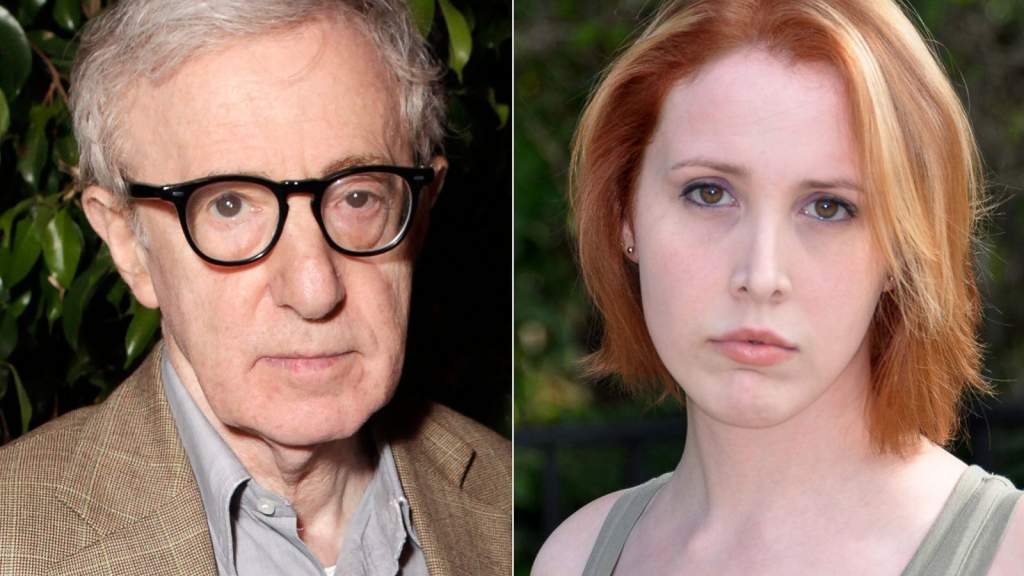
In 1992, during the custody dispute that followed the breakdown of Allen and Farrow’s relationship, Dylan Farrow — their adopted daughter, then seven years old — alleged that Woody Allen had sexually abused her in an attic at Mia Farrow’s Connecticut home.
This allegation has never gone away. It has been reinvestigated, redebated, and relitigated in the court of public opinion multiple times — most significantly in 2014 when Dylan wrote an open letter in the New York Times detailing her allegations in her own adult words, and again during the #MeToo movement when her brother Ronan Farrow became one of the movement’s most prominent journalists.
What the Investigations Found
| Investigation | Body | Conclusion |
|---|---|---|
| 1992–1993 | Connecticut State Police | Probable cause found but prosecution declined to protect Dylan |
| 1992 | Yale-New Haven Hospital Child Sexual Abuse Clinic | Did not find evidence supporting abuse allegation |
| Custody Case | Judge Elliott Wilk | Denied Allen custody; described his behavior as “grossly inappropriate” |
| Criminal charges | Never filed | Prosecutor cited Dylan’s wellbeing as primary reason |
Allen’s Response
Allen has consistently and categorically denied the allegations. He has maintained that the accusations were false — generated or encouraged by Mia Farrow in the context of a bitter custody dispute. He wrote a lengthy response to Dylan’s 2014 letter. He has never wavered in his denial.
The Divided Reality
The Dylan Farrow allegations sit in a genuinely unresolved space. No criminal charges were ever filed. No court found Allen guilty of abuse. Dylan Farrow maintains her account absolutely and with evident emotional conviction. Allen denies it absolutely.
Their brother Moses Farrow has publicly supported Allen, saying the abuse did not happen. Their brother Ronan Farrow has consistently supported Dylan.
The people who were closest to the situation are themselves divided. That doesn’t make the truth unknowable — it makes the public’s ability to know it with certainty very limited.
What it does mean is that any honest treatment of Woody Allen’s story must include this — fully, without minimizing Dylan’s account or prejudging Allen’s guilt in the absence of legal findings.
Career After Controversy
Despite the enormity of the personal controversy, Allen continued making films — and continued making good ones.
The 1990s and 2000s were uneven but produced genuine highlights. Match Point (2005), set in London, was a critical resurgence — a dark, Dostoyevskian thriller that reminded audiences of his dramatic range. Midnight in Paris (2011) became his biggest commercial hit ever, winning the Academy Award for Best Original Screenplay. Blue Jasmine (2013) drew a career-best performance from Cate Blanchett that won her the Academy Award for Best Actress.
Major stars continued to work with him throughout — Scarlett Johansson, Colin Firth, Owen Wilson, Javier Bardem, Penélope Cruz. The industry’s relationship with his work remained complicated but not severed.
The #MeToo Turning Point
The #MeToo movement of 2017–2018 changed the calculus significantly. Actors who had worked with Allen began publicly expressing regret — Timothée Chalamet, Greta Gerwig, Ellen Page, and others donated their salaries from his films to #MeToo organizations.
Amazon Studios, which had signed a four-film deal with Allen, cancelled the arrangement following renewed attention to the Dylan Farrow allegations. Allen sued and received a settlement.
His most recent films have been financed and released in Europe rather than through American studios — a reflection of how thoroughly his commercial standing in the US entertainment industry has shifted.
Awards and Recognition
Academy Awards
| Award | Year | Film | Category |
|---|---|---|---|
| Best Original Screenplay | 1978 | Annie Hall | Win |
| Best Director | 1978 | Annie Hall | Win |
| Best Original Screenplay | 1987 | Hannah and Her Sisters | Win |
| Best Original Screenplay | 2012 | Midnight in Paris | Win |
| Best Original Screenplay | 1990 | Crimes and Misdemeanors | Nomination |
| Best Director | 1990 | Crimes and Misdemeanors | Nomination |
| Best Original Screenplay | 1995 | Bullets Over Broadway | Nomination |
Beyond the Oscars, Allen has received BAFTA Awards, Golden Globe Awards, Cannes recognition, and in 2002 received the Cecil B. DeMille Award — the Golden Globes’ lifetime achievement honor.
Net Worth and Financial Overview
| Source | Estimated Value |
|---|---|
| Estimated Net Worth | $140 million+ |
| Film earnings (career) | Accumulated over 50+ films |
| Writing/directing fees | Consistently modest by Hollywood standards |
| Autobiography | Apropos of Nothing (2020) — additional income |
Allen’s financial approach to filmmaking has always been distinctive — he works on relatively modest budgets, maintains creative control, and prioritizes output over maximizing individual film profits. His wealth has accumulated steadily rather than spectacularly.
The Impossible Question of Legacy
Here is the question that every honest discussion of Woody Allen eventually arrives at — and there is no clean answer.
Can you separate the art from the artist?
His films — particularly Annie Hall, Manhattan, Crimes and Misdemeanors, Hannah and Her Sisters, The Purple Rose of Cairo — are genuine works of art. They have brought pleasure, insight, and emotional recognition to millions of people. They will be studied and watched for as long as people care about cinema.
The allegations against him — Dylan Farrow’s account of abuse, the relationship with Soon-Yi — are serious. They involve real people who have been genuinely hurt, whatever the precise truth of each situation.
These two things are both true simultaneously. And neither cancels the other out.
Future generations will make their own decisions about how to hold these realities together. What seems certain is that the films will survive — because great art has a way of outlasting everything, including the complicated humanity of the people who made it.
Comparison Table — The Filmmaker vs The Controversy
| Aspect | Achievement | Controversy |
|---|---|---|
| Career | 50+ films; 4 Oscars; 6 decades active | Amazon deal cancelled; industry distancing |
| Relationships | 25+ year marriage to Soon-Yi | Relationship began with Mia Farrow’s adopted daughter |
| Family | Children he has raised and loved | Dylan Farrow’s unresolved allegations |
| Legacy | Among greatest filmmakers in history | One of Hollywood’s most contested figures |
| Industry Standing | Celebrated for decades | Significantly diminished post-#MeToo |
| Personal Account | Categorically denies all wrongdoing | Dylan Farrow maintains her account completely |
Frequently Asked Questions
Q: Who is Woody Allen? Woody Allen is an American filmmaker, writer, actor, and comedian widely considered one of the greatest directors in cinema history, known for films including Annie Hall, Manhattan, and Midnight in Paris.
Q: What is Woody Allen’s most famous film? Annie Hall (1977) is generally considered his masterpiece — it won four Academy Awards including Best Picture and Best Director.
Q: What are the allegations against Woody Allen? His adopted daughter Dylan Farrow has alleged that Allen sexually abused her when she was seven years old in 1992. Allen has categorically denied these allegations and no criminal charges were ever filed.
Q: Did Woody Allen marry his stepdaughter? He married Soon-Yi Previn in 1997 — she is the adopted daughter of his former partner Mia Farrow, not his legal stepdaughter. Allen has maintained they met as adults and that he was never her parent figure.
Q: Is Woody Allen still making films? Yes — as of 2025 he continues to make films, primarily financed through European sources following the breakdown of his American studio relationships.
Q: What is Woody Allen’s net worth? His estimated net worth is approximately $140 million, accumulated over six decades of filmmaking, writing, and related work.
Conclusion
Woody Allen is one of those rare figures whose story genuinely resists comfortable resolution — and perhaps that discomfort is appropriate.
He made films that changed cinema. He wrote dialogue that captured human anxiety and longing with a precision that very few artists in any medium have matched. He did this consistently, prolifically, and on his own terms for over half a century.
He also made choices in his personal life that caused real harm to real people — whatever the precise legal and factual boundaries of those harms. Dylan Farrow’s account of her childhood deserves to be heard and taken seriously. The circumstances of his relationship with Soon-Yi, whatever its current stability, began in a context that was genuinely problematic.
Both of these things are true. And the honest response to Woody Allen — the complete response — is to hold both without flinching from either.
The films will continue to be watched. The conversations will continue to be had. And somewhere in a Manhattan hotel on a Monday night, an 89-year-old man in a suit is probably playing jazz clarinet — the one part of his life that has never required anyone else’s verdict.