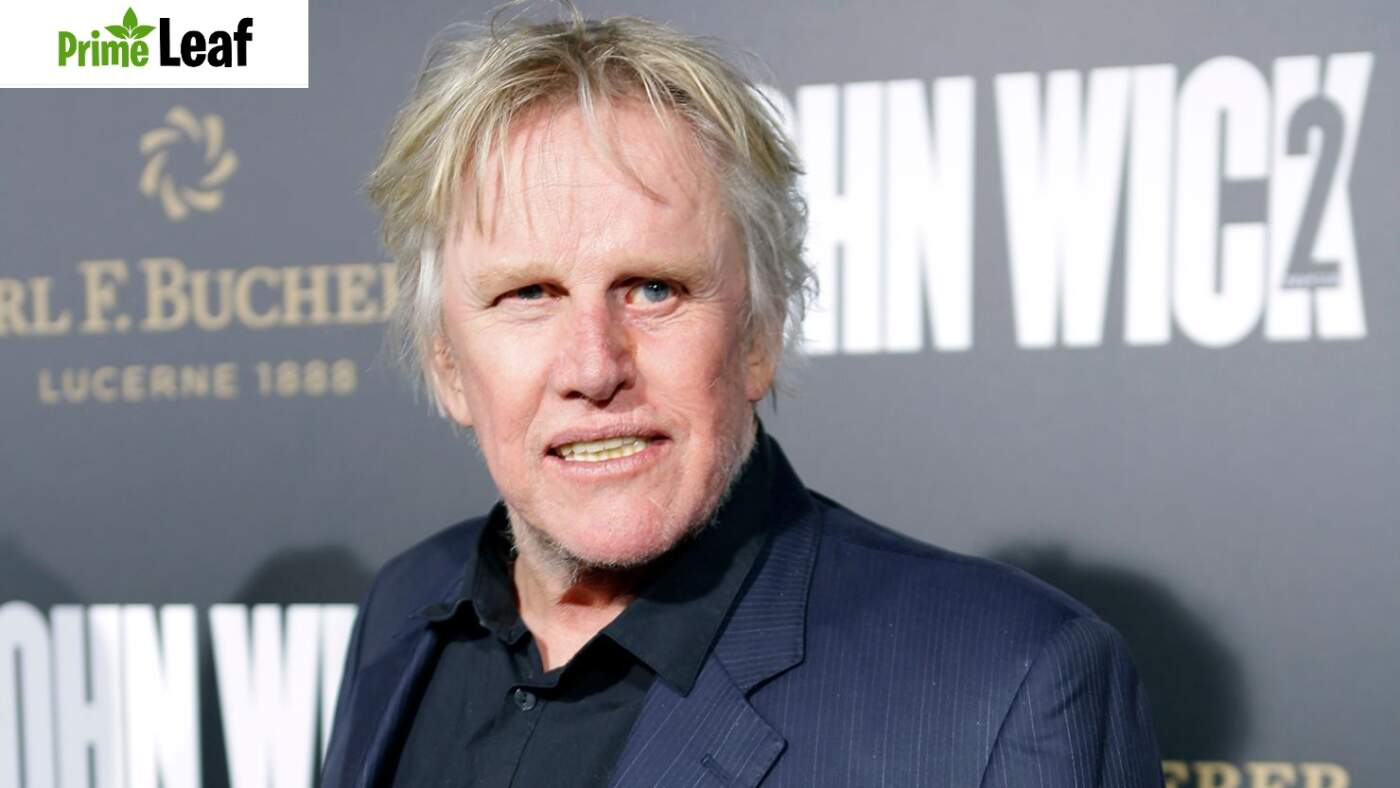

There are actors who are famous for their roles. There are actors who are famous for their talent. And then there is Gary Busey — an actor who is famous for all of those things and simultaneously for being one of the most genuinely unpredictable, fascinatingly chaotic, and stubbornly uncontainable human beings that Hollywood has ever produced. His career spans six decades, an Academy Award nomination, one of cinema’s great rock and roll performances, a near-fatal motorcycle accident that changed his brain chemistry and his personality simultaneously, and a second act in reality television that introduced him to an entirely new generation who loved him for reasons that had nothing to do with The Buddy Holly Story. There is nobody quite like Gary Busey. There never has been.
For readers looking for a quick answer — Gary Busey is an American actor and musician born William Gary Busey on June 29, 1944, in Goose Creek, Texas. He is best known for his Academy Award-nominated performance as Buddy Holly in The Buddy Holly Story (1978), and for roles in Lethal Weapon (1987), Point Break (1991), and dozens of other films across a career spanning six decades. In December 1988, he suffered a near-fatal motorcycle accident that caused significant brain damage and permanently altered his personality. He has three children including actor Jake Busey and has been married three times.
Quick Facts
| Field | Details |
|---|---|
| Full Name | William Gary Busey |
| Born | June 29, 1944 |
| Birthplace | Goose Creek, Texas, USA |
| Nationality | American |
| Occupation | Actor, Musician |
| Known For | The Buddy Holly Story; Lethal Weapon; Point Break |
| Academy Award | Nominated Best Actor — The Buddy Holly Story (1978) |
| Major Incident | Near-fatal motorcycle accident — December 4, 1988 |
| Marriages | Three — Judy Helkenberg, Tiani Warden, Steffanie Sampson |
| Children | Jake Busey, Alectra Busey, Luke Sampson Busey |
| Active Years | 1964 – Present |
Early Life: Texas Roots and Oklahoma Upbringing
Gary Busey was born on June 29, 1944, in Goose Creek, Texas — a small Gulf Coast community whose name alone suggests a certain distance from the centres of cultural ambition. He grew up primarily in Tulsa, Oklahoma — a city with its own distinct character, rooted in oil money, Midwestern values, and the particular combination of opportunity and limitation that shapes people who either stay or develop an urgent need to leave.
Tulsa gave Gary two things that would define his professional life — an athletic foundation and an early discovery of performance. He was a genuinely gifted athlete in his youth, playing football with enough ability to attract serious attention. The physical confidence and competitive intensity that sports development builds — the willingness to commit completely to what you’re doing in the moment — would later translate directly into the kind of screen presence that makes audiences unable to look away.
But it was music and performance that eventually claimed him more completely than football ever could.
He discovered drums as a teenager and approached the instrument with the same total commitment he brought to athletics. Music was not a hobby for Gary — it was an obsession, pursued with the kind of focused intensity that would later characterise every role he considered worth taking seriously.
His personality — even before the events that would later alter it significantly — was by all accounts already large, already specific, already distinctly itself. People who knew Gary Busey before fame described someone whose energy filled rooms, whose enthusiasms were total and consuming, and whose relationship with ordinary social conventions was always somewhat negotiable.
Oklahoma made him. But it was always going to be too small to contain him.
Early Career: Drums, Television and Building a Foundation
Gary Busey’s path into acting ran through music rather than drama school — a trajectory that gave his eventual performances a specific physical and rhythmic quality that purely theatrical training rarely produces.
He played drums professionally — performing under the stage name Teddy Jack Eddy in various musical contexts — while simultaneously pursuing acting opportunities in the emerging television and film market. The combination was not unusual for someone with his specific set of abilities, but the seriousness with which he pursued both simultaneously reflected the ambition and energy that drove everything he did.
His early television work built the foundation of screen experience that prepared him for larger opportunities — guest roles, supporting parts, the ordinary apprenticeship of someone learning the craft of camera performance while trying to get noticed in a competitive industry.
| Early Career Credits | Year | Production | Notes |
|---|---|---|---|
| Gunsmoke | 1971 | TV series | Early television appearance |
| The Magnificent Seven Ride! | 1972 | Film | Early film credit |
| Lolly-Madonna XXX | 1973 | Film | Supporting role |
| The Last American Hero | 1973 | Film | Growing film presence |
| Thunderbolt and Lightfoot | 1974 | Film | With Clint Eastwood |
| A Star Is Born | 1976 | Film | With Barbra Streisand and Kris Kristofferson |
| Various TV appearances | 1970s | Multiple | Building consistent resume |
The work with Clint Eastwood in Thunderbolt and Lightfoot gave him his first significant exposure to major film production — and his appearance in the Barbra Streisand vehicle A Star Is Born in 1976 placed him in a production with genuine commercial and cultural scale. He was building, methodically and with genuine talent, toward something significant.
That something arrived in 1978.
The Buddy Holly Story: The Performance of a Lifetime
The Buddy Holly Story (1978) is one of those films where everything aligned — the right actor, the right material, the right moment — and the result was something that exceeded what any of the individual components could have predicted.
Buddy Holly — the Texas rock and roll pioneer who died in the February 1959 plane crash that killed him, Ritchie Valens, and The Big Bopper — was one of the most significant figures in the history of popular music. His influence on the Beatles, the Rolling Stones, and virtually every subsequent rock act was profound and direct. Playing him required not just acting ability but genuine musical authenticity — Holly’s music was too well known and too beloved for a purely performed approximation to work.
Gary Busey did not approximate. He committed completely.
He learned to sing and play guitar specifically for the role — approaching the musical preparation with the same total intensity he had brought to drums throughout his musical career. The performances in the film are not lip-synced or musically augmented. Gary Busey is actually singing and actually playing — and the authenticity of those performances is visible in every scene.
| The Buddy Holly Story (1978) | Details |
|---|---|
| Director | Steve Rash |
| Budget | Approximately $1.5 million |
| Gary’s Preparation | Learned guitar and vocals specifically for role |
| Musical Performance | All singing and playing performed live by Busey |
| Academy Award Nomination | Best Actor — lost to Jon Voight (Coming Home) |
| Critical Reception | Immediate recognition as major performance |
| Gary’s Age at Filming | 33 |
| Legacy | Considered one of the great rock biopic performances |
The Academy Award nomination for Best Actor placed him among the most celebrated performances of 1978 — competing with Jon Voight (Coming Home), Warren Beatty (Heaven Can Wait), Robert De Niro (The Deer Hunter), and Laurence Olivier (The Boys from Brazil). He did not win — Voight took the award — but the nomination confirmed what the film itself had demonstrated: that Gary Busey was capable of work at the absolute highest level of American screen acting.
The tragedy — and it is a genuine tragedy in the arc of his career — is that the combination of personal choices and eventual physical catastrophe meant that the sustained serious career that performance promised never fully materialised.
The 1980s: Building the Villain Reputation
The years following The Buddy Holly Story produced a career that was genuinely significant without ever quite reaching the sustained heights that the Oscar nomination had seemed to promise. Gary Busey worked consistently through the 1980s — appearing in a wide range of productions that gradually established him as one of Hollywood’s most reliably interesting character actors.
His physical presence — large, intense, capable of switching between warmth and menace with unsettling speed — made him a natural fit for villain and antagonist roles that required more than simple menace. The best screen villains are comprehensible, even sympathetic in moments, and Gary Busey could do all of that simultaneously.
| 1980s Filmography Highlights | Year | Film | Role/Notes |
|---|---|---|---|
| Barbarosa | 1982 | Film | Critically praised western |
| The Bear | 1984 | Film | Strong performance |
| Silver Bullet | 1985 | Film | Stephen King adaptation |
| Eye of the Tiger | 1986 | Film | Action lead |
| Lethal Weapon | 1987 | Film | Mr. Joshua — memorable villain |
| Bulletproof | 1988 | Film | Action lead |
Lethal Weapon (1987) — directed by Richard Donner and starring Mel Gibson and Danny Glover — gave Gary one of his most commercially significant roles as Mr. Joshua, the primary villain whose cold efficiency and physical threat provided the film’s antagonist framework. It was a role that required genuine menace delivered with intelligence, and Gary provided both.
His performance in Lethal Weapon cemented the villain reputation that would define much of his subsequent casting — while simultaneously demonstrating that the dramatic intelligence of the Buddy Holly performance was not a singular event but a consistent capability that emerged when material worthy of it arrived.
Point Break (1991): Cult Classic and Lasting Legacy
Point Break (1991) — directed by Kathryn Bigelow and starring Keanu Reeves and Patrick Swayze — has become one of the defining cult films of its era. Its combination of surfing culture, bank robbery, FBI procedural, and genuinely committed performances created something that exceeded its commercial ambitions and has only grown in cultural stature in the decades since.
Gary Busey played Angelo Pappas — the veteran FBI agent partnered with Reeves’ rookie character Johnny Utah. It was not the largest role in the film, but it was one of the most important — Pappas provides the film’s grounding, its institutional context, and its human warmth in a narrative that otherwise operates in more heightened registers.
| Point Break (1991) | Details |
|---|---|
| Director | Kathryn Bigelow |
| Gary’s Role | Angelo Pappas — veteran FBI agent |
| Co-Stars | Keanu Reeves, Patrick Swayze, Lori Petty |
| Box Office | $83 million worldwide on $24 million budget |
| Cult Status | Grew significantly after initial release |
| Gary’s Contribution | Grounding presence; genuine chemistry with Reeves |
| Legacy | One of the defining action films of the early 1990s |
His chemistry with Keanu Reeves — whose own screen persona was finding its form during this period — was genuine and specific. The mentor-student dynamic between Pappas and Utah works because Gary brought real human warmth to a role that could have been purely functional.
Point Break represents the last major film of Gary Busey’s career before the increasingly erratic public behaviour that followed the motorcycle accident began to significantly affect his casting opportunities.
The Motorcycle Accident: Before and After
On December 4, 1988, Gary Busey was involved in a near-fatal motorcycle accident in Los Angeles. He was not wearing a helmet — a detail that carries its own grim irony given that he had been a public opponent of mandatory helmet laws in the period before the crash.
He suffered a severe head injury that required emergency surgery and left him clinically dead for a period before resuscitation. He was hospitalised for an extended period and his survival was, by multiple medical accounts, not guaranteed.
He survived. But the Gary Busey who came out of that hospital was not entirely the same person who had gone in.
| The Motorcycle Accident | Details |
|---|---|
| Date | December 4, 1988 |
| Location | Los Angeles, California |
| Helmet | Not wearing one — had opposed mandatory helmet laws |
| Injury | Severe traumatic brain injury |
| Surgery | Emergency neurosurgery required |
| Recovery Period | Extended hospitalisation |
| Brain Damage | Documented permanent changes |
| Before Accident | Career on upward trajectory |
| After Accident | Personality changes; erratic behaviour increased |
The traumatic brain injury he sustained caused documented neurological changes — affecting the frontal lobe functions that govern impulse control, social behaviour, and emotional regulation. These are not character flaws. They are physiological consequences of a specific physical injury to a specific part of the brain.
Understanding Gary Busey’s subsequent public behaviour — the erratic interviews, the unpredictable actions, the increasingly unconventional public persona — requires understanding this physiological context. The man who emerged from the accident was working with a different neurological architecture than the man who had gone in.
He has spoken about the accident with remarkable openness in subsequent years — including describing a near-death experience during the period when he was clinically dead, which he has referenced as a spiritually transformative moment that contributed to his later religious commitment.
Cocaine Addiction: The Parallel Battle
Alongside the neurological consequences of the motorcycle accident, Gary Busey fought a separate battle with cocaine addiction — a struggle that developed during the 1980s and that intersected damagingly with the personality changes the accident had produced.
Cocaine addiction in Hollywood in the 1980s was both epidemic and openly discussed in retrospect by virtually everyone who experienced it. The specific combination of availability, social normalisation within industry circles, and the particular psychological vulnerabilities of people whose professional lives involve extreme performance pressure created conditions in which addiction was disturbingly common.
For Gary, the addiction compounded the neurological effects of the accident — producing a public persona that was simultaneously the product of brain injury, active addiction, and the genuine creative intelligence and warmth that had always been part of who he was.
He has spoken about cocaine addiction with characteristic directness in interviews — not minimising the damage it caused or the choices involved, but also contextualising it within the broader picture of his life at that period. He has been sober for many years and the recovery is clearly genuine rather than performed.
BUSEYISMs: When Chaos Becomes Art
One of the most distinctive elements of Gary Busey’s public persona — and one that reflects both his genuine creativity and the neurological changes that followed the accident — is the phenomenon of BUSEYISMs.
BUSEYISMs are acronyms and invented definitions that Gary constructs from words — redefining ordinary language with his own specific and often surprisingly profound alternative meanings. They emerged publicly during his reality television appearances and became one of the most talked-about aspects of his unconventional personality.
| Famous BUSEYISMs | Word | Gary’s Definition |
|---|---|---|
| FEAR | Fear | False Evidence Appearing Real |
| SOBER | Sober | Son Of a B*tch Everything’s Real |
| FAITH | Faith | Fantastic Adventures In Trusting Him |
| CANCER | Cancer | Constant And Never-Ceasing Educational Realities |
| GOLF | Golf | Great Opportunity to Live Forever |
| FAMILY | Family | Forget About Me I Love You |
What makes the BUSEYISMs interesting rather than simply eccentric is that many of them contain genuine insight — particularly FEAR (False Evidence Appearing Real), which has been widely cited as a genuinely useful reframe of anxiety and avoidance. It is the kind of thing that could appear in a self-help book and be taken seriously. Coming from Gary Busey’s mouth, it becomes simultaneously profound and entertaining.
The BUSEYISMs reflect something consistent about his character — the genuine creativity and verbal intelligence that has always been part of who he is, expressed through a channel that the accident and its aftermath opened up in him.
Reality Television: The Second Act
Gary Busey’s reality television career — which began in earnest in the 2000s and has continued across multiple international formats — represents one of the more fascinating second acts in entertainment history.
He appeared on Donald Trump’s Celebrity Apprentice — first in Season 11 (2011) and again in the All-Stars season — where his completely unpredictable behaviour made him simultaneously one of the most frustrating and most compelling participants the format had ever produced. He operated by his own internal logic, formed alliances based on personal chemistry rather than strategic calculation, and delivered boardroom moments that generated more genuine tension than anything the producers could have manufactured.
| Reality Television Appearances | Show | Year | Notes |
|---|---|---|---|
| Celebrity Apprentice | NBC | 2011 | Season 11 |
| Celebrity Apprentice All-Stars | NBC | 2013 | Return appearance |
| Celebrity Big Brother UK | Channel 5 | 2014 | Generated enormous coverage |
| I’m a Celebrity | Various | Multiple | International appearances |
| Marriage Boot Camp | WE tv | 2015 | With Steffanie Sampson |
Celebrity Big Brother UK in 2014 introduced him to a British audience that had limited prior exposure to his film work — and the response was immediate and devoted. British audiences embraced Gary Busey with the particular enthusiasm that the British reserve for Americans who are completely, authentically, unapologetically themselves. His housemates never quite knew what was coming next. Neither did the viewers. Nobody could look away.
The reality television chapter gave Gary something that the decline in his film casting had threatened to remove — a genuine, current audience that loved him for who he was rather than what he had once been. That the love was partly inspired by his unconventionality rather than despite it reflects something true about both Gary Busey and about what audiences actually respond to when they’re given the choice.
Personal Life: Three Marriages and Family
Gary Busey has been married three times — each relationship reflecting a different chapter of his life and the significant personal changes that accumulated across decades of extraordinary experience.
His first marriage to Judy Helkenberg — his college sweetheart — produced his son Jake Busey and lasted through the early peak years of his career before ending in divorce. The marriage and its dissolution were part of the ordinary complications of a professional life that was consuming and disruptive of stable domestic existence.
His second marriage to Tiani Warden produced daughter Alectra Busey and followed the pattern of the first — genuine connection complicated by the particular demands of Gary’s life and personality.
His third marriage to Steffanie Sampson — with whom he has son Luke Sampson Busey — has been his longest and apparently most stable relationship, though it has not been without public difficulties.
| Gary Busey’s Family | Details |
|---|---|
| First Wife | Judy Helkenberg — divorced |
| Son | Jake Busey (b. 1971) — actor |
| Second Wife | Tiani Warden — divorced |
| Daughter | Alectra Busey |
| Third Wife | Steffanie Sampson (m. 2012) |
| Son | Luke Sampson Busey |
| Relationship with Jake | Complex; publicly warm in recent years |
Jake Busey: The Son Who Followed
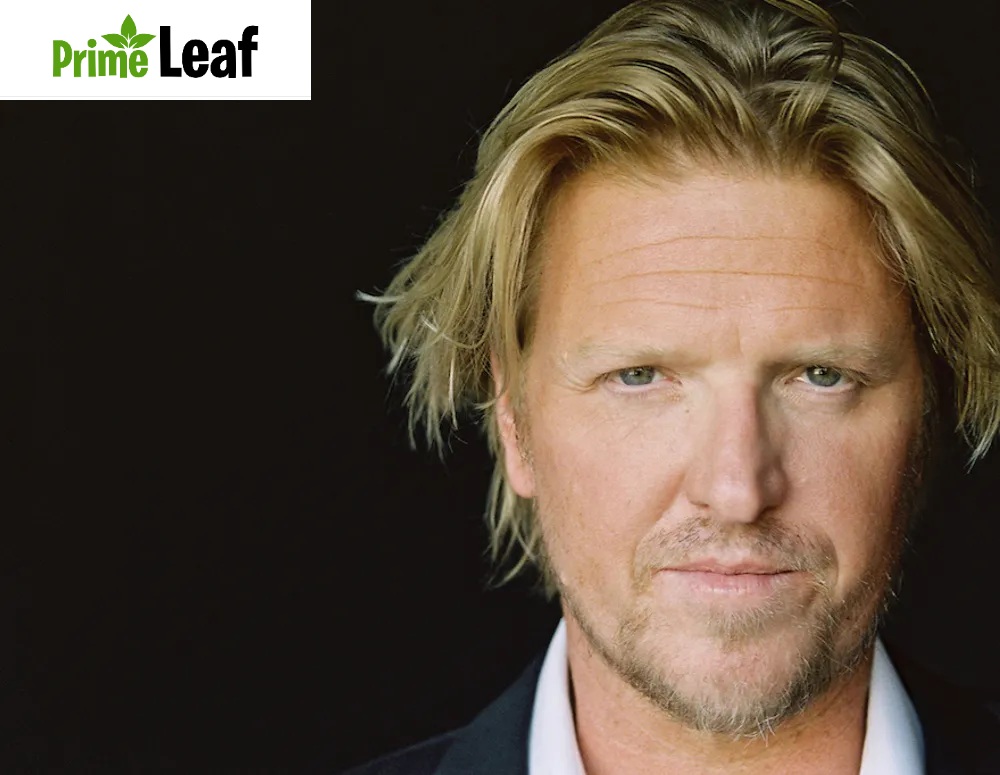
Jake Busey — born in 1971 — has built a genuine acting career of his own, appearing in films including Starship Troopers (1997), Contact (1997), and The Frighteners (1996), as well as numerous television productions.
The father-son dynamic between Gary and Jake has been publicly warm in recent years — both have spoken about each other with evident affection — but the complications of growing up with Gary Busey as a father, across a period that included addiction, accident, and significant public chaos, are not difficult to imagine.
Jake has his father’s physical presence and a comparable screen intensity — the genetic inheritance of a specific kind of energy that translates well to camera and tends to produce actors who are difficult to ignore regardless of the size of their role.
Legal Troubles and Controversies
Gary Busey’s career has been periodically disrupted by legal and personal controversies — incidents that reflect the combination of neurological changes, addiction history, and the particular vulnerability to poor judgment that brain injury can produce.
In 2022, he faced sexual misconduct allegations at a horror convention — charges that generated significant media coverage and that resulted in criminal charges being filed in New Jersey. The allegations and subsequent legal proceedings were handled with the particular complexity that attaches to any legal matter involving someone whose neurological history is as documented as Gary’s.
| Notable Controversies | Year | Details |
|---|---|---|
| Various DUI incidents | 1990s–2000s | Multiple alcohol-related incidents |
| Bankruptcy filing | 2012 | Financial difficulties |
| Sexual misconduct allegations | 2022 | Criminal charges filed in New Jersey |
| Convention incident | 2022 | Basis of 2022 allegations |
The controversies have complicated his legacy without erasing it — adding layers of moral complexity to a public story that was already operating in complicated territory.
Spiritual Transformation: Finding Faith
One of the less discussed but genuinely significant dimensions of Gary Busey’s later life is his Christian faith — a commitment that developed following the motorcycle accident and that he has described as foundational to his recovery from addiction and his approach to the subsequent decades.
He has spoken about the near-death experience he had during the period when he was clinically dead following the accident as a genuine spiritual encounter — describing it with the specificity and conviction of someone reporting an actual experience rather than adopting a convenient narrative.
His faith has given him a framework for making sense of a life that has contained extraordinary experiences across the full spectrum of human possibility — fame, talent, addiction, brain injury, personal failure, redemption, and the ongoing complicated work of being himself in public. Whether or not one shares his theological commitments, the sincerity of his engagement with them is visible and genuine.
Gary Busey Today
As of 2025, Gary Busey is in his early eighties — an age that would be remarkable for anyone, and that for someone who survived what he has survived represents something close to a miracle.
He continues to make public appearances — at conventions, in occasional film and television projects, and in the social media environment that has given his BUSEYISMs and general philosophical pronouncements a new audience and a new format perfectly suited to his particular mode of expression.
His cult status is secure and growing rather than fading — each new generation that discovers his work finds something to love, whether it is the extraordinary Buddy Holly performance, the menacing intelligence of Mr. Joshua, the anarchic warmth of his reality television appearances, or simply the experience of watching someone who is entirely, uncompromisingly, and occasionally magnificently themselves.
Legacy: The Talent Behind the Chaos
Gary Busey’s legacy is complicated in the way that all genuinely human stories are complicated — it contains excellence and failure, talent and waste, genuine achievement and genuine damage, all mixed together in proportions that resist simple summary.
| Gary Busey’s Legacy | Details |
|---|---|
| The Buddy Holly Story | One of the great rock biopic performances in cinema |
| Oscar Nomination | Confirmed serious dramatic ability at the highest level |
| Lethal Weapon/Point Break | Iconic supporting villain/character work |
| BUSEYISMs | Genuine cultural contribution; FEAR acronym widely cited |
| Reality TV Legacy | Introduced to new generation; beloved for authenticity |
| Cautionary Dimension | Addiction and accident consequences visible in career arc |
| Cult Status | Enduring audience devotion that transcends any single work |
The Academy Award nomination for The Buddy Holly Story remains the clearest evidence of what Gary Busey was capable of at his best — a performance of such complete commitment and genuine artistry that it belongs in any serious discussion of the great rock music screen performances.
Everything that followed was shaped by the accident and the addiction and the particular neurological reality that the December 1988 crash produced. But the talent was always there — visible in flashes across the decades, consistently surprising people who had filed Gary Busey away under a simpler category than he actually occupies.
Why Gary Busey’s Story Matters
Gary Busey’s story matters because it refuses the simple narratives that Hollywood usually provides for its subjects.
He is not simply a tragic cautionary tale about the dangers of addiction and recklessness — though that thread is genuinely present. He is not simply a brilliant talent derailed by circumstance — though that is also true. He is not simply an entertainingly eccentric character whose unpredictability is the whole story — though that reading has its adherents.
He is all of those things simultaneously — a genuinely complex human being whose life has moved through extraordinary registers of experience and whose talent, at its peak, was real enough to earn him a place at the highest table of American screen acting.
That complexity is worth respecting. It is more interesting, and more true, than any simpler version of the story.
Frequently Asked Questions
1. Who is Gary Busey? American actor born in 1944, best known for The Buddy Holly Story (Oscar nomination), Lethal Weapon, and Point Break. One of Hollywood’s most distinctive and unpredictable personalities.
2. What happened to Gary Busey in 1988? He suffered a near-fatal motorcycle accident in December 1988 without wearing a helmet, causing severe brain damage that permanently altered his personality and behaviour.
3. Did Gary Busey win an Oscar? He was nominated for Best Actor for The Buddy Holly Story (1978) but lost to Jon Voight for Coming Home.
4. What are BUSEYISMs? Gary’s invented acronym definitions for ordinary words — the most famous being FEAR = False Evidence Appearing Real.
5. Who is Jake Busey? Gary’s son from his first marriage — a working actor known for Starship Troopers and Contact.
6. How many times has Gary Busey been married? Three times — to Judy Helkenberg, Tiani Warden, and Steffanie Sampson.
7. What reality shows has Gary Busey appeared on? Celebrity Apprentice (2011, 2013), Celebrity Big Brother UK (2014), and various other reality formats internationally.
8. Is Gary Busey still alive? Yes — as of 2025, Gary Busey is in his early eighties and continues to make public appearances.
Conclusion: Eighty Years of Being Entirely Himself
Gary Busey arrived in Hollywood from Oklahoma with drums, ambition, and an energy that rooms couldn’t quite contain. He gave one of American cinema’s great performances as Buddy Holly. He built a career as one of the most reliably interesting character actors of his generation. He survived an accident that should have killed him and emerged from it neurologically changed but spiritually deepened. He fought addiction and won. He reinvented himself on reality television for audiences who hadn’t been born when he was nominated for an Oscar. He invented a philosophy of language one acronym at a time.
None of it followed the expected script. None of it was tidy or manageable or easily categorised. All of it was, in its own way, completely authentic — the product of someone who never had much capacity for performing a version of himself that was smaller or safer or more acceptable than the real thing.
Hollywood has always been better at producing stars than it is at knowing what to do with genuinely original human beings. Gary Busey has spent eight decades being genuinely original — and the chaos and the talent and the tragedy and the warmth are all part of the same person.
That person, at his best, was extraordinary. And even at his most chaotic, he was never boring.
Which, in the end, is more than most people manage.