
There is a version of Johnny Knoxville’s story that is easy to dismiss — a guy from Tennessee who made a career out of getting hit by bulls, tasered by police equipment, and launched off ramps in shopping carts. That version is both accurate and completely inadequate. The fuller version is the story of someone who arrived in Los Angeles with nothing, couldn’t get arrested as an actor, and invented an entirely new genre of entertainment by testing self-defence products on his own body in a parking lot. The genre he invented shaped a generation of content creators, changed what television was allowed to be, and produced a franchise that has grossed hundreds of millions of dollars across two decades. Getting hurt, it turned out, was an art form. And Johnny Knoxville was its most committed practitioner.
For readers looking for a quick answer — Johnny Knoxville is an American actor, stunt performer, and filmmaker born Philip John Clapp Jr. on March 11, 1971, in Knoxville, Tennessee. He is best known as the creator and star of the Jackass franchise — which began as an MTV television series in 2000 and expanded into a film franchise grossing over $500 million worldwide. He has also had a significant acting career including roles in The Dukes of Hazzard (2005) and the Oscar-nominated Jackass Presents: Bad Grandpa (2013). He is married to Naomi Nelson and has three children.
Quick Facts — Wiki Style
| Field | Details |
|---|---|
| Full Name | Philip John Clapp Jr. |
| Stage Name | Johnny Knoxville |
| Born | March 11, 1971 |
| Birthplace | Knoxville, Tennessee, USA |
| Nationality | American |
| Occupation | Actor, Stunt Performer, Filmmaker, Producer |
| Known For | Jackass franchise; Bad Grandpa; Dukes of Hazzard |
| Spouse | Naomi Nelson (m. 2010) |
| Children | Madison Clapp, Rocko Akira Clapp, Arlo Clapp |
| Active Years | 1992 – Present |
| Oscar Connection | Bad Grandpa nominated Best Makeup and Hairstyling |
Early Life: Knoxville, Tennessee
Philip John Clapp Jr. was born on March 11, 1971, in Knoxville, Tennessee — a mid-sized Southern city that gave him both his stage name and a specific set of cultural values that would later inform everything about how he approached his work.
His father Philip Clapp Sr. ran a car dealership — a quintessentially American small business that provided the family with stability and gave young Philip an early education in salesmanship, persuasion, and the particular art of making people comfortable enough to trust you. Skills, as it turned out, that translated remarkably well to convincing people to do dangerous things on camera.
Growing up in Tennessee in the 1970s and 1980s meant growing up with a specific relationship to physical risk and masculine performance that the South cultivates in particular ways. There was nothing unusual, in that cultural context, about a young man who pushed physical limits, tested his own tolerance for pain, and found the reactions of observers more interesting than the pain itself.
He was, by his own account, a restless and occasionally reckless young person — not academically oriented, not obviously destined for any particular professional path, but possessed of a social intelligence and natural charisma that made him interesting to people without him particularly trying.
After high school, he made the decision that thousands of ambitious young Americans make every year with varying degrees of success — he moved to Los Angeles to become an actor.
What followed was the ordinary difficulty of trying to make it in Hollywood without connections, without training, and without much money — a period that stretched across several years and produced almost nothing in the way of professional results. He took odd jobs. He auditioned. He waited. Nothing happened.
And then he had an idea.
The Idea That Started Everything
The origin story of Jackass is one of the more genuinely interesting founding myths in entertainment history — because it begins not with a television pitch but with a magazine article and a genuine willingness to cause himself physical harm in the service of a story.
In the late 1990s, Knoxville was struggling to get acting work and looking for ways to generate income and attention simultaneously. He came across self-defence products — tasers, pepper spray, and similar items — and had an idea for a magazine piece. He would test these products on himself and write about what happened.
He pitched the piece to Big Brother — a skateboarding magazine with a reputation for irreverent and countercultural content — and the pitch was accepted. He tested the products. He filmed the results. And the footage he produced caught the attention of Jeff Tremaine — Big Brother’s editor — who recognised that what Knoxville was doing had a scale and energy that exceeded what any magazine page could contain.
| The Jackass Origin | Details |
|---|---|
| Original Idea | Testing self-defence products for magazine article |
| Magazine | Big Brother — skateboarding publication |
| Key Connection | Jeff Tremaine — editor; became Jackass director |
| What the Footage Showed | Raw, genuine, unpolished — something TV didn’t have |
| MTV Involvement | Tremaine brought footage to MTV executives |
| Network Response | Immediate interest; greenlit series |
| Launch | October 1, 2000 |
Tremaine brought the footage to MTV — and the network, recognising something genuinely new, commissioned a series. The show that resulted was built around the simple but radical premise of a group of friends doing dangerous, stupid, and often disgusting things to themselves and each other on camera — with no fictional framework, no professional stunt safety, and no apparent concern for the consequences.
Jackass: The MTV Series
Jackass premiered on MTV on October 1, 2000 — and the reaction was immediate, polarised, and enormous.
Young audiences recognised something they had never seen on television before — genuine chaos, genuine risk, genuine friendship, and genuine consequences. The blood was real. The pain was real. The laughter was real. In a television landscape dominated by constructed reality and carefully managed content, Jackass operated like a documentary from another planet.
The show was also immediately controversial. Congress held hearings about its influence on young people. Parents’ groups organised against it. Imitators began appearing in emergency rooms across America — young people attempting stunts from the show with significantly less experience and significantly less tolerance for injury than the professionals they were imitating.
| Jackass MTV Series | Details |
|---|---|
| Premiere | October 1, 2000 |
| Network | MTV |
| Seasons | 3 seasons (2000–2002) |
| Episode Length | 30 minutes |
| Format | Unscripted stunt and prank segments |
| Controversy | Congressional attention; parental opposition |
| Disclaimer | “Do not attempt” warning added after pressure |
| Cultural Impact | Immediate and massive |
The original cast assembled around Knoxville became one of entertainment’s more unlikely ensembles — a group of skateboarders, pranksters, and generally reckless individuals whose specific chemistry produced something greater than the sum of its parts.
| Original Jackass Cast | Known For |
|---|---|
| Johnny Knoxville | Creator; ringleader; most famous face |
| Steve-O | Most extreme stunts; addiction struggles later |
| Bam Margera | Skateboarding; family pranks |
| Ryan Dunn | Fan favourite; died 2011 in car accident |
| Jason “Wee Man” Acuña | Physical comedy; unique presence |
| Chris Pontius | Party Boy character; animal segments |
| Dave England | Most disgusting segments |
| Preston Lacy | Physical comedy |
| Ehren McGhehey | “Danger Ehren”; extreme segments |
The dynamic between these men — built over years of shared physical experience, mutual trust, and the particular bond that develops between people who have seen each other at their most vulnerable and most ridiculous — is the genuine emotional heart of everything Jackass has ever been.
What He Did to Himself: The Injury Catalogue
Any honest account of Johnny Knoxville’s career requires honest engagement with the physical cost of it. The injuries he has sustained across twenty-plus years of professional stunt work are not trivial. They are not exaggerated for effect. They are the documented medical record of someone who chose, repeatedly and deliberately, to put his body in situations that most people’s self-preservation instincts would make impossible.
| Johnny Knoxville — Notable Documented Injuries | Incident | Details |
|---|---|---|
| Concussions | Multiple | Estimated 15+ concussions across career |
| Broken wrist | Bull riding | Fractured during animal stunt |
| Broken nose | Multiple incidents | Several times across career |
| Broken ribs | Various | Multiple rib fractures |
| Torn urethra | Motorcycle crash | Required surgery |
| Broken collarbone | Bull stunt | Jackass Forever |
| Brain bleed | Bull stunt | Most serious; Jackass Forever |
| Broken hand | Various | Multiple |
| Taser injuries | Testing | Original self-defence article |
| Pepper spray | Testing | Original self-defence article |
The brain bleed he suffered during Jackass Forever (2022) — sustained during a bull stunt — was the most medically serious injury of his career and led directly to his public statements about retiring from active stunt work. The medical advice he received following that injury was unambiguous — continuing to subject his brain to further trauma was not compatible with long-term neurological health.
His philosophy about the physical cost has been remarkably consistent across interviews spanning twenty years. He has described the pain as secondary to the performance — the point is not the suffering but the reaction it produces, in both the people watching and in himself. There is a theatrical and almost philosophical dimension to his willingness to absorb punishment that goes considerably deeper than simple recklessness.
Jackass: The Movie (2002) and the Film Franchise
The transition from MTV series to feature film in 2002 was not obvious — translating a format built around thirty-minute television episodes into a ninety-minute theatrical experience required genuine creative thinking about how to scale the premise without losing what made it work.
The answer was more money, more scale, and more locations — taking the Jackass sensibility global and giving the stunts a production quality that the television budget had never allowed.
| Jackass Film Franchise — Box Office | Film | Year | Budget | Box Office |
|---|---|---|---|---|
| Jackass: The Movie | 2002 | $5 million | $79 million | |
| Jackass Number Two | 2006 | $11 million | $85 million | |
| Jackass 3D | 2010 | $20 million | $171 million | |
| Jackass Forever | 2022 | $10 million | $80 million | |
| Total Franchise | — | — | $415 million+ |
The financial returns on the Jackass film franchise are extraordinary relative to their budgets — return on investment ratios that most major Hollywood productions would find remarkable. Jackass 3D (2010) — which opened to the largest October opening weekend in history at the time — demonstrated that the audience’s appetite for the format had not diminished with familiarity.
The Dukes of Hazzard (2005) and Acting Beyond Jackass
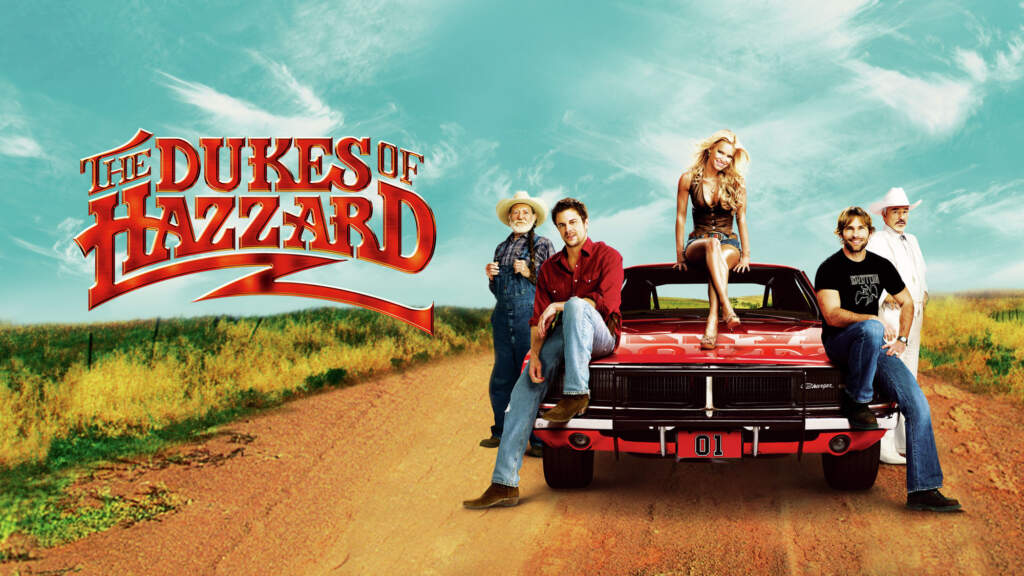
The question of whether Johnny Knoxville was capable of a conventional acting career separate from the Jackass context was answered reasonably definitively by the range of film work he pursued through the mid-2000s.
The Dukes of Hazzard (2005) — in which he played Luke Duke alongside Seann William Scott as Bo Duke — was a commercially successful adaptation of the classic television series that demonstrated his ability to anchor a major studio film in a traditional acting role. The film grossed $111 million worldwide — a genuine commercial success that established him as a viable leading man rather than simply a stunt performer.
| Acting Credits Beyond Jackass | Year | Film | Role |
|---|---|---|---|
| Men in Black II | 2002 | Film | Cameo |
| Walking Tall | 2004 | Film | Supporting role |
| The Dukes of Hazzard | 2005 | Film | Luke Duke |
| Lords of Dogtown | 2005 | Film | Topper Burks |
| The Ringer | 2005 | Film | Lead |
| Failure to Launch | 2006 | Film | Supporting |
| Action Point | 2018 | Film | Lead — stunt-based |
| Easter Sunday | 2022 | Film | Supporting |
The range of the acting work — from broad comedy to action to character roles — reflects a genuine versatility that his Jackass reputation tends to overshadow. He is, by the accounts of directors who have worked with him, a technically capable and professionally committed actor whose on-set behaviour is considerably more disciplined than his public persona might suggest.
Bad Grandpa (2013): The Oscar-Nominated Surprise
Jackass Presents: Bad Grandpa (2013) is the most formally ambitious and critically successful project that emerged from the Jackass universe — and its Academy Award nomination remains one of the more surprising entries in Oscar history.
The film followed Irving Zisman — a Knoxville character in old-age makeup and prosthetics — as he travels across America with his young grandson, interacting with real, unsuspecting members of the public in hidden camera sequences. The combination of elaborate practical makeup, committed character performance, and genuine human reactions from unknowing participants produced something that felt simultaneously like a Jackass production and like a genuine film.
| Bad Grandpa (2013) | Details |
|---|---|
| Director | Jeff Tremaine |
| Format | Hidden camera; real public interactions |
| Makeup | Elaborate old-age prosthetics |
| Box Office | $151 million worldwide on $15 million budget |
| Oscar Nomination | Best Makeup and Hairstyling |
| Character | Irving Zisman — recurring Knoxville character |
| Co-Star | Jackson Nicoll as Billy |
The Oscar nomination for Best Makeup and Hairstyling was entirely legitimate — the prosthetic work that transformed Knoxville into Irving Zisman was technically extraordinary. But the nomination also drew attention to the film’s genuine creative ambition — the recognition that Bad Grandpa was doing something more sophisticated than a simple Jackass spinoff.
Knoxville’s commitment to the Irving Zisman character — performing in full old-age makeup in public spaces with real people reacting to him in real time — required a specific acting discipline that had nothing to do with physical courage and everything to do with improvisational skill and character consistency under genuinely unpredictable conditions.
Personal Life: Two Marriages and Three Children
Johnny Knoxville’s personal life has been lived with considerably more privacy than his professional one — a deliberate separation between the public spectacle of his work and the genuine domestic life he has built.
His first marriage to Melanie Lynn Cline lasted from 1995 to 2008 — spanning the entire launch and peak of the Jackass phenomenon — and produced his eldest child, daughter Madison Clapp. The marriage’s dissolution after thirteen years was not a dramatic public event — it was handled with a discretion that reflected the genuine respect both parties had for each other and for their daughter.
His relationship with Naomi Nelson — which began during the period following his first marriage’s end — developed into his second marriage in 2010 and has produced two children: son Rocko Akira Clapp (born 2009) and daughter Arlo Clapp (born 2011).
| Johnny Knoxville’s Family | Details |
|---|---|
| First Wife | Melanie Lynn Cline (m. 1995; div. 2008) |
| Daughter | Madison Clapp (b. 1996) |
| Second Wife | Naomi Nelson (m. 2010) |
| Son | Rocko Akira Clapp (b. 2009) |
| Daughter | Arlo Clapp (b. 2011) |
| Family Approach | Deliberately private; children protected from spotlight |
He has spoken about fatherhood with a warmth and seriousness that sits in interesting contrast to the public persona — describing the particular experience of being a parent whose professional life involves doing things that would horrify most parents to watch, and the conscious effort required to separate those worlds from each other.
The Cast Relationships: Brotherhood and Difficulty
The relationships between the Jackass cast members — built over two decades of shared physical extremity — represent one of the more genuine examples of male friendship in modern entertainment culture. These are men who have seen each other at their absolute worst, most vulnerable, and most ridiculous, across more than twenty years.
Steve-O’s battle with drug addiction — which became public and serious in the mid-2000s — was one of the most difficult chapters in the cast’s collective story. Knoxville has spoken about that period with evident pain — the experience of watching a friend destroy himself and the complicated question of how much intervention is possible from outside someone’s addiction. Steve-O’s eventual recovery and sobriety represented a genuine collective relief.
Bam Margera’s more recent and more public difficulties — involving substance abuse, mental health struggles, and legal complications — have been handled by the group with a mixture of concern and the firm boundaries that the Jackass Forever production imposed on his participation. The decision to remove Bam from aspects of the final film while he was still struggling generated controversy but reflected a genuine concern for his welfare rather than simple corporate calculation.
Ryan Dunn’s death in a car accident in June 2011 — at thirty-four — was the most devastating loss the group has experienced. Knoxville’s public grief at the time was unguarded and clearly genuine — the loss of a friend and collaborator of a decade’s standing, gone suddenly and without warning.
These relationships — with all their complications, grief, and genuine love — are the human core of what Jackass has always been. The stunts are the product. The friendships are the foundation.
Jackass Forever (2022): The Final Chapter
Jackass Forever (2022) arrived eleven years after Jackass 3D and functioned, for both the cast and the audience, as something more emotionally significant than a simple franchise continuation.
The original cast members were now in their forties and fifties — men whose bodies carried the cumulative evidence of twenty years of professional abuse and whose ability to do what they had once done was genuinely, visibly reduced. The film acknowledged this honestly — making the age and physical limitation part of the story rather than pretending it wasn’t happening.
New cast members were introduced — younger performers who brought fresh energy and served as a generational passing-of-the-torch that gave the film a poignancy beyond the immediate entertainment value.
The brain bleed Knoxville sustained during production — from a bull stunt — was not disclosed publicly until after filming was complete, which meant audiences watching the finished film didn’t know they were seeing the performance that effectively ended his active stunt career. In retrospect, that context adds weight to every scene he appears in.
His post-Forever public statements about retiring from stunts have been clear and consistent — he is done. The medical reality makes continuing impossible, and the personal reality — three children, a marriage, the ordinary obligations of a person who wants to be present and functional in their own life — makes it unnecessary.
Cultural Impact: What Jackass Changed
The cultural impact of Jackass operates on multiple levels that reward serious examination — even if serious examination of Jackass is itself a somewhat absurd proposition.
At the most direct level, Jackass invented a genre. The hidden camera prank show existed before Jackass, but the specific combination of physical stunt performance, genuine friendship dynamics, and complete commitment to consequence that Jackass embodied was genuinely new. Every stunt channel on YouTube, every influencer who builds an audience on physical extremity, every content creator whose brand is built around doing things to their own body — all of them are working in a territory that Jackass opened up.
| Jackass Cultural Impact | Details |
|---|---|
| Television | Changed what MTV and unscripted television could be |
| Internet/YouTube | Direct ancestor of stunt and prank content culture |
| Film | Demonstrated viability of documentary-format theatrical releases |
| Masculinity | Complex representation — vulnerability through physical extremity |
| Friendship | Genuine male emotional bonds made visible through shared experience |
| Academic Interest | Subject of serious cultural and media studies analysis |
The more interesting cultural argument about Jackass — made by several media scholars and cultural critics — concerns its representation of male vulnerability and emotion. These men express love for each other through shared physical extremity. The pain is the vocabulary of the affection. In a cultural environment where male emotional expression is frequently constrained, Jackass found a way to make deep friendship visible and genuine — even if the vehicle was a shopping trolley being launched off a ramp.
That reading is either profound or a significant overreach, depending on your perspective. But the fact that it’s a serious argument reflects something genuine about what Jackass was doing beneath the surface of what it appeared to be doing.
Johnny Knoxville Today
As of 2025, Johnny Knoxville is in his early fifties — post-stunts, post-Forever, and focused on the production and acting work that his physical condition now makes the appropriate professional direction.
He remains active in the entertainment industry — developing projects through his production infrastructure, taking acting roles that interest him, and maintaining the public presence that two decades of cultural significance generates without particular effort.
His social media engagement is characteristically warm and occasionally chaotic — reflecting the same personality that built the Jackass franchise without the physical consequences that the franchise’s live performances entailed. He is, by all available evidence, genuinely at peace with where he is — someone who did something extraordinary, paid the physical price for it honestly, and is now living the quieter life that the price purchased.
Legacy: The Artistry Behind the Chaos
Johnny Knoxville’s legacy is larger and more interesting than the simple “guy who got hurt for money” summary that his story is sometimes reduced to.
| Johnny Knoxville’s Legacy | Details |
|---|---|
| Jackass Franchise | $500 million+ in box office; cultural phenomenon |
| Genre Creation | Invented modern stunt/prank content format |
| Bad Grandpa | Oscar-nominated creative evolution of the format |
| Acting Career | Genuine range beyond stunt work |
| Cultural Impact | Direct ancestor of modern internet content culture |
| Human Story | Friendship, physical courage, and genuine consequence |
He arrived in Los Angeles from Tennessee with no connections, no training, and no money. He invented a format by testing tasers on himself in a parking lot. He turned that format into a franchise that grossed half a billion dollars. He sustained more physical damage than most people can imagine and kept going back. He made a film that got nominated for an Oscar.
None of that was supposed to happen. All of it happened anyway — through stubbornness, creativity, genuine physical courage, and the particular willingness to be ridiculous on camera that is itself a specific and undervalued form of artistic commitment.
Frequently Asked Questions
1. Who is Johnny Knoxville? Creator and star of the Jackass franchise, born Philip John Clapp Jr. in 1971 in Knoxville, Tennessee. Actor, stunt performer, and filmmaker with a career spanning over thirty years.
2. What is Johnny Knoxville’s real name? Philip John Clapp Jr. He adopted the stage name Johnny Knoxville after his hometown.
3. How did Jackass start? Knoxville pitched a piece to Big Brother magazine testing self-defence products on himself. The footage caught MTV’s attention and became the Jackass series in 2000.
4. How many times has Johnny Knoxville been injured? He has sustained 15+ concussions, multiple broken bones, a brain bleed, and numerous other injuries across his career.
5. Is Johnny Knoxville retired from stunts? Yes — following a brain bleed sustained during Jackass Forever (2022), he has publicly stated he is done with active stunt work.
6. How many children does Johnny Knoxville have? Three — Madison (with first wife Melanie Cline), and Rocko and Arlo (with wife Naomi Nelson).
7. What was Bad Grandpa? A 2013 hidden camera film featuring Knoxville as elderly character Irving Zisman. It grossed $151 million and received an Oscar nomination for Best Makeup.
8. What is Johnny Knoxville doing now? Focused on acting and producing following his retirement from stunt work after Jackass Forever.
Conclusion: The Man Who Made It Look Worth It
Philip John Clapp Jr. left Knoxville, Tennessee, for Los Angeles with an acting dream and the kind of stubborn Tennessee determination that doesn’t process the word no particularly well. The acting career he imagined didn’t materialise. So he invented something else — something nobody had thought to invent, in a format nobody had tried, with a group of friends who were collectively willing to do things to their bodies that most human beings’ survival instincts make impossible.
He got hit by bulls. He got tasered. He got launched off things. He got back up, cleaned up, and went back to work.
And somewhere in the middle of all of that physical chaos, he made real films, gave real performances, built real friendships, raised three children, and created a cultural phenomenon that shaped how an entire generation thinks about entertainment, courage, and what you’re willing to do for the people you love.
The stunts were the surface. The friendship was the point. The legacy is both.
Not bad for a guy from Knoxville who couldn’t get an acting job.