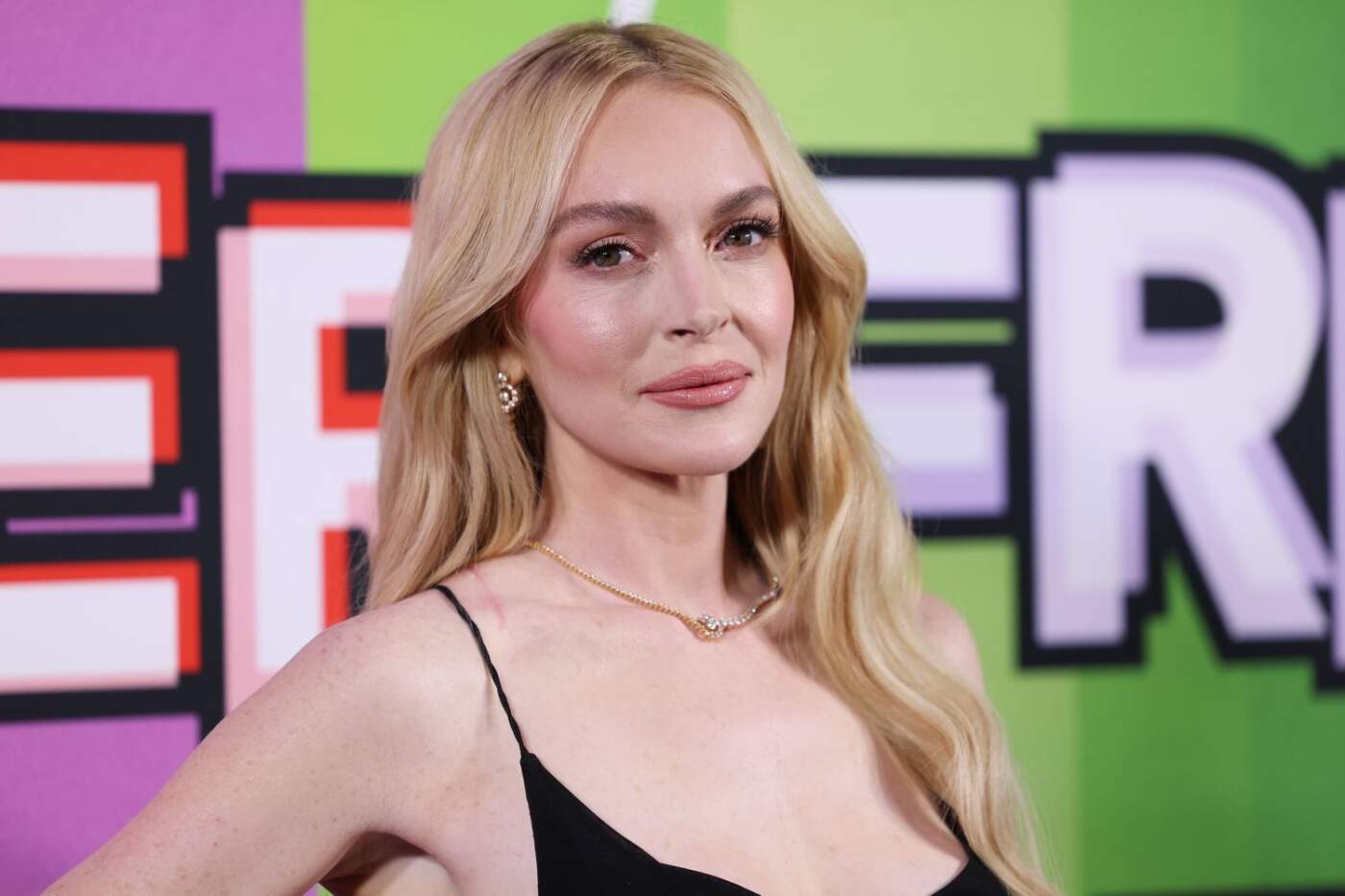

There is a particular kind of public story that American culture constructs around young women who flame out in spectacular fashion — a narrative that is simultaneously sympathetic and punishing, that documents the descent with the same breathless attention it gave the ascent, and that rarely leaves room for the possibility of genuine recovery. Lindsay Lohan has lived inside that narrative for two decades. What makes her story genuinely interesting — more interesting than the tabloid version that most people carry — is what happened after. The marriage. The son. The Netflix films that millions of people watched. The quiet, private rebuilding of a life that the public had essentially written off. The comeback nobody predicted has turned out to be the most compelling chapter of all.
For readers looking for a quick answer — Lindsay Dee Lohan is an American actress, singer, and businesswoman born on July 2, 1986, in New York City. She is best known for her roles in The Parent Trap (1998), Freaky Friday (2003), and Mean Girls (2004) — films that made her one of the most celebrated young actresses of her generation. A period of well-documented personal difficulty through the late 2000s and early 2010s significantly disrupted her career. She has since staged a genuine Hollywood comeback through Netflix films beginning in 2022, is married to Bader Shammas, and has a son named Luai Shammas born in 2023.
Quick Facts
| Field | Details |
|---|---|
| Full Name | Lindsay Dee Lohan |
| Born | July 2, 1986 |
| Birthplace | New York City, New York, USA |
| Nationality | American |
| Occupation | Actress, Singer, Businesswoman |
| Known For | Mean Girls; The Parent Trap; Freaky Friday |
| Spouse | Bader Shammas (m. 2022) |
| Children | Luai Shammas (born July 2023) |
| Active Years | 1989 – Present |
| Current Base | Dubai, UAE |
| Netflix Films | Falling for Christmas (2022); Irish Wish (2024); Our Little Secret (2024) |
Early Life: New York, Family and the Camera
Lindsay Dee Lohan was born on July 2, 1986, in New York City — specifically on Long Island — into a family whose dynamics would eventually become as much a part of her public story as any film she made.
Her father Michael Lohan was a Wall Street trader whose personal life was marked by legal troubles, substance issues, and the particular brand of chaotic public behaviour that would later make him a fixture in tabloid coverage of his daughter’s difficulties. Her mother Dina Lohan managed Lindsay’s career from its earliest stages — a role that generated its own ongoing controversy about the appropriateness of the parenting decisions involved.
The household Lindsay grew up in was volatile. Her parents’ relationship was marked by conflict and eventually divorce — a domestic instability that she experienced from early childhood and that almost certainly contributed to the vulnerability she showed when the pressures of fame became overwhelming in her late teens.
She began modelling at age three — discovered by a Ford Models talent scout — and was working professionally in commercials and print campaigns before she was old enough to start school. The early entry into professional performance was not unusual for New York families in the entertainment industry, but it meant that Lindsay’s identity was shaped by professional expectation and public presentation from the very beginning of her conscious life.
By the time she was a teenager, she had never known a version of herself that wasn’t a public product. That absence of private identity — of a self that existed separately from performance and audience approval — would later prove to be one of the most significant vulnerabilities in her story.
Child Acting: Building the Foundation
Before Disney, before Mean Girls, before any of the fame that the public eventually associated with her name, Lindsay Lohan was building a child acting career through the ordinary channels of the New York entertainment world.
She appeared in commercials for major brands — developing the on-camera ease and natural charisma that would later make her transition to feature films seem effortless. In 1996, she joined the cast of the daytime soap opera Another World — her first significant acting credit and her introduction to the discipline of professional television production.
The soap opera work gave her something that child performers often lack — genuine professional experience in a demanding, schedule-driven production environment. Soap operas move fast. Scripts are long. The margin for error is small. Learning to work in that environment at ten years old built a professional foundation that informed everything she did subsequently.
Her natural ability was immediately visible to everyone who worked with her. She had the specific quality that separates actors from performers — the ability to make you believe she is feeling something rather than demonstrating that she is feeling something. In a child actor, that quality is genuinely rare.
The Parent Trap (1998): A Child Actor’s Technical Marvel
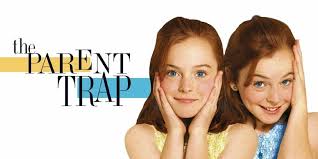
The Parent Trap (1998) — directed by Nancy Meyers — was the film that introduced Lindsay Lohan to a global audience and immediately established her as one of the most naturally gifted child actors working in Hollywood.
The technical challenge of the role was extraordinary for a twelve-year-old. She played twins — Annie James and Hallie Parker — who had been separated at birth and meet at summer camp, each discovering they have a twin sister they never knew existed. Playing two distinct characters in a single film requires an actor to maintain clear differentiation between the personalities while sharing screen space with themselves through split-screen and double photography.
Lindsay did it with a complete mastery that left her co-stars and director consistently impressed.
| The Parent Trap (1998) | Details |
|---|---|
| Director | Nancy Meyers |
| Co-Stars | Dennis Quaid, Natasha Richardson, Elaine Hendrix |
| Lindsay’s Roles | Annie James AND Hallie Parker — both twins |
| Technical Challenge | Split-screen work; distinct character differentiation |
| Box Office | $92 million worldwide on $15 million budget |
| Critical Reception | Praised specifically for Lindsay’s dual performance |
| Lindsay’s Age | 11 during filming |
| Legacy | Established her as major child acting talent |
Working alongside Natasha Richardson — a classically trained British actress of significant reputation — and Dennis Quaid, Lindsay held her own completely. Richardson, who died tragically in 2009, spoke warmly about Lindsay’s ability in interviews — the specific generosity of praise from a serious theatrical actress that carries particular weight.
The film grossed $92 million worldwide and was both a critical and commercial success. For a film built almost entirely around the performance of a single eleven-year-old playing two roles, that success was a direct reflection of what Lindsay Lohan brought to it.
The Disney Era: Freaky Friday and Beyond
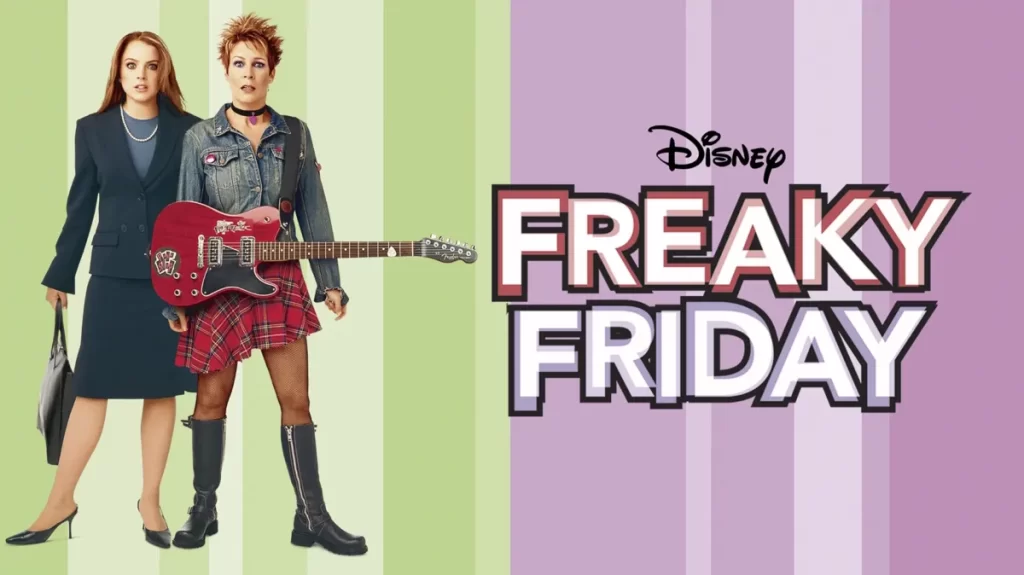
The Disney years that followed The Parent Trap consolidated Lindsay’s position as one of the most commercially reliable young actresses in Hollywood — a string of films that built her audience and developed her range while keeping her within the safety of the family entertainment framework.
Freaky Friday (2003) — in which she starred opposite Jamie Lee Curtis in a body-swap comedy — was the most significant of these. The film required her to play a version of Jamie Lee Curtis’s adult character inhabiting her teenage body — a performance that demanded physical comedy, character mimicry, and the kind of comedic intelligence that is genuinely difficult to teach.
| Freaky Friday (2003) | Details |
|---|---|
| Director | Mark Waters |
| Co-Star | Jamie Lee Curtis |
| Premise | Mother and daughter swap bodies |
| Box Office | $160 million worldwide on $26 million budget |
| Critical Reception | Strongly positive; both leads praised |
| Significance | Confirmed her as viable lead beyond child roles |
| Jamie Lee Curtis | Described Lindsay as exceptionally talented co-star |
The film’s commercial success — $160 million worldwide — confirmed that her audience had grown with her and that the transition from child star to teenage leading actress was proceeding more smoothly than it does for most performers who make that particular journey.
Confessions of a Teenage Drama Queen (2004) followed — a less successful film that nonetheless demonstrated her continued commercial viability and her natural affinity for the specific register of heightened teenage comedy that would reach its fullest expression in what came next.
Mean Girls (2004): The Role That Defined a Generation
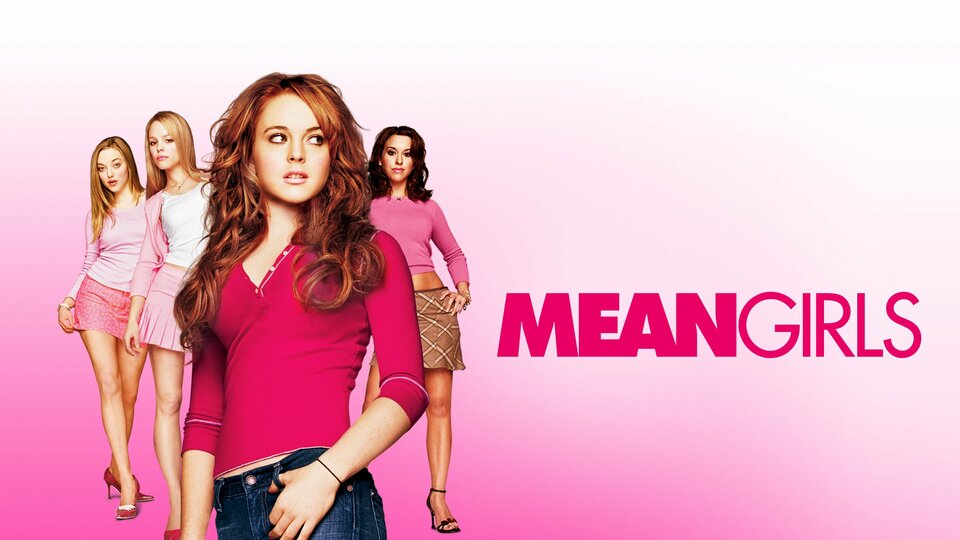
Mean Girls (2004) is, by any honest measure, one of the most culturally significant teen films ever made — a movie that has only grown in cultural stature in the two decades since its release and that has now spawned a Broadway musical and a 2024 film adaptation that demonstrates the endurance of its original vision.
Written by Tina Fey — based on Rosalind Wiseman’s non-fiction book Queen Bees and Wannabes — the film examined the social ecosystem of an American high school with a satirical intelligence that went considerably deeper than the genre typically attempted. Lindsay played Cady Heron — a girl raised in Africa by academic parents who navigates the treacherous social landscape of a suburban American high school.
| Mean Girls (2004) | Details |
|---|---|
| Director | Mark Waters |
| Writer | Tina Fey |
| Lindsay’s Role | Cady Heron |
| Co-Stars | Rachel McAdams, Tina Fey, Amanda Seyfried, Lacey Chabert |
| Budget | $17 million |
| Box Office | $130 million worldwide |
| Critical Reception | Strongly positive; Tina Fey’s script universally praised |
| Cultural Legacy | Quotes, memes, Broadway musical, 2024 film remake |
| “Fetch” Status | Multiple lines entered permanent cultural vocabulary |
The film’s ensemble — Rachel McAdams as Regina George, Amanda Seyfried as Karen Smith, Lacey Chabert as Gretchen Wieners — is one of the most precisely calibrated comic casts of its era. But Lindsay is the centre that the film rotates around, and her performance — moving from genuine outsider to corrupted insider and back — provides the emotional through-line that gives Tina Fey’s satire its human dimension.
Lines from Mean Girls — “On Wednesdays we wear pink,” “You can’t sit with us,” “So fetch” — entered the permanent vocabulary of a generation and remain in active circulation twenty years later. The film’s Broadway adaptation and the 2024 film of that musical confirm that what Mean Girls captured about female social dynamics and high school hierarchy has not dated — it has, if anything, become more recognisable with time.
For Lindsay Lohan, the film represented the absolute peak of her early career — the role she was born to play, in the film she was best positioned to make, at the exact moment when her talent and her public profile were perfectly aligned.
What followed was not more of the same.
The Music Career: A Genuine Parallel Path
Alongside her film work, Lindsay built a genuine music career during her peak years — one that is often overlooked in the broader narrative but that reflected real musical ambition rather than simple celebrity product placement.
Her debut album Speak (2004) — released simultaneously with Mean Girls — was received more positively than most celebrity debut albums, with critics acknowledging that her vocal ability was genuine and that the material, while pop-oriented, was crafted with more care than the genre minimum.
| Lindsay Lohan Discography | Year | Album | Chart Performance |
|---|---|---|---|
| Speak | 2004 | Debut | #4 US Billboard 200 |
| A Little More Personal (Raw) | 2005 | Second album | #20 US Billboard 200 |
| Bossy | 2008 | Single only | Limited release |
The #4 US Billboard 200 debut for Speak was a genuine commercial result that reflected real audience interest rather than simply celebrity curiosity. The single “Rumors” — which addressed the tabloid attention she was already attracting — demonstrated a self-awareness and lyrical directness that surprised critics expecting something more superficial.
The music career didn’t sustain — partly because the film career was always more central to her identity and partly because the personal difficulties that began disrupting her life in 2006 affected every professional dimension simultaneously.
Peak Fame: 2004–2006
The period between Mean Girls in 2004 and Just My Luck in 2006 represents the absolute peak of Lindsay Lohan’s cultural prominence — a moment when she was simultaneously one of the most commercially successful young actresses in Hollywood and one of the most talked-about young women in American media.
Herbie: Fully Loaded (2005) — in which she starred in a Disney revival of the classic Herbie franchise — grossed $144 million worldwide and confirmed that her box office appeal extended beyond the teen comedy genre. She was twenty years old and appearing on the cover of virtually every major magazine in America.
The public appetite for Lindsay Lohan content — films, music, red carpet appearances, magazine profiles — was essentially limitless during this period. She was the young actress that everyone wanted to watch.
What the public couldn’t see — or perhaps didn’t want to see clearly enough to act on — was that the pressure, the pace, the absence of genuine protective adult figures, and the particular vulnerabilities of someone who had been a professional performer since the age of three were combining into something that was going to eventually demand a very heavy price.
The Downfall: 2006–2009
The public documentation of Lindsay Lohan’s personal difficulties through the late 2000s was so extensive and so merciless that it became its own cultural event — a sustained tabloid narrative that generated enormous media traffic while doing genuine damage to a real human being who was clearly struggling.
The specifics are documented and do not require extensive elaboration here. What matters for understanding her story is the pattern rather than the individual incidents.
| Legal and Personal Timeline | Year | Incident |
|---|---|---|
| First DUI arrest | May 2007 | Los Angeles |
| Cocaine possession | May 2007 | Same incident as DUI |
| First rehab stint | 2007 | Wonderland Centre |
| Second DUI arrest | July 2007 | Santa Monica |
| Second rehab stint | 2007 | Promises Malibu |
| Probation violations | 2010–2011 | Multiple incidents |
| Jail sentences | 2010–2011 | Multiple short sentences |
| House arrest | 2011 | Multiple periods |
| Final major legal issue | 2012 | Probation resolved |
Two DUI arrests in the same summer. Cocaine possession charges. Multiple rehab stays. Court appearances that generated the kind of media coverage that a film premiere would envy. The combination of genuine personal difficulty and the relentless public documentation of that difficulty created a feedback loop that made recovery considerably harder than it would otherwise have been.
The entertainment industry’s response was swift and financially rational — she became effectively uninsurable for major productions. Films she was attached to fell through. Directors who had wanted to work with her found their financing contingent on her not being involved. The career that had been generating hundreds of millions of dollars in box office essentially stopped.
Her Parents: The Adults Who Weren’t
Any honest accounting of what happened to Lindsay Lohan in her late teens and early twenties requires honest engagement with the role her parents played — not to assign blame in a simple or reductive way, but because the absence of effective parental protection is a genuine part of the story.
Michael Lohan — her father — was himself in and out of legal difficulties throughout her childhood and repeatedly inserted himself into her public story in ways that generated media attention and emotional chaos rather than stability and support. His public statements about his daughter during her most difficult period were not those of someone prioritising her welfare.
Dina Lohan — her mother and manager — has been the subject of sustained criticism for the decisions made around Lindsay’s career from its earliest stages. The combination of parent and manager roles creates conflicts of interest that are difficult to navigate even with the best intentions, and the critical consensus is that the navigation was not always in Lindsay’s best interests.
Lindsay has spoken about her family with the complicated mixture of love and clear-eyed acknowledgment that characterises someone who has had to make peace with an imperfect history. She loves her parents. She also understands, as an adult, that the adults around her during the most vulnerable period of her life were not providing the protection she needed.
The child star system — which routinely places enormous financial and professional pressure on children and teenagers without adequate safeguards — is the broader structural context in which individual parental failures operate. Lindsay Lohan’s story is also a story about what that system does to the people inside it.
Attempted Comebacks: 2009–2013
The period between the peak of her legal difficulties and her eventual genuine comeback was marked by a series of projects that were either critically or commercially unsuccessful — films and television appearances that reflected the industry’s uncertainty about how to use her and her own uncertainty about how to rebuild.
Liz & Dick (2012) — a Lifetime television film in which she played Elizabeth Taylor — generated enormous advance interest and genuinely poor reviews. The mismatch between the casting ambition and the execution confirmed what the industry had feared — that the personal difficulties had affected her professional capabilities in ways that a single project couldn’t resolve.
The Canyons (2013) — directed by Paul Schrader from a script by Bret Easton Ellis — was a deliberately provocative independent film that attracted attention partly for its artistic ambition and partly for the on-set difficulties that were extensively documented in a New York Times Magazine piece. The film itself was a modest critical success but confirmed that comeback was going to require patience and the right circumstances rather than simply the right project.
Life in Europe and Dubai: The Necessary Distance
The turning point in Lindsay Lohan’s personal story was not a single event or decision but a gradual geographical and psychological shift — a move away from the environment that had been simultaneously the source of her success and the context of her difficulties.
She spent time in London — working on various projects, building a different kind of social life, and beginning the process of constructing a personal identity that wasn’t defined by the tabloid narrative that had become her primary public story in America.
Eventually she settled in Dubai — a city whose culture, distance from Hollywood, and specific social environment provided something she had never had as a working actress in America: genuine anonymity and the ability to build a private life outside of any pre-existing narrative.
The Dubai chapter is where the genuine personal rebuilding happened. Away from the Los Angeles party culture, away from the tabloid photographers, away from the people and places that had been part of the most difficult years — she built something new. A social circle based on genuine relationships rather than industry connections. A business — she opened a beach club in Mykonos, Greece — that gave her professional identity beyond acting. And eventually, a relationship.
Bader Shammas: The Relationship That Changed Everything
Bader Shammas is a Lebanese-American financier based in Dubai — a private, professionally accomplished individual whose world intersected with Lindsay’s through the social connections of the expatriate community she had joined.
Their relationship developed quietly and with a privacy that was itself remarkable given how extensively Lindsay’s previous personal life had been documented publicly. By the time their relationship became public knowledge, it was already established and serious.
| Bader Shammas and Lindsay | Details |
|---|---|
| Full Name | Bader Shammas |
| Nationality | Lebanese-American |
| Profession | Finance — Credit Suisse |
| Based | Dubai, UAE |
| Engagement | November 2021 |
| Wedding | July 2022 |
| Public Profile | Deliberately private |
| What He Represents | Stability; genuine partnership; private life |
They became engaged in November 2021 and married in July 2022 — a ceremony that was private and personal rather than a media event. The contrast with the tabloid scrutiny that had attended every aspect of Lindsay’s earlier life was complete and clearly intentional.
Bader Shammas is not a public figure who sought visibility through his relationship with a famous person. He is a private individual who built a relationship with someone whose famous past was not the reason he was interested in her. That distinction matters — and its effect on Lindsay’s stability and sense of self is visible in everything about her public persona since the marriage.
Luai Shammas: Motherhood as a New Chapter
In July 2023 — on her own birthday, July 2 — Lindsay and Bader welcomed their son Luai Shammas. The timing felt like a statement, even if it wasn’t intended as one — a new life beginning on the anniversary of her own.
Luai’s name is Arabic, reflecting his father’s Lebanese heritage and the bicultural identity that will shape his upbringing in Dubai.
Lindsay has spoken about motherhood with a warmth and grounded joy that reflects the most settled chapter of her personal life. The person discussing her son in interviews in 2023 and 2024 is recognisably different from the person the tabloids were documenting fifteen years earlier — calmer, more rooted, more clearly at peace with who she is and what she has.
That transformation is real. The evidence is in how she talks, how she carries herself, and what she chooses to make public.
The Netflix Comeback: Strategic and Successful
Netflix gave Lindsay Lohan her genuine Hollywood comeback — and the platform choice was strategically intelligent for both parties.
Netflix needed comfortable, nostalgic holiday content with recognisable faces. Lindsay needed a platform that could deliver her to a massive audience without the theatrical release scrutiny that a traditional film comeback would have generated. The match was close to perfect.
| Lindsay Lohan Netflix Films | Year | Film | Details |
|---|---|---|---|
| Falling for Christmas | 2022 | Holiday romantic comedy | 73 million viewing hours in first month |
| Irish Wish | 2024 | Romantic comedy | Ireland-set; strong viewership |
| Our Little Secret | 2024 | Holiday romantic comedy | Continued Netflix relationship |
Falling for Christmas (2022) — in which she played an amnesiac heiress who falls for a single father at a ski lodge — generated 73 million viewing hours in its first month on the platform. That figure is not a courtesy statistic. It reflects genuine, widespread audience engagement from people who were actively happy to see Lindsay Lohan back on screen.
The critical response was warm without being effusive — the films are comfortable, enjoyable romantic comedies rather than ambitious artistic statements, and they were received as exactly that. What mattered was that she was good in them — present, charming, and clearly enjoying herself — and that the audience responded to her with genuine affection.
The Netflix comeback didn’t require Lindsay to pretend the difficult years didn’t happen. It simply gave her a space to demonstrate that they were over.
Mean Girls Legacy: The Franchise That Kept Going
While Lindsay was rebuilding her personal life, the film that represented the peak of her early career was building a legacy that extended far beyond its original theatrical run.
The Mean Girls Broadway musical — which opened in 2018 and ran until 2024 — confirmed that Tina Fey’s original vision had genuine theatrical depth. The 2024 film adaptation of the musical — featuring a new cast — was another demonstration that the material’s cultural resonance showed no signs of diminishing.
Lindsay’s relationship with the Mean Girls legacy has been warm and generous — she has engaged with its continued cultural life with the affection of someone who understands what it meant and means, rather than the bitterness of someone who feels left behind by it.
Her cameo history and engagement with the Mean Girls community reflects a peace with her own past that is one of the more moving aspects of her recent public persona.
Lindsay Lohan Today
As of 2025, Lindsay Lohan is living in Dubai with her husband and son — a private, family-centred life that is about as different from the Los Angeles years as it is possible to get while remaining within the same career.
She continues her relationship with Netflix — with additional projects reportedly in development that suggest the platform’s confidence in her commercial viability is ongoing. She is, by every available measure, in the most personally stable and professionally functional period of her adult life.
Her social media presence is warm and carefully curated — sharing family moments, professional updates, and the occasional glimpse of the Dubai life that represents the world she has built. It is the social media of someone who is genuinely content rather than performing contentment for an audience.
Legacy: More Than the Tabloid Version
Lindsay Lohan’s legacy is complicated in exactly the ways that genuinely human stories are complicated — containing extraordinary early talent, a period of genuine difficulty, systemic failures by the adults and institutions responsible for protecting her, and a recovery that is as real as the difficulty that preceded it.
| Lindsay Lohan’s Legacy | Details |
|---|---|
| The Parent Trap | One of the great child acting performances |
| Mean Girls | Permanent place in cultural history |
| Music Career | Genuine commercial success often overlooked |
| Child Star System | Her story a case study in its failures |
| Netflix Comeback | Demonstrated genuine audience loyalty |
| Personal Recovery | Marriage, motherhood, stability — the real second act |
| Cultural Staying Power | Mean Girls legacy ensures permanent relevance |
The Mean Girls legacy alone ensures that Lindsay Lohan will be part of the cultural conversation for as long as people talk about the films of the early 2000s. But the more interesting legacy is the personal one — the story of someone who went through the worst that public life can offer a young woman and came out the other side with a marriage, a son, a renewed career, and a clearly genuine sense of who she is and what she wants.
Why Lindsay Lohan’s Story Matters
Lindsay Lohan’s story matters for reasons that extend beyond the entertainment industry.
It is a story about what happens when a child is placed in a professional environment without adequate protection and what the long-term consequences of that placement can be. It is a story about the specific cruelty of a media culture that documents the suffering of young women with the same appetite it brings to their success. It is a story about the systemic failures of an entertainment industry that profits enormously from child performers without taking adequate responsibility for their welfare.
It is also a story about recovery — about the possibility of genuine rebuilding after genuine damage, about the role that distance and privacy and stable relationships play in making that rebuilding possible, and about the resilience that is itself a form of talent.
The comeback nobody predicted is the part of the story worth paying the most attention to.
Frequently Asked Questions
1. Who is Lindsay Lohan? American actress born in 1986, best known for Mean Girls, The Parent Trap, and Freaky Friday. Currently staging a comeback through Netflix films after a well-documented period of personal difficulty.
2. What is Lindsay Lohan doing now? Living in Dubai with husband Bader Shammas and son Luai. Continuing her Netflix film career with multiple projects released and in development.
3. Who did Lindsay Lohan marry? She married Bader Shammas — a Lebanese-American financier — in July 2022 in a private ceremony.
4. Does Lindsay Lohan have children? Yes — son Luai Shammas, born July 2023.
5. What Netflix films has Lindsay Lohan made? Falling for Christmas (2022), Irish Wish (2024), and Our Little Secret (2024) — all romantic comedies that have performed strongly on the platform.
6. What happened to Lindsay Lohan’s career? Multiple DUI arrests and personal difficulties from 2007 onward made her effectively uninsurable for major productions. She rebuilt her life in Dubai before returning to film through Netflix.
7. Is Mean Girls connected to Lindsay Lohan still? Yes — the 2004 film she starred in has spawned a Broadway musical and a 2024 film adaptation. It remains one of the most culturally enduring teen films ever made.
8. How old was Lindsay Lohan in The Parent Trap? She was 11 years old during filming — playing both twins through split-screen and double photography techniques.
Conclusion: The Comeback Is the Story
Lindsay Lohan was eleven years old when she played twins in The Parent Trap and made Hollywood pay attention. She was seventeen when Mean Girls made her one of the most celebrated young actresses of her generation. She was twenty-three when the tabloid version of her story reached its lowest point and the entertainment industry essentially walked away.
She was thirty-five when she married a man who loved her for who she was rather than what she had been. She was thirty-six when Netflix gave her the platform to remind a global audience that she was always better than the tabloid version suggested. She was thirty-seven when her son was born.
The woman who exists now — in Dubai, with her family, with her renewed career, with the settled personal identity that the difficult years eventually produced — is the most interesting version of Lindsay Lohan’s story. Not the child star. Not the tabloid disaster. The person who rebuilt.
That person deserved a second chance. And the audience, it turned out, was ready to give her one.