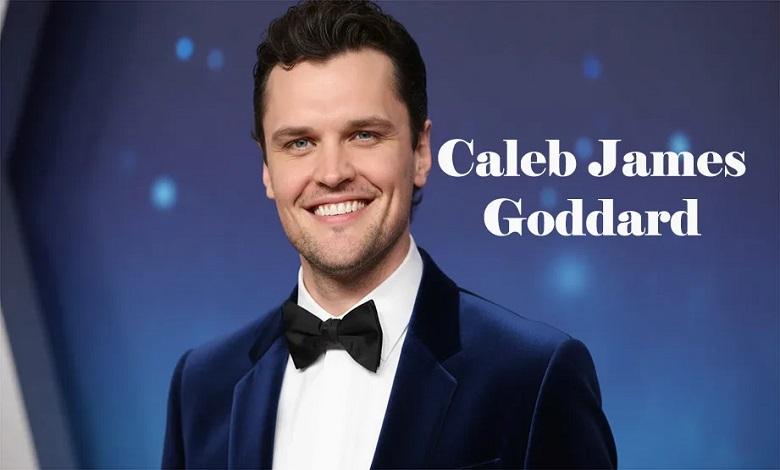

Some stories about famous families begin with inheritance — the wealth, the connections, the reflected light of a famous name opening doors that remain closed to everyone else. Caleb James Goddard’s story begins with the opposite. His biological father — one of the most celebrated actors in Hollywood history — spent years denying he existed. His surname came not from Nicholson but from a television actor who married his mother and gave the boy a name before that marriage too ended. And yet from that beginning — denied, renamed, raised by a single mother who fought for him publicly while Hollywood’s most famous bachelor pretended he wasn’t his — Caleb James Goddard built one of the more genuinely impressive careers in this entire story. Georgetown University. London School of Economics. CNN. Bloomberg TV Asia. Yahoo’s first live internet news broadcast. The United States Foreign Service. He did all of it without Jack Nicholson’s help, and largely in spite of Jack Nicholson’s absence.
For readers looking for a quick answer — Caleb James Goddard is an American journalist, broadcaster, and diplomat born on September 26, 1970, in Los Angeles, California. He is the biological son of legendary Hollywood actor Jack Nicholson and actress Susan Anspach — a paternity that Jack denied for years before eventually acknowledging. He was raised by his mother and took the surname of his stepfather Mark Goddard — the Lost in Space actor who married Susan Anspach in 1970. Caleb graduated from Georgetown University (1992) and the London School of Economics, built a significant career in broadcast journalism at CNN and Bloomberg TV Asia, and joined the US State Department as a Foreign Service Officer in 2012.
Quick Facts
| Field | Details |
|---|---|
| Full Name | Caleb James Goddard |
| Born | September 26, 1970 |
| Birthplace | Los Angeles, California, USA |
| Nationality | American |
| Known For | Son of Jack Nicholson and Susan Anspach |
| Biological Father | Jack Nicholson — three-time Oscar winner |
| Mother | Susan Anspach — actress (1942–2018) |
| Stepfather | Mark Goddard — Lost in Space actor |
| Spouse | Karine Pouget |
| Children | Two — son and daughter |
| Education | Georgetown University (1992); London School of Economics |
| Career | CNN; Bloomberg TV Asia; Yahoo; US Foreign Service (2012) |
Early Life: The Circumstances of His Birth
Caleb James Goddard was born on September 26, 1970, in Los Angeles, California — and the circumstances of his birth are inseparable from the film that connected his parents and the long dispute about his origins that would define a significant portion of his early life.
His mother Susan Anspach and his biological father Jack Nicholson met on the set of Five Easy Pieces (1970) — one of the landmark films of New Hollywood, directed by Bob Rafelson, in which Nicholson played Bobby Dupea in a performance that earned him his first Academy Award nomination for Best Actor. Susan played Rayette Dipesto’s counterpart in a different dimension of the film’s emotional landscape — and whatever happened between the two actors on and around that set resulted in Caleb’s conception.
The relationship between Susan and Jack was not a sustained romantic partnership. It was a brief connection between two working actors on a film set — the kind of connection that the Hollywood environment of the late 1960s and early 1970s produced with some regularity and that rarely resulted in the kind of acknowledged, supported pregnancy that Caleb’s birth required.
When Susan became pregnant and Caleb was born, Jack Nicholson’s response was to deny paternity entirely.
His Biological Father: Jack Nicholson
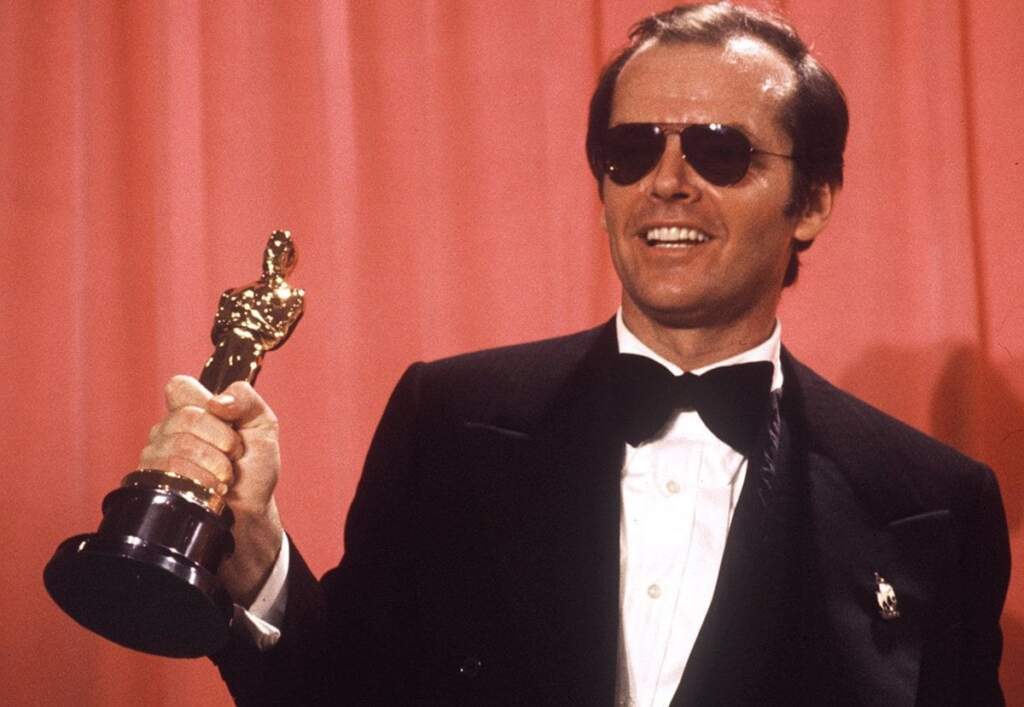
Jack Nicholson is, by virtually any measure, one of the greatest actors in the history of American cinema — a performer whose combination of technical brilliance, charismatic screen presence, and willingness to inhabit the most complex and dangerous dimensions of human character has produced a filmography that is essentially without rival in its range and quality.
Born John Joseph Nicholson on April 22, 1937, in Neptune City, New Jersey — and raised in a family situation that itself involved a significant paternity complication, as he did not learn until adulthood that the woman he believed was his sister was actually his mother — Jack Nicholson’s relationship with unconventional family structures runs deeply through his personal history.
| Jack Nicholson — Career Highlights | Details |
|---|---|
| Full Name | John Joseph Nicholson |
| Born | April 22, 1937 — Neptune City, New Jersey |
| Oscar Wins | Three — Best Actor: One Flew Over the Cuckoo’s Nest (1975), As Good as It Gets (1997); Best Supporting Actor: Terms of Endearment (1983) |
| Oscar Nominations | 12 total — most nominated male actor in history |
| Iconic Films | The Shining; Chinatown; Batman; A Few Good Men; The Departed |
| Cultural Status | One of Hollywood’s most celebrated figures |
| Personal Life | Never married; multiple children with multiple women |
| Known For | The smile; counterculture icon; basketball courtside presence |
His three Academy Awards — more than any other male actor in history — across a career spanning from the early 1960s to the 2000s represent a level of sustained critical recognition that very few performers in any medium have achieved.
His personal life — characterised by relationships with numerous women, multiple children, and a deliberate avoidance of marriage after his first — created the complicated family landscape that Caleb was born into and that would take years to navigate toward any kind of resolution.
His Mother: Susan Anspach
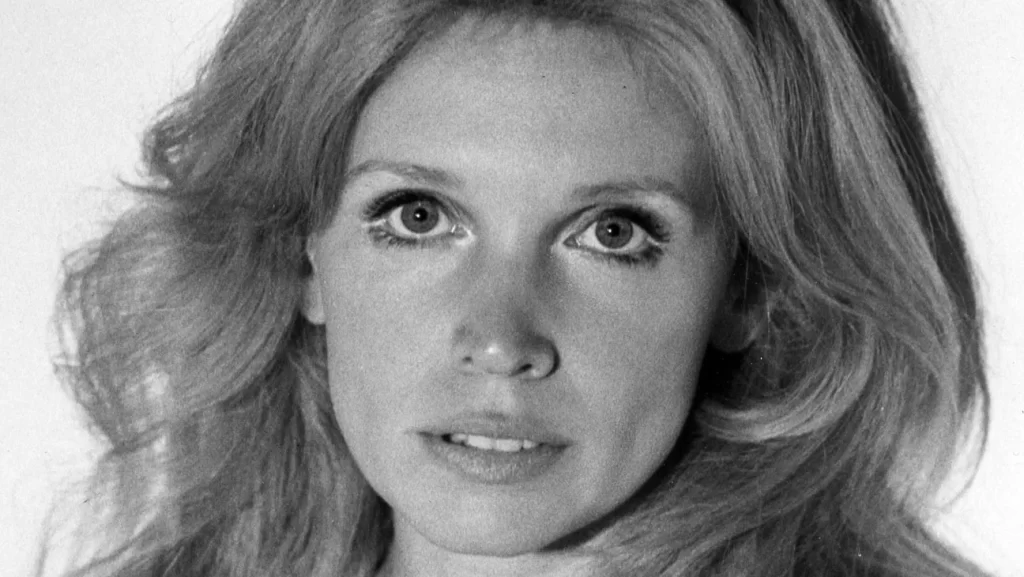
Susan Anspach was a genuine actress of the New Hollywood era — not a supporting player or a peripheral figure, but a working professional whose career produced real and respected work before the complications of her dispute with Jack Nicholson complicated both her professional trajectory and her personal life.
Born on November 23, 1942, in New York City, she trained seriously as an actress and built a career through stage work and film in the late 1960s and 1970s that earned her genuine critical respect.
| Susan Anspach — Career Highlights | Details |
|---|---|
| Full Name | Susan Anspach |
| Born | November 23, 1942 — New York City |
| Died | April 2, 2018 — Los Angeles (heart failure, age 75) |
| Notable Films | Five Easy Pieces (1970); Blume in Love (1973); Play It Again, Sam (1972) |
| Five Easy Pieces | Where she met Jack Nicholson |
| Stage Work | Respected theatrical career in New York |
| Post-Nicholson | Career affected by public dispute; continued working |
| As a Mother | Fought publicly for Caleb’s paternity recognition |
| Legacy | Fierce advocate for her son; respected actress |
Five Easy Pieces (1970) and Blume in Love (1973) represent the peaks of her film work — both serious, critically regarded films from the New Hollywood period that demonstrated her genuine ability. Play It Again, Sam (1972) — with Woody Allen — showed her comic range.
What defines her legacy as much as any film, however, is the fierceness with which she fought for her son’s recognition — publicly disputing Jack Nicholson’s paternity denial for years, refusing to be silenced by the considerable power differential between a struggling actress and one of Hollywood’s most powerful stars, and raising Caleb with the love and the values that the eventual evidence of his adult life reflects.
She died on April 2, 2018 from heart failure at the age of 75 — and Caleb’s response to her death was one of the rare public moments in his otherwise private life, as he directed people on social media to Amnesty International in her honour — a tribute that reflected both his grief and the values they shared.
Mark Goddard: The Man Who Gave Him a Name
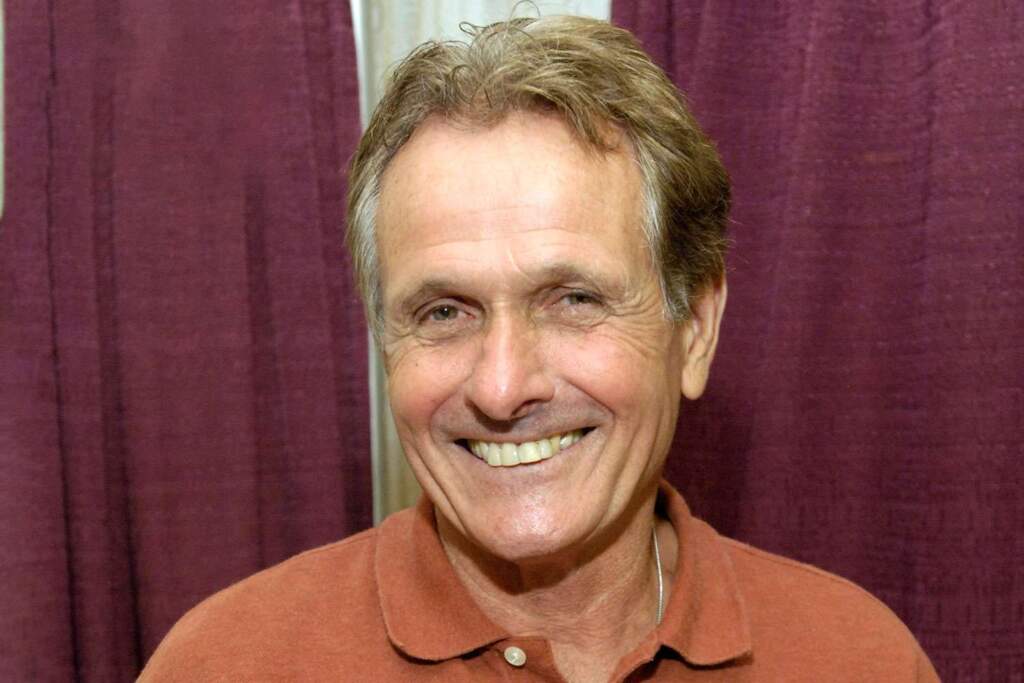
Mark Goddard is best known to the general public as Don West in the original Lost in Space television series — the 1960s science fiction programme whose cultural footprint has remained surprisingly durable across six decades.
Born Charles Harvey Goddard on July 24, 1936, in Scituate, Massachusetts, he built a television career that extended well beyond Lost in Space while that show remained the primary cultural reference for his name recognition.
| Mark Goddard | Details |
|---|---|
| Full Name | Charles Harvey Goddard |
| Born | July 24, 1936 — Scituate, Massachusetts |
| Known For | Don West in Lost in Space (1965–1968) |
| Marriage to Susan | 1970–1977 |
| Role in Caleb’s Life | Adopted Caleb; provided surname Goddard |
| Significance | The stable male presence of Caleb’s early childhood |
| Post-Divorce | Maintained cordial relationship; kept surname for Caleb |
His marriage to Susan Anspach in 1970 — the same year Caleb was born — provided the immediate context in which Caleb’s early life was structured. Mark adopted Caleb and gave him the Goddard surname — the name Caleb has carried throughout his professional life and that represents the most visible legacy of a stepfather whose presence, however brief the marriage, provided something genuinely important.
The marriage lasted until 1977 — ending when Caleb was six or seven years old — but the surname endured. Caleb has never sought to change it to Nicholson, which is itself a statement about where he locates his sense of identity and what he values about the name he carries.
The Paternity Battle: Years of Denial
The dispute between Susan Anspach and Jack Nicholson over Caleb’s paternity is one of Hollywood’s less glamorous stories — a years-long public disagreement in which one of the industry’s most powerful figures denied the existence of a child while the child’s mother fought to establish the truth.
Jack Nicholson’s initial and sustained denial of paternity placed Susan in the specific and difficult position of being a single mother making claims against a man whose wealth, connections, and public profile gave him significant structural advantages in any dispute — formal or informal.
She did not back down. She spoke publicly about the paternity in multiple interviews across years — maintaining consistently that Jack was Caleb’s biological father and refusing to allow the denial to go unchallenged.
| Paternity Timeline | Year | Event |
|---|---|---|
| Five Easy Pieces filming | 1970 | Jack and Susan’s connection |
| Caleb born | September 26, 1970 | Jack denies paternity |
| Years of dispute | 1970s–1980s | Susan speaks publicly; Jack denies |
| First acknowledgment | Mid-1980s | Jack calls Caleb “son” by phone |
| Georgetown tuition | 1988–1992 | Jack pays university fees |
| Public acknowledgment | Gradual | Never fully formal |
The moment of first acknowledgment — described in accounts of the family history — came through a phone call in which Jack referred to Caleb as “son” for the first time. It was not a dramatic reconciliation scene. It was a phone call. But it was enough to begin the process of establishing the relationship that would eventually lead to Jack paying Caleb’s Georgetown University tuition — an acknowledgment through financial support that carried its own kind of statement even without being accompanied by a formal public admission.
The emotional cost of growing up as a denied child — of being the son of one of the world’s most famous men who nevertheless chose not to acknowledge you for years — is not something that resolves through a phone call or a tuition payment. It is the kind of formative experience that shapes a person’s character and choices across an entire lifetime.
In Caleb’s case, it appears to have produced someone who understood very clearly that he could rely on no one’s name but his own and that the only identity worth having was one he built himself.
Growing Up: Two Fathers, Complicated Presence
The family structure that Caleb grew up in — biological father absent and denying, stepfather present but eventually departing through divorce, mother fiercely present and publicly fighting — created a specific psychological landscape that required genuine resilience to navigate.
Susan was the constant — the parent who claimed him completely, who fought for him publicly, who raised him with the values that his adult life reflects. Whatever the complications of her career and the strains of the legal and public dispute with Jack, she provided the stable core of his childhood.
Mark Goddard provided the stable male presence of the earliest years — and the surname that connected Caleb to a family identity that was not Jack Nicholson’s. The departure of Mark through the 1977 divorce removed that presence from daily life while leaving the name and whatever emotional foundation the seven years of his presence had built.
Jack Nicholson’s eventual acknowledgment — gradual, partial, expressed through financial support more than physical presence — arrived late and shaped the later chapters of Caleb’s development rather than the formative ones.
The combination of all three — mother’s fierce love, stepfather’s early stability, biological father’s late and complicated acknowledgment — produced a man whose character is the sum of all of it. The resilience comes from navigating the absence. The values come from Susan. The name comes from Mark. The eventual connection with Jack is part of the story without being the defining chapter.
Education: Georgetown to London School of Economics
The educational choices Caleb James Goddard made are among the most revealing facts about him — reflecting both genuine intellectual ambition and the deliberate construction of an identity built on merit rather than family connection.
Georgetown University in Washington DC — one of America’s most prestigious universities, with particular strength in international affairs, diplomacy, and journalism — is not where you go if you’re planning to leverage a famous surname for entertainment industry access. It is where you go if you’re planning to build a career based on academic preparation, intellectual seriousness, and engagement with the world beyond Hollywood.
| Caleb’s Education | Institution | Details |
|---|---|---|
| Undergraduate | Georgetown University | Graduated 1992 |
| Location | Washington DC | Deliberate distance from LA |
| Focus | International affairs; journalism foundation | |
| Graduate | London School of Economics | Master’s degree |
| LSE Focus | Economics; international relations | |
| Combined Legacy | Two of the world’s most respected institutions | |
| What It Built | Foundation for journalism and diplomatic career |
He then pursued a Master’s degree at the London School of Economics — one of the world’s most respected institutions for economics, international relations, and political science. The LSE degree took him to London and into the specific academic community that trains the people who run international organisations, government ministries, and global financial institutions.
The educational trajectory — Georgetown then LSE — is the trajectory of someone building toward international public service rather than entertainment industry celebrity. It is an academic foundation that positions its holder for exactly the kind of career Caleb has built.
Career: From Hollywood Adjacent to Global Journalist
Caleb’s career trajectory is one of the more interesting in this series of articles — because it moves from modest Hollywood-adjacent beginnings through a genuinely significant journalism career to a diplomatic posting that reflects the fullest expression of the values his education and upbringing developed.
The Early Entertainment Work
His earliest professional work was in the entertainment industry — not as an actor leveraging his Nicholson connection, but in production and location management roles that represented the ordinary entry-level work of someone building professional experience in Los Angeles.
He appeared in The Slap Maxwell Story — a 1987–1988 ABC sitcom — and worked in location management on Guilty as Charged (1991). These were not star-making roles or celebrity opportunities. They were professional stepping stones.
| Caleb James Goddard — Full Career Timeline | Year | Role/Organisation | Details |
|---|---|---|---|
| The Slap Maxwell Story | 1987–88 | Actor/crew | ABC sitcom |
| Guilty as Charged | 1991 | Location management | Film production |
| Georgetown graduation | 1992 | — | BA degree |
| CNN | Mid-1990s | Journalist/producer | Launched Hong Kong Financial News Bureau |
| Yahoo! | Late 1990s | Broadcast pioneer | First live news broadcast on internet |
| Bloomberg TV Asia | 2000s | Head of Programming | Major broadcasting role |
| LSE | 2000s | Graduate study | Master’s degree |
| US State Department | 2012–present | Foreign Service Officer | Multiple international postings |
CNN: Launching a Journalism Career
The CNN chapter of Caleb’s career was significant and substantive — he worked as a journalist and producer for the network and was involved in the launch of CNN’s Hong Kong Financial News Bureau — a genuine contribution to the development of international financial journalism during a period when Asia’s economic significance was growing rapidly and the demand for serious financial reporting from the region was intensifying.
Working at CNN in the mid-1990s meant working in the most dynamic period of cable news development — a period when the network was actively expanding its international footprint and when the opportunities for serious journalists willing to work in international contexts were genuinely significant.
Yahoo!: A Pioneer Moment
One of the most historically interesting entries in Caleb’s career is his involvement in what has been described as the first live news broadcast on the internet — conducted through Yahoo! in the late 1990s at a moment when internet broadcasting was entirely new and when the technical and editorial frameworks for doing it were being invented in real time.
Being part of that specific moment — the transition of broadcast journalism from traditional television to internet delivery — placed Caleb at the intersection of journalism and technology at exactly the right historical moment. It reflects both the intellectual flexibility of someone comfortable with new ideas and the professional instinct for where significant development was happening.
Bloomberg TV Asia: Head of Programming
His role as Head of Programming at Bloomberg TV Asia represented the most senior executive position of his journalism career — taking responsibility for the editorial direction and programming strategy of a significant international financial news channel during a period of intense development in Asian financial markets.
The Bloomberg role required the combination of journalistic judgment, executive decision-making, and deep understanding of international financial markets that his Georgetown and LSE education had built toward. It was a role that placed him at the senior level of international financial journalism — a genuine professional achievement built entirely through his own ability and effort.
The Diplomat: US Foreign Service Officer
The most significant and most recent chapter of Caleb James Goddard’s career is also the most directly expressive of his values — his appointment as a US Foreign Service Officer with the State Department in 2012.
Joining the Foreign Service is not a casual career decision. It requires passing the Foreign Service Officer Test — one of the most competitive examinations in the American government — and surviving a rigorous selection process that evaluates candidates on their language ability, analytical skills, cultural competency, and personal character.
The fact that Caleb passed that process — bringing to it his Georgetown education, his LSE Master’s, his CNN and Bloomberg journalism experience, and the specific international perspective that working in Asia had developed — reflects the genuine professional substance behind the private persona.
| US Foreign Service — Caleb’s Postings | Country | Work |
|---|---|---|
| Guinea | West Africa | Development; democracy building |
| Thailand | Southeast Asia | Economic diplomacy; regional relations |
| Pakistan | South Asia | Complex security environment; public diplomacy |
| Brussels | Belgium/EU | NATO; European Union relations |
| Mauritius | Indian Ocean | Regional diplomacy; island nation relations |
| Notable Work | Various | Hostage negotiations; election monitoring; Ebola response; prisoner rights |
The range of postings — from Guinea in West Africa to Pakistan in South Asia to Brussels at the heart of European institutional politics — reflects the professional versatility and cultural adaptability that a serious diplomatic career requires.
The specific work documented across those postings — hostage negotiations, election monitoring, Ebola response, prisoner rights advocacy — is exactly the kind of genuinely consequential public service that represents the most substantive use of the skills and values Caleb has spent his entire career building.
His journalism background — the ability to communicate clearly, to analyse complex situations rapidly, to build relationships across cultural differences — is directly applicable to diplomatic work in ways that make his career trajectory coherent rather than fragmented. Each chapter prepared him for the next.
Marriage to Karine Pouget
Caleb James Goddard married Karine Pouget — a French woman whose own background reflects the international orientation of Caleb’s career and personal life. The specific details of their meeting and relationship are not publicly documented — consistent with Caleb’s overall approach to privacy.
They have two children together — a son and a daughter — whose upbringing in the context of a Foreign Service family means a childhood of international experience, cultural fluency, and the specific resilience that comes from building community in multiple countries across a career.
| Caleb and Karine | Details |
|---|---|
| Spouse | Karine Pouget |
| Background | French |
| Children | Son and daughter |
| Family Life | International — shaped by diplomatic postings |
| Privacy | Consistent — no public profile |
| Values | International perspective; service orientation |
The family he has built — private, internationally oriented, grounded in genuine service — reflects the values that every chapter of his life has developed and confirmed.Half-Siblings: The Nicholson Children
Jack Nicholson’s complicated romantic history has produced multiple children — each of whom occupies a different position in the complicated family landscape that his life choices created.
| Jack Nicholson’s Children | Mother | Born |
|---|---|---|
| Jennifer Nicholson | Sandra Knight (1st marriage) | 1963 |
| Caleb Goddard | Susan Anspach | 1970 |
| Honey Hollman | Winnie Hollman | 1981 |
| Lorraine Nicholson | Rebecca Broussard | 1990 |
| Ray Nicholson | Rebecca Broussard | 1992 |
| Tessa Gourin | Julie Gourin | 1994 |
Caleb’s relationships with his various half-siblings are not publicly documented — consistent with the privacy that characterises his approach to all personal matters. What is known is that the Nicholson family tree is complicated, that each member has navigated that complexity differently, and that Caleb’s path — the most geographically and professionally distant from Hollywood — represents one end of the spectrum of possible responses.
The Loss of Susan Anspach (2018)
On April 2, 2018, Susan Anspach died from heart failure at the age of 75 in Los Angeles — ending the life of the person who had been Caleb’s most complete and unconditional advocate from before his birth.
Caleb’s public response was characteristically understated and characteristically revealing. Rather than a lengthy personal statement or a media engagement designed to process the grief publicly, he directed people on social media to Amnesty International — the human rights organisation that reflected Susan’s own values and that Caleb clearly shares.
The tribute was brief, specific, and genuine — directing public attention not to himself or to his grief but to the cause that his mother had cared about. It was the kind of tribute that reveals character precisely because it prioritises the honoured person’s values over the mourner’s need for public acknowledgment.
Susan Anspach fought for Caleb when no one else would. She raised him when the man who should have shared that responsibility denied he had any. She gave him the values that his entire career reflects. The Amnesty International tribute was the right farewell for the right person.
His Relationship With Jack Today
The relationship between Caleb and Jack Nicholson — which moved from denial through gradual acknowledgment to something that resembles a complicated but genuine connection — is not publicly documented in its current state.
Jack Nicholson has become increasingly reclusive in recent years — withdrawing from public life in ways that have generated concern among people who remember his decades of visible cultural presence. His engagement with his various children in this period is not publicly known.
What can be said is that the relationship moved from complete denial to financial support (Georgetown tuition) to some form of acknowledgment — a trajectory that represents genuine progress even if it never produced the straightforward father-son relationship that might have existed in different circumstances.
Caleb has spoken about Jack rarely and when he has, he has done so with the measured, non-sensational tone that characterises everything about his public presence. He is not angry in public. He is not performatively forgiving. He is simply a person who had a complicated family history, processed it with intelligence and dignity, and built a life that doesn’t require anyone’s validation — including Jack Nicholson’s.
Why He Didn’t Chase Fame
The question of why Caleb James Goddard — with two famous parents, a famous stepfather, and the surname of a Hollywood family — never sought entertainment industry fame has an answer that his entire story provides.
He watched his mother’s career be complicated by the public dispute with his father. He watched the personal costs of public life from very close range. He attended Georgetown and the London School of Economics — institutions that value substance over celebrity. He built a career in journalism and diplomacy that took him progressively further from Hollywood both geographically and professionally.
The Foreign Service is about as far from Hollywood celebrity culture as a career can take someone while still operating in the English-speaking world. It involves real work in genuinely difficult environments on genuinely consequential problems — hostage negotiations in dangerous countries, election monitoring in fragile democracies, public health responses to epidemic diseases.
That is the career of someone who decided that the most interesting and most meaningful thing he could do with his abilities was contribute to something larger than himself — and who had the education, the resilience, and the character to actually do it.
Caleb James Goddard Today
As of 2025, Caleb James Goddard is 54 years old — a career diplomat in what are typically the most senior and most consequential years of a Foreign Service career.
His diplomatic postings continue — the specific current assignment not publicly confirmed, consistent with the operational security considerations that attach to active diplomatic work in sensitive environments.
His family life with Karine and their two children continues — privately, internationally, and with the specific richness that comes from a life lived across multiple countries and cultures.
The man who was denied by his biological father, renamed by a stepfather, raised by a fierce single mother, and educated at two of the world’s great universities has built something that requires no famous surname to justify it.
Frequently Asked Questions
1. Who is Caleb James Goddard? The biological son of Jack Nicholson and actress Susan Anspach. A Georgetown and LSE-educated journalist and diplomat who has worked at CNN, Bloomberg TV Asia, and as a US Foreign Service Officer since 2012.
2. Why does he have the surname Goddard and not Nicholson? He took the surname of his stepfather Mark Goddard — the Lost in Space actor who married his mother in 1970 and adopted Caleb. Jack Nicholson denied paternity for years.
3. Did Jack Nicholson acknowledge Caleb? Eventually — Jack called Caleb “son” by phone and later paid his Georgetown University tuition. The acknowledgment was gradual rather than formal and public.
4. What happened to Caleb’s mother Susan Anspach? She died on April 2, 2018, from heart failure at age 75 in Los Angeles. Caleb directed people to Amnesty International in her honour.
5. What is Caleb James Goddard’s career? He has had a distinguished career spanning CNN journalism, Bloomberg TV Asia (as Head of Programming), pioneering internet broadcasting at Yahoo, and since 2012 as a US Foreign Service Officer with postings in Guinea, Thailand, Pakistan, Brussels, and Mauritius.
6. Who is Caleb James Goddard’s wife? He is married to Karine Pouget — a French woman. They have two children together.
7. Who are Caleb’s half-siblings? Jack Nicholson’s other children include Jennifer Nicholson, Honey Hollman, Lorraine Nicholson, Ray Nicholson, and Tessa Gourin.
8. Where is Caleb James Goddard now? He continues his career as a US Foreign Service Officer — his current posting not publicly confirmed. He lives privately with his family.
Conclusion: The Son Who Needed No One’s Name
Jack Nicholson spent years denying that Caleb James Goddard existed. During those years, Caleb grew up, went to Georgetown, went to the London School of Economics, launched CNN’s Hong Kong bureau, pioneered internet broadcasting, ran Bloomberg TV Asia, and joined the United States Foreign Service to negotiate for hostages and monitor elections in some of the world’s most challenging environments.
He did all of it as Caleb Goddard — carrying the name of a Lost in Space actor rather than one of Hollywood’s most celebrated surnames. He did all of it without leveraging a paternity that his father preferred to deny. He did all of it because Susan Anspach raised a son who understood that the only identity worth having is one you build yourself.
Jack eventually called. Jack eventually paid the Georgetown tuition. Jack eventually acknowledged what Susan had been saying for years.
By that point, the acknowledgment was largely beside the point. Caleb James Goddard had already become who he was going to be — and who he was going to be turned out to be more interesting, more substantial, and more genuinely accomplished than anything the Nicholson name could have provided on its own.