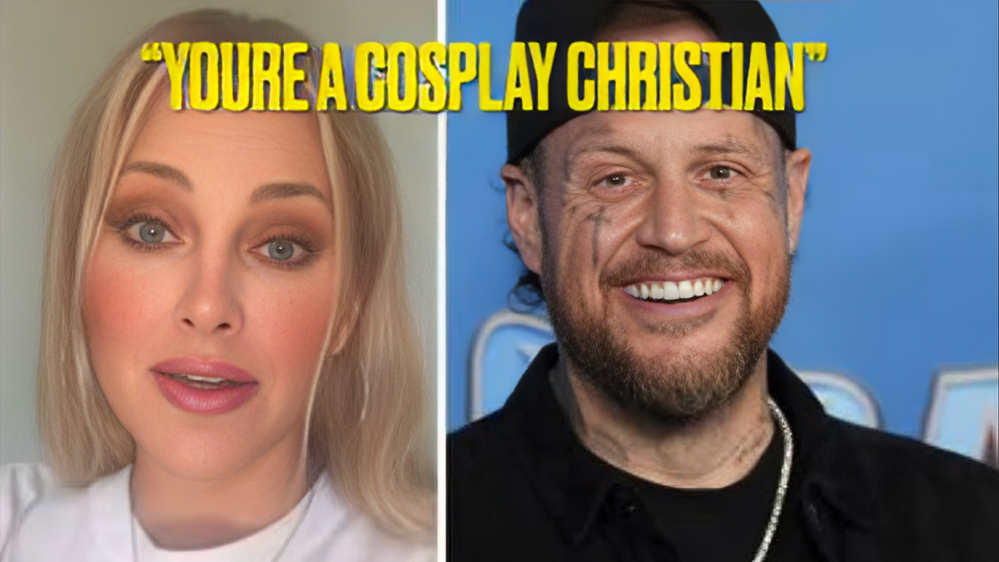

Three weeks after standing on the Grammy stage in tears, crediting Jesus and his wife Bunnie XO with saving his life, country rap star Jelly Roll found himself at the center of a swirling online controversy — not for something he said publicly, but for something one woman alleges he tried to keep buried.
Nicole Arbour, a Canadian comedian and YouTuber best known for a decade of viral controversy, emerged in February 2026 with a pointed set of accusations: that Jelly Roll’s team had sent her an alleged hush money agreement and NDA, threatened to sue her, and spent years systematically working to damage her career — all to keep her quiet about alleged past misconduct.
What followed was a cascade of viral videos, a leaked recording of disputed authenticity, a trending hashtag comparing Jelly Roll to one of history’s most notorious names, and complete silence from the man at the center of it all. This is everything we know.
Quick Reference: Key Facts
| Subject | Jelly Roll (Jason Bradley DeFord) vs. Nicole Arbour |
| Controversy Type | Alleged hush money agreement; leaked video; career interference claims |
| Timeline | Began ~5 years prior to 2026; escalated February 2026 |
| Key Date 1 | February 11, 2026 — alleged NDA/hush money agreement received by Arbour |
| Key Date 2 | February 14, 2026 — Arbour’s viral Valentine’s Day video — 3.1M views |
| Key Date 3 | February 21, 2026 — alleged leaked video posted — 1M+ views |
| Jelly Roll’s Response | No public response to specific allegations |
| Bunnie XO Connection | Memoir Stripped Down released same week — details 10-month affair |
| Alleged Leaked Video | Unverified — authenticity not independently confirmed |
| “Epstein 2.0” Label | Online reaction to alleged Epstein network comparison in leaked footage |
| Nicole Arbour | Canadian comedian, YouTuber, former fitness model, Toronto Raptors cheerleader |
| Context | Days after Jelly Roll’s Grammy wins and emotional acceptance speech |
Who Is Nicole Arbour?
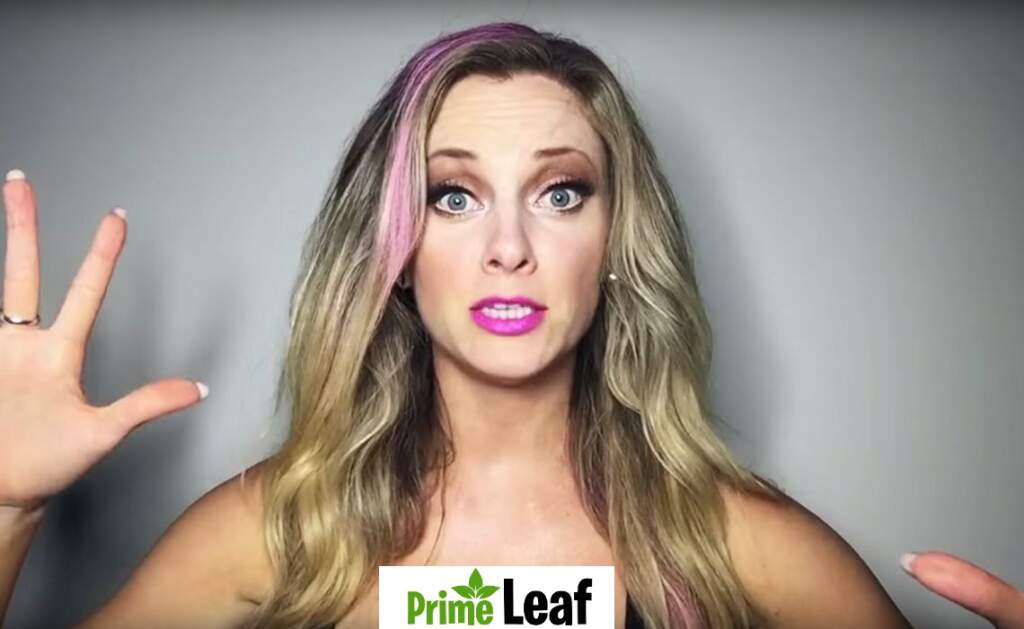
Nicole Arbour, born June 26, 1985, in Hamilton, Ontario, Canada, is a multi-hyphenate content creator — comedian, actress, choreographer, singer, and YouTuber — whose career has been defined as much by controversy as by genuine talent.
She studied at Humber College and built an early career as a professional cheerleader, most notably as a member of the Toronto Raptors NBA dance team. She led the Humber Hype dance team to two national championships and worked as a choreographer for artists and awards shows, including choreographing Omi’s performance of “Cheerleader” at the 2015 Much Music Video Awards.
Online, she carved out a substantial following through sharp, often abrasive comedic videos. In 2015, she became a viral flashpoint with “Dear Fat People,” a YouTube video framed as satire that critics widely condemned as fat-shaming. The video was temporarily pulled from YouTube — which Arbour characterized as censorship — before being reinstated. It earned her widespread backlash, celebrity criticism, and at least one lost professional opportunity. She appeared on The View to defend it, maintaining the video was satire and not intended to offend those with medical conditions.
In 2016, ex-boyfriend Matthew Santoro posted a video alleging emotional and physical abuse by a former partner widely identified as Arbour. She denied the allegations. Her romantic history with other public figures, including musicians Tommy Vext and Ryan Upchurch, has also generated public attention and conflict — with Upchurch notably connected to the Jelly Roll controversy.
Arbour has maintained an active presence across social platforms and describes herself as an advocate for mental health awareness. Her credibility as a messenger remains a point of contention — but the substance of her allegations exists independently of her likability.
The Background: How the Conflict Started
Arbour has stated publicly that her conflict with Jelly Roll began approximately five years before her February 2026 videos — placing the origin somewhere around 2020 or 2021, a period during which Jelly Roll was transitioning from underground rap toward mainstream country recognition.
The full specifics of what allegedly occurred between them in those early years remain vague in Arbour’s public statements. She has repeatedly said she requested an apology from both Jelly Roll and his wife Bunnie XO for “the crazy things that you and your wife did to me” — without specifying exactly what those actions were. She has indicated the conflict involved both personal misconduct and professional interference.
What Arbour has made clear is that rather than resolving quietly, the conflict escalated — from an initial grievance requiring an apology, to years of alleged legal threats, to ultimately what she describes as a formal hush money agreement sent by Jelly Roll’s team.
The Podcast Cancellation
Among the career interference claims Arbour has made is an allegation that Jelly Roll’s team was involved in the cancellation of a podcast she was associated with. The specifics of this claim — including the podcast’s name, the network involved, and the precise nature of the alleged interference — have not been fully detailed in Arbour’s public statements.
Arbour has connected the podcast cancellation to a broader pattern she describes as systematic: an effort by Jelly Roll’s team to suppress her publicly before she could speak about what she knows. She has implied that her professional setbacks during this period were not coincidental but targeted — a form of retaliation for refusing to stay quiet.
No independent confirmation of this interference claim has emerged, and no network or production company has publicly corroborated Arbour’s account.
Career Interference Claims
Beyond the podcast, Arbour has described a sustained campaign aimed at limiting her professional opportunities, allegedly orchestrated by or connected to Jelly Roll’s team. She has suggested this includes efforts to discredit her, warn off potential collaborators, and suppress her voice in the industry.
In her February 14, 2026 video and subsequent social media posts, she referenced a “smear campaign” allegedly being launched by Jelly Roll’s publicist against her — specifically in response to her refusing to sign the alleged hush money agreement. Her exact words on X: “Oh… and I heard your publicist is launching a smear campaign against me for not taking the alleged deal. That’s not very Christian at all. Probably don’t do that.”
The framing of these claims is notable: Arbour positions them not as isolated incidents but as a years-long strategy to marginalize a woman who witnessed or experienced something Jelly Roll allegedly wanted suppressed. Whether this constitutes a coordinated campaign or a series of unconnected events remains unverified.
Years of Legal Threats: Arbour’s Account
One of the more significant threads running through Arbour’s account is her claim that legal threats from Jelly Roll’s side were not new in 2026 — they had been a recurring feature of their conflict for years.
She has stated that for approximately five years, any time she appeared close to speaking publicly about her experiences, she was met with legal pressure designed to keep her silent. This, she claims, created a pattern: she would approach the situation hoping for resolution, encounter threats instead, and retreat without resolution.
The February 2026 escalation, by her account, came after she made one more attempt to resolve things privately — specifically by requesting an apology — and was refused. The alleged hush money agreement, she says, arrived as an alternative: money in exchange for silence, rather than an apology or acknowledgment.
Arbour has not provided documentary evidence of these earlier legal threats publicly. She maintains that the NDA itself — if she were permitted to share it — would serve as corroboration of the pattern she describes.
February 11, 2026: The Alleged NDA

According to Arbour’s account, on or around February 11, 2026 — just ten days after Jelly Roll’s Grammy victories at Crypto.com Arena in Los Angeles — she received what she describes as a formal hush money agreement from his team.
She alleges the document offered money in exchange for her silence, and included a threat: if she refused to sign, Jelly Roll would pursue legal action against her. She says she turned the agreement down.
The timing is significant. Jelly Roll had just experienced the pinnacle of his public redemption narrative — emotional Grammy wins, a tearful speech crediting Bunnie XO with saving his life, widespread praise for his transformation from a convicted criminal to an award-winning artist advocating for prison reform. The arrival of an alleged hush money agreement in that same week presents a jarring contrast — if true.
The document has not been made public. Arbour maintains she cannot legally share it without Jelly Roll’s permission, and she has framed her public campaign as an effort to get that permission — or at minimum, to force him to publicly deny its existence.
February 14, 2026: The Viral Valentine’s Day Video
Hi @JellyRoll615 can I post that alleged hush money deal you allegedly sent over with an alleged threat that if I won’t sign it you’d allegedly sue me?? 💁🏼♀️
Really sucks that you couldn’t be man enough to apologize for all the INSANE things you did but here we are 🤷🏼♀️
Lemme know!… pic.twitter.com/frNNxwYvtM
— Nicole Arbour (@NicoleArbour) February 14, 2026
On Valentine’s Day 2026, at 11:10 AM, Nicole Arbour posted a video to X (formerly Twitter) addressed directly to Jelly Roll. The caption read: “Hi @JellyRoll615 can I post that alleged hush money deal you allegedly sent over with an alleged threat that if I won’t sign it you’d allegedly sue me?? Really sucks that you couldn’t be man enough to apologize for all the INSANE things you did but here we are. Lemme know!”
The video itself was measured in tone — not a tearful breakdown or a screaming confrontation, but something almost theatrically calm. Arbour spoke directly to the camera, expressing disappointment that the situation had not been resolved with a simple apology, framing the alleged deal as unnecessary when the alternative — genuine accountability — was always available.
She invoked Jelly Roll’s public Christian faith, saying he was “saved now” and should want to atone for his sins. She coined the phrase “cosplay Christians” to describe those who perform faith publicly while allegedly behaving differently in private. The phrase spread rapidly online.
Arbour also warned that anything sent to her going forward — by Jelly Roll or his legal team — would be posted publicly and immediately. She framed the entire situation as a dare: let her post the document, and everyone can judge for themselves. If it doesn’t exist, she’d have nothing to post. If it does, the silence becomes harder to explain.
The video accumulated 3.1 million views. Comments ranged from expressions of support for Arbour to skepticism about her motivations and credibility. Some users challenged her directly, telling her to post proof rather than make allegations. She responded by reiterating that she needed Jelly Roll’s legal permission to share the document.
February 21, 2026: The Alleged Leaked Video
WOW. Look at the difference of Jellyroll on camera VS off.
(Videos taken around the same time) pic.twitter.com/IoHsCji797
— Nicole Arbour (@NicoleArbour) February 21, 2026
A week after the Valentine’s Day video, on February 21, 2026, Arbour escalated significantly. She posted a clip captioned “WOW. Look at the difference of Jellyroll on camera VS off.” The footage crossed one million views.
The video appears to show Jelly Roll in an informal, private setting — what looks like a living room or basement — speaking candidly with a group. A voice attributed to the singer references something called “Operation Infiltration,” describing what sounds like a plan to expand influence or control over something — “take over” and “get a building down” are phrases associated with the clip.
The footage also allegedly features a voice identified as Jelly Roll using graphic, degrading language about Bunnie XO — referring to her in terms tied explicitly to her past as an escort, repeating the characterization multiple times. The specificity of the language is striking given that Bunnie XO had, just days earlier, published her memoir partially dedicated to reclaiming her story and her dignity.
A separate portion of the alleged leaked material features a voice attributed to Jelly Roll comparing his rivalry with rapper Ryan Upchurch to the way Jeffrey Epstein allegedly built his network of influence. The Epstein comparison, even if intended casually or metaphorically in a private setting, landed like a grenade given the cultural climate.
Critical caveat: The authenticity of this footage has not been independently verified. Neither Jelly Roll nor his representatives have confirmed or denied that the voice on the recordings is his. The origins, date of recording, and full context of the footage remain unclear. Watching unverified recordings go viral without authentication is a familiar pattern online — and one that warrants real caution before drawing conclusions.
The “Epstein 2.0” Reaction
The phrase “Epstein 2.0” began trending on social media in the days following Arbour’s February 21 post. The label stems from the portion of the alleged leaked video in which a voice attributed to Jelly Roll likens a personal rivalry to how Jeffrey Epstein built connections and leverage.
In the context of 2026 — with the Epstein files still dominating public discourse and the name functioning as cultural shorthand for predatory networks of power and silence — the comparison was incendiary regardless of the intent behind it. Even if the remark was meant as an offhand metaphor in a private setting, its public emergence in the context of hush money allegations gave it a specific and damaging resonance.
Online commenters moved quickly from the specific allegation to the broader implication: that Jelly Roll’s alleged behavior — silencing accusers, threatening lawsuits, sending NDAs — followed a familiar playbook. The Epstein comparison, however casually made in the alleged footage, seemed to confirm in some minds a pattern of powerful men using financial and legal tools to suppress women.
It’s worth noting that neither Ryan Upchurch nor Jelly Roll responded publicly to the Epstein comparison. The trending label represents public interpretation of an unverified clip — not a verified fact about Jelly Roll’s conduct or intent.
The Grammy Timing: Why It Matters
The timing of this controversy matters enormously — and not just for the drama of the contrast.
On February 2, 2026, Jelly Roll stood on the Grammy stage at Crypto.com Arena and won three awards: Best Country Duo/Group Performance for “Amen” with Shaboozey, Best Contemporary Christian Music Performance/Song for “Hard Fought Hallelujah” with Brandon Lake, and Best Contemporary Country Album for Beautifully Broken. He cried. He thanked Jesus. He looked at Bunnie XO and said, “I would have never changed my life without you. I would’ve ended up dead or in jail. I would’ve killed myself if it weren’t for you and Jesus.”
The speech went viral for its raw emotion. Jelly Roll had built his entire public persona around transformation — from a man with a criminal record and addiction history to a Grammy-winning artist advocating for criminal justice reform and speaking before Congress about the fentanyl crisis. Vulnerability was his currency. Accountability was his brand.
Which makes the silence about Arbour’s allegations all the more conspicuous. A man who has voluntarily confessed cheating on his wife on a podcast, who told Joe Rogan he could feel himself dying, who appeared before Congress to talk about the failures of the justice system — is maintaining complete silence about one woman’s claims that he tried to buy her silence.
The contrast between his Grammy speech and the allegations isn’t just ironic. It gets to the core of what his entire public identity is built on. If he’s the man he says he is, the response to Arbour’s request for an apology should be straightforward. The silence raises a question that only he can answer.
Bunnie XO’s Memoir Connection
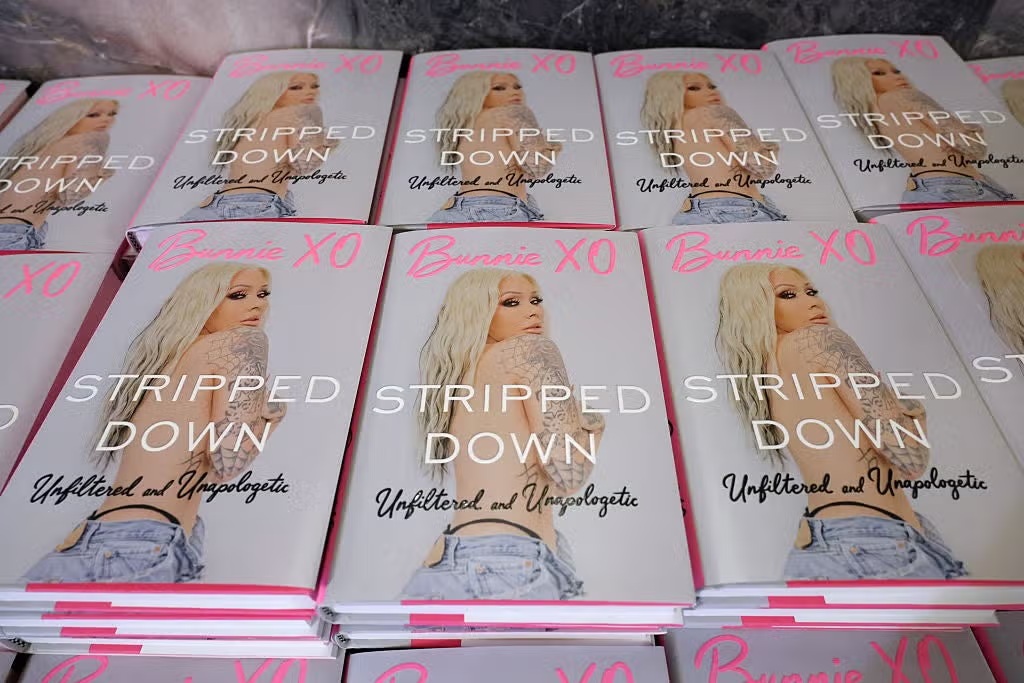
The week of February 17, 2026 — the same week Arbour’s controversy exploded — Bunnie XO released her memoir, Stripped Down: Unfiltered and Unapologetic, published by HarperCollins/Dey Street Books. The book had been anticipated for months, with Bunnie teasing it as a raw, unfiltered account of her life.
The memoir delivered. Bunnie XO wrote about childhood abuse, a teenage abortion, surviving exploitation, and her years working as an escort. She wrote about the early days of her relationship with Jelly Roll — who, when they met in 2015 at a Las Vegas bar, was living out of a brown van and bouncing from couch to couch.
Most relevant to the current controversy: Bunnie wrote openly about discovering Jelly Roll’s 10-month affair. She described the profound emotional devastation it caused — including a moment where she reached for a bottle of pills and wondered if her husband would even care if she were gone. She described how the relationship never fully returned to what it had been. She wrote: “Your heart is more guarded. Less trusting. Cracked.”
Then, the week that book sat on shelves — with Bunnie publicly reclaiming her story and standing next to her husband making a heart sign at the Grammys — footage emerged that allegedly showed a man sounding like Jelly Roll reducing Bunnie XO to the worst moments of her past. The alleged footage was not just offensive on its face. In the specific context of Bunnie’s memoir week, it was particularly brutal in its implied contrast.
Jelly Roll told PEOPLE Magazine that reading the memoir was “rough at times,” and expressed pride in Bunnie for her courage. He also stated publicly that she hadn’t wanted him to read the manuscript while she was writing it, so it would remain entirely her own voice.
Jelly Roll’s Silence
As of publication, Jelly Roll has not publicly addressed Nicole Arbour’s allegations. No statement has been released by him or his representatives regarding the alleged hush money agreement, the NDA claims, the leaked footage, the career interference allegations, or the “Epstein 2.0” trending label.
This is a deliberate strategic choice — but it is not without cost. His silence leaves the public narrative entirely in Arbour’s hands. Every day that passes without response, she continues posting, the videos continue accumulating views, and the questions surrounding the alleged document remain open.
The strategic logic of silence is not irrational. Responding to Arbour’s claims — even to deny them — risks amplifying the story, potentially prompting legal proceedings, and forcing the alleged NDA into the spotlight. If the document exists, engagement creates evidence trails. If it doesn’t exist, even a denial validates the public conversation.
But the optics are difficult to ignore. Jelly Roll has demonstrated his willingness to discuss deeply personal material publicly — his criminal past, his addiction, his infidelity, his fear of death. The specific carve-out around Arbour’s claims stands out. It is, as one commentator noted, the one conversation that gets the lawyer treatment from a man whose entire brand is built on having no secrets.
Nicole Arbour’s Credibility: Context
Before treating Nicole Arbour’s account as settled truth, her credibility as a source deserves honest examination — not to dismiss her claims, but to contextualize them fairly.
Arbour’s public history includes a series of high-profile feuds and controversies. The “Dear Fat People” video generated widespread condemnation and, by her own admission, was constructed partly as a deliberate viral marketing strategy. She has been in conflicted public relationships with multiple musicians, including Ryan Upchurch — who is mentioned in the alleged Jelly Roll leaked footage — and Tommy Vext, both relationships that generated their own online disputes. Ex-boyfriend Matthew Santoro made abuse allegations against a woman widely identified as Arbour; she denied them.
There is also a question of motivation. Arbour has struggled to maintain mainstream relevance in recent years, and the Jelly Roll controversy — whatever its origins — has dramatically elevated her public profile. That doesn’t mean her claims are false. It does mean the incentive structure for escalation exists independent of the underlying facts.
At the same time, the specific legal framework she’s operating within is not nothing. She is not simply making vague accusations. She is saying there is a document. She is saying she cannot legally release it without permission. She is inviting Jelly Roll to call her bluff publicly. That structure gives her claim a particular kind of accountability: either the document materializes or it doesn’t, and if it doesn’t, the legal exposure for defamation is severe. She appears to understand this. Whether she is genuinely constrained by legal concerns or strategically using that framing as cover is impossible to determine from the outside.
What Remains Unverified
Given the viral intensity of this controversy, it is important to be explicit about what is and is not established fact.
Unverified claims include: the existence of an NDA or hush money agreement; the authenticity of the alleged leaked video; whether the voice in the footage is Jelly Roll’s; whether the podcast cancellation or other career interference was orchestrated by Jelly Roll’s team; and the specific nature of the alleged original misconduct that Arbour says she wanted an apology for.
Established facts include: Nicole Arbour posted videos making these allegations. The videos accumulated millions of views. Jelly Roll has not publicly responded to the specific allegations. Bunnie XO’s memoir was released the same week and does independently confirm a 10-month affair and significant marital strain. Jelly Roll did win three Grammys on February 2, 2026, and did deliver an emotional speech. Arbour’s claims, true or false, are being made under circumstances where the defamation exposure for fabrication is real.
The fundamental question — does the alleged hush money agreement exist? — remains unanswered. Until it is answered, everything built on top of it remains speculation.
Conclusion
The Jelly Roll and Nicole Arbour controversy is, at its core, a story about the gap between public persona and private behavior — and the people who get trapped in that gap.
Jelly Roll built his career on confession. His willingness to own his past — the criminal record, the addiction, the infidelity — is genuinely unusual in celebrity culture and genuinely compelling. Whether or not Arbour’s specific allegations are true, the silence surrounding them is at odds with that brand in a way that the public has noticed.
Arbour, meanwhile, is not a neutral messenger. Her history complicates her credibility. But she is not required to be likable for her claims to have merit, and the legal structure she’s operating within — framing the release of the alleged document as conditional on Jelly Roll’s permission — creates a specific kind of accountability that pure attention-seeking generally doesn’t.
Until the alleged hush money agreement is either confirmed, denied, or produced — and until the leaked footage is authenticated or debunked — the story remains open. What’s not open is the question of whether a man who made accountability his brand owes the public an explanation for his silence. Whatever the truth turns out to be, that question deserves an answer.
Frequently Asked Questions
What exactly is Nicole Arbour accusing Jelly Roll of?
Arbour claims Jelly Roll’s team sent her an NDA and alleged hush money agreement, threatening to sue if she refused to sign. She also alleges years of career interference, legal threats, and a smear campaign. She says she turned the deal down and is asking publicly for permission to release the document.
Has the alleged hush money agreement been confirmed?
No. As of publication, no independent confirmation of the document’s existence has been made. Arbour claims she cannot legally share it without Jelly Roll’s permission. Jelly Roll has not publicly denied or acknowledged it.
What does the alleged leaked video show?
The video, posted by Arbour on February 21, 2026, purports to show Jelly Roll speaking candidly in a private setting. A voice identified as his allegedly uses derogatory language about Bunnie XO and compares a rivalry to how Jeffrey Epstein built his network. The video’s authenticity has not been independently verified.
What is the Epstein 2.0 reference?
In the alleged leaked footage, a voice attributed to Jelly Roll references Jeffrey Epstein’s network while describing a personal rivalry. Given the cultural toxicity of that comparison in 2026, online commenters quickly coined “Epstein 2.0” as a trending label. Neither Jelly Roll nor his team have commented.
What did Bunnie XO’s memoir reveal?
Stripped Down, released February 17, 2026, details Bunnie XO’s survival of childhood abuse, time as an escort, and discovery of Jelly Roll’s 10-month affair. She wrote about the emotional devastation it caused, including reaching for a bottle of pills. The book’s release during the same week as the controversy added another layer to the story.
Why hasn’t Jelly Roll responded?
Jelly Roll has maintained public silence since the controversy escalated. No statement has been issued addressing Arbour’s specific allegations, the leaked video, or the NDA claims. His team has similarly not commented publicly.