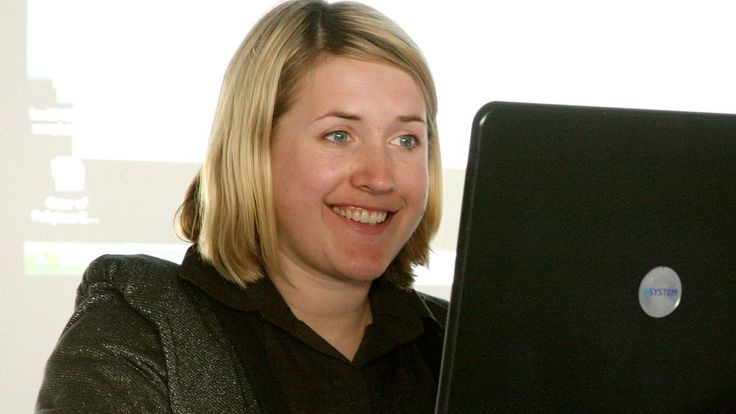

Joy Millward is a British parliamentary lobbyist, charity advocate, and the founder of Principle Affairs — a lobbying organisation supporting charities through the corridors of Westminster. She is also widely believed to be the wife of Robin Gunningham, the man who multiple investigations, media reports, and legal documents have repeatedly identified as the anonymous street artist Banksy. The couple married in Las Vegas in 2006.
That two-sentence summary is essentially all that can be verified about Joy Millward. Everything else — the guesswork about her net worth, claims about her daily life, invented quotes attributed to unnamed sources — is speculation dressed up as biography. This article sticks to what is known, and is honest about what isn’t.
Quick Bio: Joy Millward at a Glance
| Detail | Info |
|---|---|
| Full Name | Joy Millward |
| Birthplace | West Midlands, England |
| Birth Year | Estimated mid-1960s to mid-1970s (not publicly confirmed) |
| Education | University of Bristol (Politics degree) |
| Career | Parliamentary Lobbyist, Founder of Principle Affairs |
| Previous Role | Researcher for Labour MP Austin Mitchell |
| Organisation Founded | Principle Affairs (2005) — charity lobbying |
| Husband | Robin Gunningham (m. 2006, Las Vegas) |
| Public Interviews | None |
| Social Media | None |
| Known Photo | One — National Hepatitis C Conference, 2007 |
Early Life: The West Midlands Foundation
Joy grew up in the West Midlands — a region of England that sits about as far from glamour and celebrity as it is possible to get while remaining in a major urban area. The West Midlands is working Britain — industrial heritage, practical values, communities that get on with things without making a fuss about it.
Details about her family background are deliberately sparse, and that is clearly a conscious choice rather than an information gap. What is known is that she attended local schools before earning a place at the University of Bristol — a highly competitive institution with a well-regarded politics department.
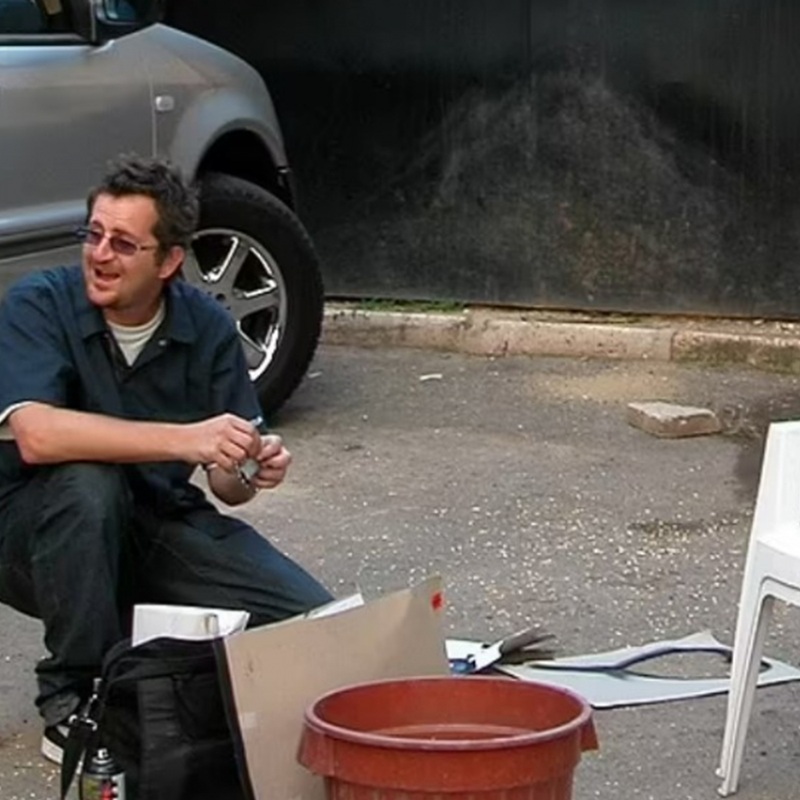
Bristol is also, notably, the city where Robin Gunningham grew up. Whether that connection preceded their meeting in 2003 or was entirely coincidental is unknown. What it does mean is that both of them have roots in the same city — one that is also Banksy’s spiritual and creative home, the place where many of his earliest and most celebrated pieces appeared.
Education: Politics at Bristol
A politics degree from the University of Bristol in the late 1980s or early 1990s — whenever Joy graduated, depending on her birth year — was a serious academic undertaking. Bristol’s politics department attracted students who intended to work in government, policy, advocacy, or research. It was not a degree you pursued casually.
The skills it built are exactly the ones Joy went on to use professionally: policy analysis, understanding legislative processes, researching complex issues, communicating effectively with decision-makers, and navigating the often opaque world of British political institutions.
Her trajectory from Bristol to Westminster was a direct one — which suggests she always knew what she wanted to do. That kind of clarity at university is unusual and says something about her.
Career: From Westminster Research to Founding Principle Affairs
After graduating, Joy moved into political research. She worked as a researcher for Austin Mitchell — the Labour MP who represented Great Grimsby from 1977 to 2015, a long-serving, politically active, and sometimes controversial parliamentarian.
Being a researcher for an MP is unglamorous, demanding, essential work. You dig through policy documents, draft briefing notes, prepare parliamentary questions, track legislation, and make sure your MP is informed and effective. It builds a deep, practical understanding of how Parliament actually functions — not the theory, but the daily mechanics of it. That knowledge is exactly what makes a good lobbyist.
Around 2003, she made the transition from working for an MP to working for the organisations trying to influence MPs. She founded Principle Affairs in 2005 — a lobbying group with a specific focus on supporting charities and non-profit organisations in their engagement with the political process.
The distinction between corporate lobbying and charity lobbying matters here. Corporate lobbyists work to advance the interests of businesses and commercial entities. Charity lobbyists work to amplify the voices of organisations — healthcare providers, community groups, welfare charities, public health advocates — that typically lack the resources or connections to navigate Westminster effectively on their own.
It’s meaningful, unglamorous work. Nobody writes magazine profiles about charity lobbyists. Nobody is photographed arriving at their offices. The only evidence of Principle Affairs’ activity in the public record is a single photograph of Joy at the National Hepatitis C Conference in 2007 — appearing in her professional capacity, representing a public health client.
That one image is the only confirmed photograph of her known to exist.
How She Met Robin Gunningham
Joy met Robin Gunningham around 2003 — the same period she was transitioning from political research to establishing Principle Affairs.
The Mail on Sunday’s 2008 investigation — the piece that first publicly identified Robin Gunningham as Banksy — confirmed that Joy was his partner. The investigation described him living in a community where even close neighbours were unaware of his real occupation or identity. Joy’s cover story to people who asked about her husband’s work: he illustrated cookbooks and designed album covers. Innocuous, plausible, and completely unremarkable to anyone who didn’t know better.
Robin’s own cover story was that he designed sets for award ceremonies. Another answer that closes conversations rather than opening them.
What drew them together is not documented. But the alignment of values is obvious in retrospect. She was a person who worked to advance social causes through quiet political leverage — influence without visibility. He was a person who made some of the most powerful political statements in contemporary art without ever revealing his face. Both of them understood something important: that the message matters more than the messenger, and that keeping the messenger hidden can actually amplify the message.
The Las Vegas Wedding: January 2006
They married in January 2006 in Las Vegas. A chapel wedding in Vegas is the international gold standard for private ceremonies — no banns posted in the local parish, no neighbourhood gossip, no photographs in the local paper. You fly in, you sign the papers, you fly out. The whole city exists in a kind of temporary space that has no memory.
It suited them completely.
Robin’s business associate was later quoted as saying he hadn’t even known Robin was married. That detail underscores just how tight their circle of knowledge was — a professional partner, not someone on the outer edge of their lives, genuinely did not know the wedding had happened.
In some ways, the Las Vegas choice was also deeply practical. For a man whose anonymity was both his personal preference and his professional survival, marrying quietly in a foreign city was simply the sensible thing to do. Joy understood that. She married him on those terms without apparent complaint or negotiation about doing it differently.
What Their Life Actually Looks Like
Based on everything reported by The Mail on Sunday and other investigations that tracked their movements, the couple built a deliberately ordinary life in a deliberately unremarkable community.
The neighbours didn’t know who Robin was. The extended family, by most accounts, were not brought into the full picture either. The inner circle that understood the complete reality of their lives was carefully vetted, tightly controlled, and very small.
Joy operated professionally as a lobbyist, which gave her a completely legitimate reason to move through Westminster and political circles without attracting attention. Nothing about her career required public profile — in fact, her effectiveness as a lobbyist probably benefited from not being known at all.
The couple are also connected to a property in East Quogue, New York — sold in 2022. Dual-country presence, minimal footprint in both. It is the physical expression of the same approach they apply to everything else: present where needed, invisible where possible.
The High Court Case: 2023
The clearest public evidence of Joy and Robin’s connection came through legal proceedings rather than any voluntary disclosure.
In 2023, Andrew Gallagher filed a defamation lawsuit against Banksy. The claim named Robin Gunningham as the first defendant — described in the legal filings as the artist known as Banksy. Pest Control Ltd, the authentication body that verifies genuine Banksy works, was named as the second defendant.
Legal documents are public records. The naming of Robin Gunningham as a defendant in a High Court case meant that his connection to Banksy — and by extension, Joy’s identity as his wife — appeared in official documents accessible to any journalist or researcher.
Neither Joy nor Robin made any statement in response. The legal process proceeded on its own terms. Their silence, as always, was total.
Joy Millward as Her Own Person
There is a pattern in how Joy Millward is written about that consistently misses the point. Every article starts with Banksy, reaches Joy through him, and treats her career as context for the more interesting story about the anonymous street artist.
That gets it backwards.
Joy Millward founded a lobbying organisation at a time when female founders in political consultancy were unusual. She built a client base in the charity sector — some of the most resource-poor organisations in British civil society — and gave them a voice in Parliament that they would not otherwise have had. The Hepatitis C Conference appearance in 2007 is a small window into the kind of unglamorous, genuinely useful work she did: public health advocacy, charity representation, working on issues that affect real people’s lives.
None of that happened because of who her husband is. It happened because she was good at it.
What Is Verified vs. What Is Speculation
Given how much fabricated content exists online about Joy Millward, it’s worth being explicit about what actually stands up to scrutiny.
| Category | Status |
|---|---|
| West Midlands upbringing | Verified |
| Bristol University politics degree | Verified |
| Researcher for Austin Mitchell MP | Verified |
| Founded Principle Affairs (2005) | Verified |
| Married Robin Gunningham (Las Vegas, 2006) | Verified |
| One known photograph (Hepatitis C Conf., 2007) | Verified |
| Robin named as Banksy defendant (2023 High Court) | Verified |
| Exact birth year | Not publicly confirmed |
| Children | Not confirmed |
| Net worth ($6 million figure) | Fabricated — no basis |
| Specific home address or community | Not confirmed |
| Her role in Banksy’s artistic decisions | Entirely speculative |
The $6 million net worth figure that appears on multiple sites was invented. There is no Forbes listing, no financial disclosure, no basis for it whatsoever. The claims about her influencing Banksy’s artistic choices are similarly invented — flattering speculation, but speculation nonetheless.
FAQs
Who is Joy Millward? She is a British parliamentary lobbyist and the founder of Principle Affairs, a lobbying organisation supporting charities. She is widely believed to be the wife of Robin Gunningham, who multiple investigations and legal documents have linked to the street artist Banksy.
Who is Joy Millward married to? She married Robin Gunningham in Las Vegas in January 2006. Gunningham has been identified as Banksy in multiple major media investigations and named as such in a 2023 High Court lawsuit.
Where did Joy Millward go to university? She studied politics at the University of Bristol, graduating before pursuing her career in political research and lobbying.
What is Principle Affairs? It is a UK lobbying organisation Joy founded in 2005 that helps charities and non-profit organisations navigate the political process and engage effectively with Parliament.
Has Joy Millward ever spoken publicly about Banksy? No. She has never confirmed or denied her husband’s identity and has not given any public interviews on the subject at any point.
Why is Joy Millward’s name in the news? Renewed public interest in Banksy’s identity — particularly following the 2023 High Court case that named Robin Gunningham as a defendant — has regularly brought Joy’s name back into search traffic.
Conclusion
Joy Millward has built something most people in her position would find impossible to maintain — a genuinely private life alongside a genuinely accomplished career, while being married to arguably the most famous anonymous person on the planet.
She has never held a press conference. She has never appeared on a panel. She has never posted a photograph on social media. The only confirmed image of her is a single photograph from a hepatitis C conference nearly two decades ago.
In the information age — where every passing thought gets documented, every relationship gets performed, every private moment eventually surfaces — that kind of sustained, principled privacy is extraordinary. It requires discipline, consistency, and a clarity about what actually matters that most of us don’t have.
Her career supported charities that lacked political voice. Her marriage supported a man whose work gave political voice to things most people ignored. Both choices reflect the same underlying value: using what you have to amplify what matters, without making yourself the story.
That, in the end, is who Joy Millward is. And it turns out that’s more than enough.