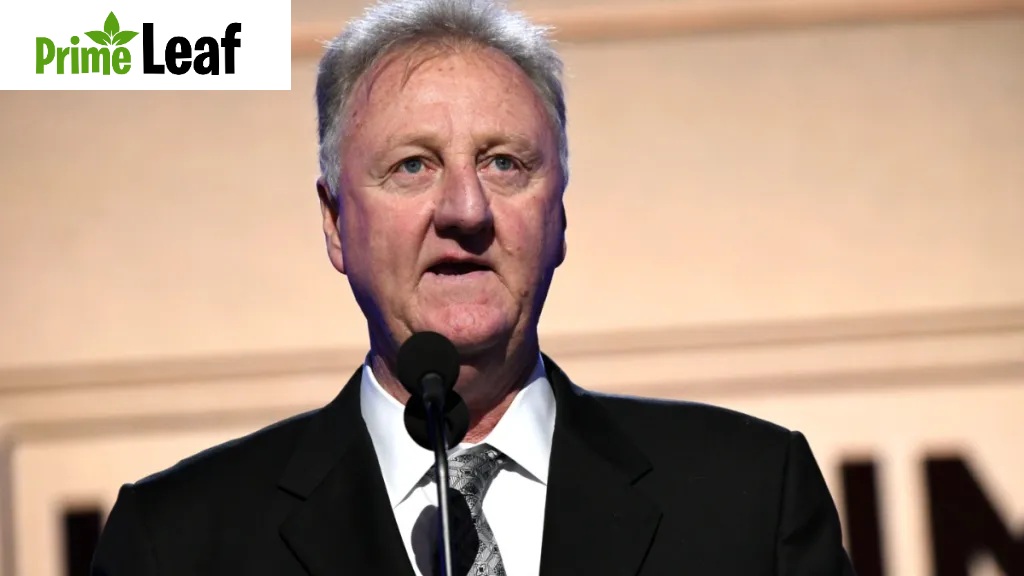

Larry Bird’s net worth is estimated at approximately $75 million as of 2025 — a figure that reflects a remarkable career as an NBA player, coach, and executive, combined with decades of business interests and real estate holdings in his home state of Indiana. For a man widely considered one of the five greatest basketball players in history, $75 million might surprise people expecting a number closer to Michael Jordan’s territory. But Bird’s financial story is as distinctive as his playing style — shaped by where he came from, what he valued, and the deliberate choices he made about money and lifestyle throughout his life.
If you’re here for a quick answer — Larry Bird’s net worth is approximately $75 million, built through NBA playing contracts totaling roughly $24 million, coaching and executive salaries with the Indiana Pacers, endorsement deals, real estate, and business investments. He never pursued the aggressive post-basketball business empire that contemporaries like Magic Johnson built, choosing instead to remain rooted in Indiana and live on his own terms. That choice cost him financially. It also made him who he is.
Quick Facts
| Detail | Information |
|---|---|
| Full Name | Larry Joe Bird |
| Date of Birth | December 7, 1956 |
| Place of Birth | West Baden Springs, Indiana |
| Raised In | French Lick, Indiana |
| Nationality | American |
| Profession | Former NBA Player, Coach, Executive |
| Teams (Player) | Boston Celtics (1979–1992) |
| Teams (Coach/Executive) | Indiana Pacers |
| Estimated Net Worth | ~$75 million (2025) |
| NBA Championships | 3 (1981, 1984, 1986) |
| MVP Awards | 3 consecutive (1984–1986) |
| Spouse | Dinah Mattingly (married 1989) |
| Children | Corrie Bird (biological); Connor and Mariah (adopted) |
Early Life — French Lick, Indiana
The Poverty That Built Him
Larry Bird grew up in French Lick, Indiana — a small town of a few thousand people in the southern part of the state, the kind of place where basketball isn’t just a sport but a genuine cultural identity. Indiana takes its basketball seriously in a way that is difficult to explain to people who didn’t grow up there.
He was one of six children born to Joe and Georgia Bird. Money was a constant source of stress in the household — the family struggled genuinely, not in the softened way that word sometimes gets used but in the concrete, specific way of not knowing what comes next.
When Larry was 18 years old, his father died by suicide. The loss was devastating and came at the age when most young men are just beginning to figure out who they are. It left a mark that Larry has referenced carefully in various interviews over the decades — not performing the grief but acknowledging that it shaped everything that followed.
Basketball was the escape, the purpose, and eventually the path out. He was extraordinary at it in a way that French Lick had never seen and the wider world would soon discover.
High School and the Garbage Truck
After high school, Bird enrolled at Indiana University — one of the great basketball programs in America — but left after less than a month. The campus felt enormous and alienating for someone from a town of a few thousand people.
He went back to French Lick and worked as a garbage truck driver for the city — not a romantic detail but an honest one. He was 18, had walked away from college, and needed to work.
He eventually enrolled at Indiana State University in Terre Haute — a smaller school that felt more manageable — and proceeded to build one of the great college basketball careers in the sport’s history.
College Career — Indiana State
At Indiana State, Bird averaged over 30 points per game in his senior season and led the Sycamores to the 1979 NCAA Championship game — where they faced Michigan State and a sophomore named Magic Johnson.
Michigan State won. But the game drew the highest television ratings in college basketball history at that point and introduced a rivalry — Bird vs Magic — that would define the next decade of American basketball and arguably save the NBA as a commercial enterprise.
The friendship and competition between these two men is one of sports’ great narratives. It also created a financial divergence that would only grow more pronounced over the following decades.
NBA Career — Boston Celtics (1979–1992)
The Gamble That Paid Off
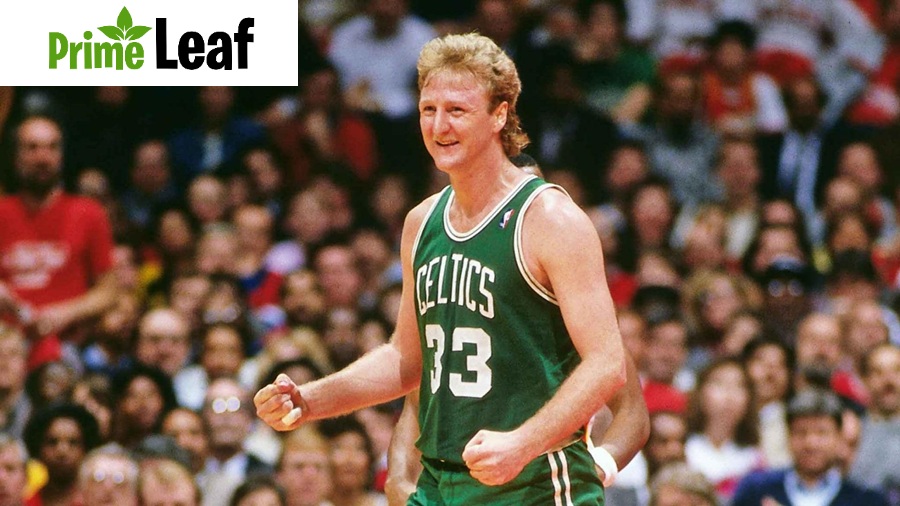
In a now-legendary move, Red Auerbach and the Boston Celtics drafted Larry Bird in the first round of the 1978 NBA Draft — a year before Bird was eligible to play, knowing he would return to Indiana State for his senior season. It was an extraordinary gamble on a player they couldn’t yet sign.
It paid off completely.
Bird joined the Celtics in 1979 and transformed the franchise almost immediately. Boston had won championships through the Russell era and the Havlicek era — Bird began the next chapter. The team went from 29 wins in 1978-79 (without Bird) to 61 wins in Bird’s rookie season.
What He Accomplished
Three NBA Championships. Three consecutive MVP awards. Twelve All-Star appearances. He was the greatest power forward of his generation — possibly of any generation — combining scoring, rebounding, passing, and a psychological edge over opponents that became legendary.
He retired in 1992 at age 35, forced out by chronic back problems that had plagued his final seasons. The back issues were, ultimately, the most significant financial limiting factor of his playing career — a healthy Bird playing into his late thirties in an era of escalating salaries would have earned considerably more.
NBA Career Stats Table
| Season | Team | PPG | RPG | APG | Notable |
|---|---|---|---|---|---|
| 1979–80 | Boston Celtics | 21.3 | 10.4 | 4.5 | Rookie of the Year |
| 1981–82 | Boston Celtics | 22.9 | 10.9 | 5.8 | — |
| 1983–84 | Boston Celtics | 24.2 | 10.1 | 6.6 | MVP + Championship |
| 1984–85 | Boston Celtics | 28.7 | 10.5 | 6.6 | MVP |
| 1985–86 | Boston Celtics | 25.8 | 9.8 | 6.8 | MVP + Championship |
| 1991–92 | Boston Celtics | 20.2 | 9.5 | 6.2 | Final season |
| Career | Boston Celtics | 24.3 | 10.0 | 6.3 | 3 Championships, 3 MVPs |
NBA Salary History
Here is where the financial picture gets genuinely interesting. By modern standards, what Larry Bird earned as a player seems almost incomprehensibly modest for someone of his stature.
| Period | Approximate Annual Salary | Context |
|---|---|---|
| 1979–1981 | ~$650,000 | Top rookie contract of the era |
| 1981–1983 | ~$1.5 million | Post-championship raise |
| 1983–1986 | ~$1.8–2 million | MVP years |
| 1986–1989 | ~$2 million | Peak earning years |
| 1989–1992 | ~$7 million | Final contracts; salary escalation |
| Career Total | ~$24 million | Entire 13-year playing career |
The NBA in the 1980s was a fundamentally different financial landscape than today. A player of Bird’s caliber today — three MVPs, three championships, generational talent — would sign contracts worth $50+ million per year. His entire career earnings wouldn’t cover a single season for a top player in the current market.
That context matters. The $75 million net worth he has built is not a reflection of financial mismanagement or poor decisions. It reflects the era in which he played.
The Larry Bird Exception — His Most Lasting Financial Legacy
Here is the great irony of Larry Bird’s financial story — his most significant contribution to NBA economics was not his own salary but a collective bargaining rule named after him.
What It Is
The Larry Bird Exception — formally called the Bird Rights provision — is an NBA salary cap rule that allows teams to exceed the salary cap to re-sign their own players. It was established in the 1983 CBA specifically because the Celtics needed a mechanism to retain Bird without being crippled by cap constraints.
Why It Matters
Without the Bird Exception, teams would face an impossible choice between keeping their best players and building a competitive roster around them. The rule created the framework for player loyalty and franchise continuity that has shaped NBA team-building ever since.
Every superstar max contract re-signing in NBA history — LeBron James staying in Cleveland, Steph Curry staying in Golden State, Giannis staying in Milwaukee — has been made possible by a mechanism that bears Larry Bird’s name.
He didn’t create it deliberately. He didn’t negotiate it for himself. It was created around him. But his name is permanently attached to one of the most important financial structures in professional basketball.
Post-Playing Career — Coaching and Executive Work
Indiana Pacers Head Coach
After retiring as a player in 1992, Bird spent several years away from basketball before returning as Head Coach of the Indiana Pacers in 1997. He had never coached before. He won the NBA Coach of the Year Award in his first season.
That is a remarkable thing to do — walk into a coaching role with no prior coaching experience and immediately win the league’s top coaching honor. It speaks to his basketball intelligence and his ability to translate what he understood about the game into something he could communicate to others.
He coached the Pacers for three seasons, taking them to the NBA Finals in 2000 before losing to the Los Angeles Lakers. He stepped down after that season as he had said he would — three years, as promised.
President of Basketball Operations
Bird returned to the Pacers as President of Basketball Operations in 2003 — a role in which he oversaw roster construction, personnel decisions, and the franchise’s strategic direction. He held the position through multiple rebuilding cycles and was responsible for drafting and developing players including Paul George.
He won the NBA Executive of the Year Award in 2012 — making him one of the very few people in basketball history to win top awards as a player, coach, and executive.
Coaching and Executive Career Table
| Role | Years | Team | Achievement | Est. Compensation |
|---|---|---|---|---|
| Head Coach | 1997–2000 | Indiana Pacers | Coach of Year; Finals appearance | ~$4.5M total |
| President, Basketball Ops | 2003–2012 | Indiana Pacers | Executive of Year 2012 | ~$3–5M/year |
| President, Basketball Ops | 2012–2017 | Indiana Pacers | Paul George era | ~$5M/year |
| Special Advisor | 2017–present | Indiana Pacers | Ongoing relationship | Undisclosed |
Business Ventures and Endorsements
Endorsement Career
Bird’s endorsement earnings were significant by the standards of his era but modest compared to what his contemporaries — particularly Magic Johnson and Michael Jordan — generated from commercial deals.
His most notable endorsement relationship was with Converse — the shoe brand that also sponsored Magic Johnson and Jordan in that era. The famous Bird vs Magic Converse commercials are among the most celebrated sports advertisements ever made — genuinely funny, warmly competitive, and capturing something real about both men’s personalities.
He also had deals with State Farm, Hardee’s, and various regional Indiana businesses — reflecting his deliberate preference for partnerships that felt authentic to who he was rather than maximum commercial exposure.
| Endorsement | Type | Era | Notes |
|---|---|---|---|
| Converse | Footwear | 1980s–1990s | Famous Bird vs Magic commercials |
| State Farm | Insurance | Playing career | Regional and national |
| Hardee’s | Fast food | 1980s | Regional partnership |
| Indiana businesses | Various | Career and post-career | Consistent with values |
Business Interests and Real Estate
Bird’s business interests have been concentrated in Indiana — a deliberate choice that reflects his values rather than a failure of financial imagination.
| Investment | Type | Location | Est. Value |
|---|---|---|---|
| Indiana Pacers stake | Minority ownership | Indianapolis | Significant |
| Real estate | Property holdings | Indiana/Florida | Multiple properties |
| Naples, FL home | Primary/vacation residence | Florida | $2M+ |
| Indiana properties | Various | Indiana | Multiple holdings |
| Business partnerships | Various | Indiana-based | Undisclosed |
Larry Bird vs Magic Johnson — The Wealth Gap
The comparison between Bird and Magic Johnson’s net worth is one of the more revealing financial stories in sports history.
| Detail | Larry Bird | Magic Johnson |
|---|---|---|
| Estimated Net Worth | ~$75 million | ~$600 million |
| Primary Wealth Source | Salary, executive career, real estate | Business empire, Starbucks, movie theaters |
| Post-Basketball Business | Indiana-focused; modest | Aggressive; national scale |
| Endorsement Approach | Selective; authentic | Maximum commercial |
| Geographic Base | Indiana | Los Angeles |
| Business Style | Conservative | Entrepreneurial |
The gap — $75 million vs $600 million — is not a reflection of intelligence or business acumen. It is a reflection of appetite and geography. Magic Johnson built a national business empire in Los Angeles, where capital, connections, and commercial opportunity are concentrated at maximum density.
Bird stayed in Indiana. He built a life there. He coached and managed there. His businesses are there. The trade-off was between wealth maximization and authenticity — and Bird made his choice with complete awareness of what it meant.
NBA Legends Net Worth Comparison
| Player | Era | Estimated Net Worth | Primary Wealth Source |
|---|---|---|---|
| Michael Jordan | 1984–2003 | ~$3 billion | Charlotte Hornets ownership; Jordan Brand |
| Magic Johnson | 1979–1996 | ~$600 million | Business empire; Starbucks franchises |
| LeBron James | 2003–present | ~$1.2 billion | SpringHill; Space Jam; investments |
| Larry Bird | 1979–1992 | ~$75 million | Salary; Pacers; real estate |
| Charles Barkley | 1984–2000 | ~$50 million | Broadcasting; endorsements |
| Scottie Pippen | 1987–2004 | ~$20 million | Salary mismanagement noted |
Bird’s $75 million sits comfortably in this group — not at the Jordan or LeBron level, but solidly built and independently sustained through decades of multiple career phases.
Personal Life
Relationships and Family
| Relationship | Years | Details |
|---|---|---|
| Janet Condra | 1975–1976 | Brief first marriage |
| Corrie Bird | Born 1977 | Biological daughter; estranged for years before reconciling |
| Dinah Mattingly | 1989–present | Current wife; 35+ year marriage |
| Connor Bird | Adopted | Son with Dinah |
| Mariah Bird | Adopted | Daughter with Dinah |
His marriage to Dinah Mattingly has been one of the defining constants of his adult life — over 35 years together, maintained with genuine privacy and evident stability. The reconciliation with his daughter Corrie — who he initially denied paternity of before eventually acknowledging and building a relationship with — is one of the more human, complicated details of his biography.
What Would Larry Bird Be Worth Today?
This is the hypothetical that every basketball fan eventually asks. A player of Bird’s caliber in today’s NBA market would command staggering financial figures.
| Scenario | Estimated Value |
|---|---|
| Annual max contract (2024–25 scale) | $50–60 million per year |
| 13-year career at current rates | $500–700 million in salary alone |
| Endorsement potential (social media era) | $20–30 million per year |
| Jordan Brand equivalent deal | $100M+ lifetime |
| Total hypothetical net worth | $1–2 billion range |
The numbers are staggering — and they illustrate, more vividly than anything else, how dramatically the financial landscape of professional basketball has changed since Bird’s playing days.
FAQs
Q: What is Larry Bird’s net worth? Larry Bird’s net worth is estimated at approximately $75 million as of 2025, built through his NBA playing career, coaching and executive roles with the Indiana Pacers, endorsements, and real estate.
Q: How much did Larry Bird earn during his playing career? His total NBA playing career earnings were approximately $24 million across 13 seasons — significant for the era but modest by modern NBA standards.
Q: What is the Larry Bird Exception? It is an NBA salary cap rule that allows teams to exceed the cap to re-sign their own players — named after Bird because it was created in the 1983 CBA specifically to allow the Celtics to keep him.
Q: Does Larry Bird still work for the Pacers? He stepped down as President of Basketball Operations in 2017 and has maintained a special advisor relationship with the franchise since then.
Q: What does Larry Bird do now? He lives primarily between Indiana and Florida, maintains his advisor relationship with the Pacers, and by all accounts lives a quiet, private life consistent with his values and personality.
Conclusion
Larry Bird’s $75 million net worth is not the number people expect when they search for it. They expect someone of his stature — three championships, three MVPs, one of the greatest players in NBA history — to have a fortune that reflects the scale of his achievement.
What they find instead is the financial record of a man who valued winning over wealth, Indiana over opportunity, authenticity over maximum commercial exposure. He played in an era when the money was a fraction of what it is today. He stayed in a state where the business ecosystem is not designed to produce billionaires. He made every significant life decision based on what felt right rather than what paid best.
The Larry Bird Exception bears his name in every NBA contract negotiated today — a legacy worth more than any dollar figure attached to his net worth. His three championship banners hang in Boston. His coaching and executive awards sit in Indiana. His reputation as one of the competitors in the history of American sport is entirely intact.
The $75 million is the financial number. The actual legacy is considerably larger.
A kid from French Lick who drove a garbage truck and became one of the greatest basketball players who ever lived — and then stayed exactly who he was throughout all of it.
That is worth more than any net worth calculation can capture