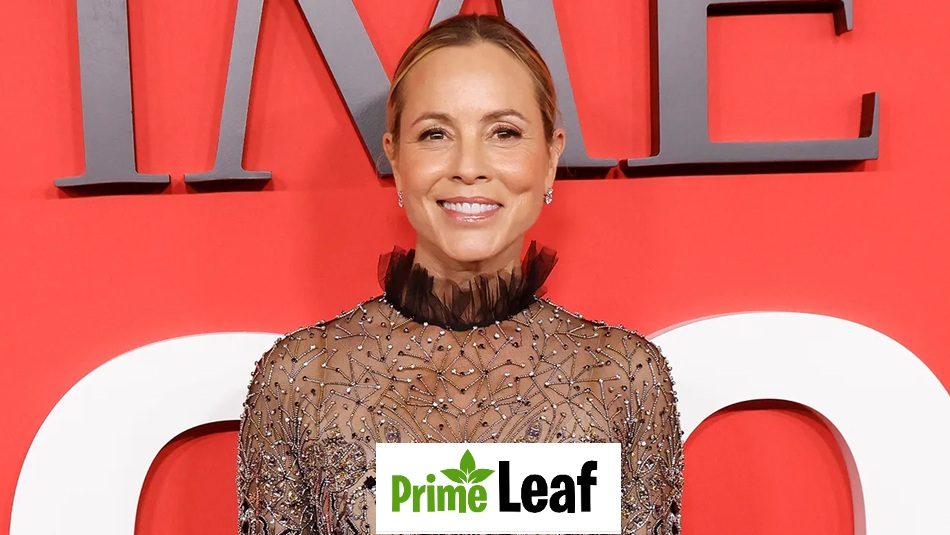

Maria Bello is an American actress, author, and humanitarian activist who has built one of the most genuinely multidimensional careers in modern Hollywood. Born on April 18, 1967, in Norristown, Pennsylvania, she rose to prominence through a series of fearless, emotionally raw performances in film and television — earning a Golden Globe nomination, widespread critical acclaim, and a reputation as one of the most committed dramatic actresses of her generation. She is known for roles in A History of Violence, The Cooler, Prisoners, and her long-running part as Special Agent Jack Sloane on NCIS.
But Maria Bello’s story extends well beyond her filmography. She came out publicly in a 2013 New York Times essay that became a landmark moment in conversations about modern relationships and identity. She co-founded We Advance, a nonprofit organization working with women in Haiti following the devastating 2010 earthquake. She wrote a book. She raised a son. She built a life that refuses to fit neatly into any single category — and has spoken about all of it with a directness and warmth that makes her one of the more compelling public figures of her era.
Quick Facts — Wiki-Style Table
| Detail | Information |
|---|---|
| Full Name | Maria Bello |
| Date of Birth | April 18, 1967 |
| Place of Birth | Norristown, Pennsylvania, USA |
| Nationality | American |
| Profession | Actress, Author, Activist |
| Known For | A History of Violence, The Cooler, NCIS, Prisoners |
| Education | Villanova University (Political Science) |
| Son | Jackson Bello McDermott |
| Former Partner | Dan McDermott |
| Partner (2013) | Clare Munn |
| Organization | We Advance (Haiti) |
| Book | Whatever… Love Is Love (2015) |
| Estimated Net Worth | $14 million+ |
| Golden Globe | Nominated — The Cooler (2004) |
Early Life and Background
Maria Bello was born and raised in Norristown, Pennsylvania — a working-class town outside Philadelphia with the kind of grounded, no-frills character that tends to produce people who don’t take themselves too seriously and don’t tolerate pretension in others. That sensibility is very visible in everything Maria has done professionally and personally.
Her family background is Italian and Polish — a Catholic household with strong community roots and the kind of close family culture that comes with that particular ethnic and religious combination. She has spoken warmly about her upbringing in various interviews, describing a childhood that was loving and relatively normal despite the fact that it gave very little indication of the Hollywood career that was coming.
What Maria was interested in as a young person was not acting — it was politics and justice. She was intellectually engaged, socially aware, and drawn toward questions of power, fairness, and human rights. These were not passing interests — they shaped the direction she took when it came time for university.
Education — Villanova University
Maria attended Villanova University in Pennsylvania, where she studied Political Science. The plan, apparently, was something in law or politics — a career oriented toward public service in a conventional sense.
What happened instead was a slow gravitational pull toward performance. She became involved in theater at Villanova and discovered something she hadn’t expected — that acting, at its best, was its own form of truth-telling. That it could engage questions of justice, identity, and human experience just as directly as a courtroom or a legislative chamber.
By the time she graduated, the direction had changed. She was going to New York to be an actress.
Early Acting Career
New York and the Struggle
Moving to New York after Villanova put Maria in the company of thousands of other young people with the same idea and considerably fewer prospects than ambition. The early years were what they always are for serious actors — stage work, auditions, small roles, the slow process of learning the craft in conditions that reward persistence over everything else.
She worked in theater, did small television appearances, and built the kind of foundational skills that would eventually make her film performances so physically and emotionally committed. The New York theatrical world in the late 1980s and early 1990s was rigorous training for anyone serious about the craft.
Breaking Into Film and Television
Maria’s early screen appearances were the typical stepping-stone work of a talented actress building a career. She appeared in various television projects and smaller film roles through the early and mid-1990s — nothing that announced a star, but everything that was building one.
Early Career Timeline
| Year | Milestone |
|---|---|
| 1967 | Born in Norristown, Pennsylvania |
| 1989 | Graduates Villanova University with Political Science degree |
| Early 1990s | Stage work and early TV appearances in New York |
| 1998 | Joins cast of ER — major breakthrough |
| 2001 | Duets — notable film role alongside Gwyneth Paltrow |
| 2002 | Paid in Full — dramatic film work |
| 2003 | The Cooler — Golden Globe nomination |
| 2005 | A History of Violence — career-defining performance |
| 2006 | World Trade Center — major studio film |
Breakthrough — ER
Maria’s first major mainstream exposure came through the medical drama ER — one of the most watched television programs in America during the late 1990s. Her role on the show introduced her to a massive audience and established her as a serious dramatic actress capable of holding her own in an ensemble cast of considerable talent.
ER was, at that point, one of the most demanding and prestigious television productions in the country. The writing was sharp, the pace was relentless, and the emotional demands on the cast were genuine. Maria thrived in that environment.
The role did exactly what a good television role should do — it made audiences want to see more of her. And what came next in her film career showed exactly why that was the right instinct.
Film Career — The Fearless Roles
The Cooler — 2003

The Cooler, directed by Wayne Kramer, cast Maria opposite William H. Macy in a story set in the Las Vegas casino world. She played a cocktail waitress caught up in an unexpected love story — and her performance was raw, vulnerable, and deeply human in a way that genuinely surprised critics.
The role earned her a Golden Globe nomination for Best Supporting Actress — a significant recognition that confirmed what serious film watchers had already started to suspect. She was not just a good television actress. She was a major film talent.
What made the performance remarkable was Maria’s willingness to be completely unguarded on screen. There was no vanity in her work — no protective layer between the character’s emotional reality and the audience. That quality — the refusal to perform safety — became her defining characteristic as a dramatic actress.
A History of Violence — 2005

If The Cooler announced Maria Bello as a serious film actress, A History of Violence confirmed it.
David Cronenberg’s film — adapted from a graphic novel — starred Viggo Mortensen as a small-town diner owner whose past as a violent man gradually surfaces. Maria played his wife, Edie Stall — a woman navigating the discovery that the man she married may not be the person she believed him to be.
The role was complex, physically demanding, and emotionally layered in ways that required an actress of genuine depth. The film contains scenes of remarkable intensity — including a controversial staircase sequence that generated considerable discussion — and Maria brought to all of it the same absolute commitment she had shown in The Cooler.
Critical reception was outstanding. The film is now considered one of Cronenberg’s finest works, and Maria’s performance is frequently cited as one of its essential elements.
| Film | Year | Role | Recognition |
|---|---|---|---|
| The Cooler | 2003 | Natalie | Golden Globe nomination |
| A History of Violence | 2005 | Edie Stall | Critical acclaim; career-defining |
| World Trade Center | 2006 | Donna McLoughlin | Major studio drama |
| Thank You for Smoking | 2005 | Polly Bailey | Sharp comedic performance |
| Downloading Nancy | 2008 | Nancy | Sundance; intense dramatic role |
| Prisoners | 2013 | Grace Dover | Denis Villeneuve film; strong ensemble |
| Annabelle | 2014 | Mia Form | Horror franchise; commercial success |
| Beautiful Boy | 2018 | Supporting role | Steve Carell drama |
Television Work — Beyond ER
Maria’s television career has been as varied and committed as her film work.
NCIS — Special Agent Jack Sloane
Her most sustained television role came when she joined NCIS as Special Agent Jacqueline “Jack” Sloane — a forensic psychologist brought into the team. She joined the show in Season 15 (2017) and remained through Season 18 (2021).
The role gave Maria a platform on one of the most consistently watched television programs in America — NCIS regularly draws some of the largest audiences in US broadcast television. Her character was written with genuine intelligence and emotional complexity — a woman with her own history, her own wounds, and her own professional excellence.
She departed the show in 2021, with her character leaving for Afghanistan on a humanitarian mission — a departure that felt, given Maria’s real-world activism, entirely appropriate.
Mr. Mercedes — Stephen King Adaptation
In the Audience Network’s adaptation of Stephen King’s Mr. Mercedes, Maria played Lou Linklatter — a character whose arc across the series gave her some of the most dramatically demanding material of her television career.
The show was critically well-received and demonstrated once again that Maria brings something extra to morally complex characters — she is never content to play the surface of a person when the depth is available.
Coming Out — The New York Times Essay (2013)
In November 2013, Maria Bello wrote an essay for the New York Times titled “Coming Out as a Modern Family” — and it became one of the most discussed personal essays published that year.
In it, she described a conversation with her son Jackson, then twelve years old, in which she told him that she was in love with her best friend — a woman named Clare Munn. Jackson’s response, by Maria’s account, was characteristically direct: “Mom, I know you love her. She’s your best friend. And doesn’t everyone deserve to be happy?”
What Made the Essay Remarkable
The essay was not simply a coming-out announcement — it was a thoughtful, personal exploration of how we define love, family, and commitment in the modern world. Maria pushed back against the need for labels, describing herself as part of a “whatever” generation that prioritized the reality of love over its categorization.
She wrote about her son’s two homes, her co-parenting relationship with his father Dan McDermott, her deep friendships, and her relationship with Clare — presenting all of these as components of a rich, unconventional family structure rather than problems to be resolved.
The response was immediate and largely positive. The essay resonated with millions of people who had their own complicated, label-resistant relationships and family structures. It was exactly the kind of public statement that Maria Bello had always been capable of — honest, warm, intellectually engaged, and entirely on her own terms.
Her Relationship with Clare Munn

Clare Munn is a businesswoman and longtime friend of Maria’s who became her romantic partner. The relationship was clearly significant — Maria chose to write publicly about it in the New York Times rather than keeping it private, which was itself a statement about how she felt about the relationship and about visibility.
The relationship has since evolved — as relationships do — but its public acknowledgment in 2013 remains a meaningful moment both in Maria’s personal story and in broader cultural conversations about identity and modern family structures.
Activism — We Advance and Haiti
If acting is Maria Bello’s profession, activism is arguably her vocation — the thing she would be drawn toward regardless of career circumstances.
The 2010 Haiti Earthquake
When the January 2010 earthquake devastated Haiti — killing over 200,000 people and leaving millions displaced — Maria was among the many people who felt compelled to respond. Unlike many celebrity responses that begin and end with fundraising, Maria’s commitment to Haiti became sustained, structural, and deeply personal.
Co-Founding We Advance
Maria co-founded We Advance — a nonprofit organization specifically focused on women’s empowerment and health in Haiti. The organization works at the intersection of healthcare, economic opportunity, and women’s rights — addressing the particular vulnerabilities that Haitian women face in the aftermath of disaster and in the context of ongoing structural inequality.
| Organization | We Advance |
|---|---|
| Founded | Post-2010 Haiti earthquake |
| Focus | Women’s health and empowerment in Haiti |
| Co-Founder | Maria Bello |
| Work | Healthcare access, economic opportunity, rights advocacy |
| Impact | Thousands of women served in Haiti |
Maria has spoken about We Advance in interviews with the kind of specific, informed passion that distinguishes genuine commitment from celebrity philanthropy. She knows the organization’s work in detail, has spent significant time in Haiti, and has used her public platform consistently to draw attention to its mission.
The political science student from Villanova who thought she might go into public service turned out to have been right about her direction — she just found a different path to get there.
Author — Whatever… Love Is Love
In 2015, Maria published Whatever… Love Is Love: Questioning the Labels We Give Ourselves — a book that expanded on the themes she had introduced in her 2013 New York Times essay.
The book explored modern concepts of family, love, and identity through a series of conversations with people living outside traditional relationship structures. It was part memoir, part social commentary, and entirely characteristic of how Maria approaches everything — with curiosity, openness, and a refusal to accept that the conventional categories are the only ones worth having.
The reception was warm, particularly within communities that had found the original essay meaningful. It reinforced Maria’s identity as a public intellectual as well as a performer — someone whose engagement with ideas extends beyond the work she does on screen.
Personal Philosophy and Public Voice
One of the most consistently interesting things about Maria Bello as a public figure is how she talks about love, identity, and relationship.
She has explicitly rejected the pressure to define herself through labels — gay, straight, bisexual — describing these categories as less interesting than the actual reality of who she loves and how. Her 2013 essay used the word “whatever” not dismissively but liberatingly — as in, whatever this is, it’s real, and the label matters less than the love.
This philosophical position, articulated at a moment when public conversations about LGBTQ+ identity were particularly charged, was quietly influential. It gave language to a lot of people who felt that the available categories didn’t quite fit their experience.
She has also spoken consistently about co-parenting — her relationship with Dan McDermott as Jackson’s father, maintained with evident warmth and mutual respect despite the end of their romantic partnership. Her model of extended, chosen family — biological parents, romantic partners, deep friendships all woven together — is one she has described as genuinely fulfilling rather than as a compromise.
Net Worth and Financial Overview
| Source | Detail |
|---|---|
| Estimated Net Worth | $14 million+ |
| Primary Earnings | Film and television acting career |
| NCIS | Long-running network television salary |
| Film work | Accumulated over decades |
| Book | Whatever… Love Is Love (2015) |
| Activism | Non-profit; not a financial source |
Maria’s financial standing reflects a long, consistent career in both film and television rather than a single spectacular commercial breakthrough. Her work on NCIS — one of the most watched shows in American television — would have been particularly significant in terms of consistent earnings over multiple seasons.
Her activism work through We Advance is entirely separate from her commercial career — nonprofit work that she funds and supports rather than profits from.
Comparison Table — Actress vs Activist
| Dimension | Maria Bello The Actress | Maria Bello The Activist |
|---|---|---|
| Platform | Film and television | We Advance; public advocacy |
| Recognition | Golden Globe nomination; critical acclaim | Humanitarian recognition |
| Focus | Character truth; emotional commitment | Women’s rights; global health |
| Style | Fearless; unguarded; committed | Direct; informed; sustained |
| Legacy | Body of work across 30 years | Organization serving Haitian women |
| Key Work | A History of Violence; NCIS | We Advance; NYT essay; book |
Frequently Asked Questions
Q: Who is Maria Bello? Maria Bello is an American actress, author, and activist known for her roles in A History of Violence, The Cooler, Prisoners, and NCIS, as well as her humanitarian work in Haiti.
Q: What is Maria Bello known for? She is known for fearless dramatic performances, her Golden Globe-nominated role in The Cooler, her long run on NCIS, and her 2013 New York Times essay about modern family and coming out.
Q: Is Maria Bello gay? She has resisted labels, describing herself as someone who loves people regardless of gender. Her 2013 essay publicly described a romantic relationship with a woman while rejecting the need to categorize her sexuality.
Q: What is We Advance? We Advance is a nonprofit organization co-founded by Maria Bello that focuses on women’s health and empowerment in Haiti, established in the aftermath of the devastating 2010 earthquake.
Q: Is Maria Bello still acting? Yes — as of 2025 she continues to work in film and television, with an ongoing career that spans dramatic film, network television, and streaming projects.
Conclusion
Maria Bello is the kind of public figure that resists the simplifications that celebrity culture tends to impose. She is not just an actress — though she is a very good one. She is not just an activist — though her commitment to that work is genuine and sustained. She is not defined by her relationships or her coming-out story — though both are meaningful parts of who she is.
What she is, consistently and across every dimension of her public life, is honest. Honest in her performances — which have always prioritized truth over comfort. Honest in her writing — the New York Times essay that named her reality without apology. Honest in her activism — showing up in Haiti not for a photo opportunity but for a sustained organizational commitment.
She grew up in working-class Pennsylvania with a political science degree and a plan that life rearranged. What emerged instead was something more interesting than any plan — a career built on fearlessness, a family built on love rather than convention, and a humanitarian commitment that connects the political science student from Villanova to the woman she turned out to be.
That’s a life well lived. And it belongs entirely to Maria Bello.