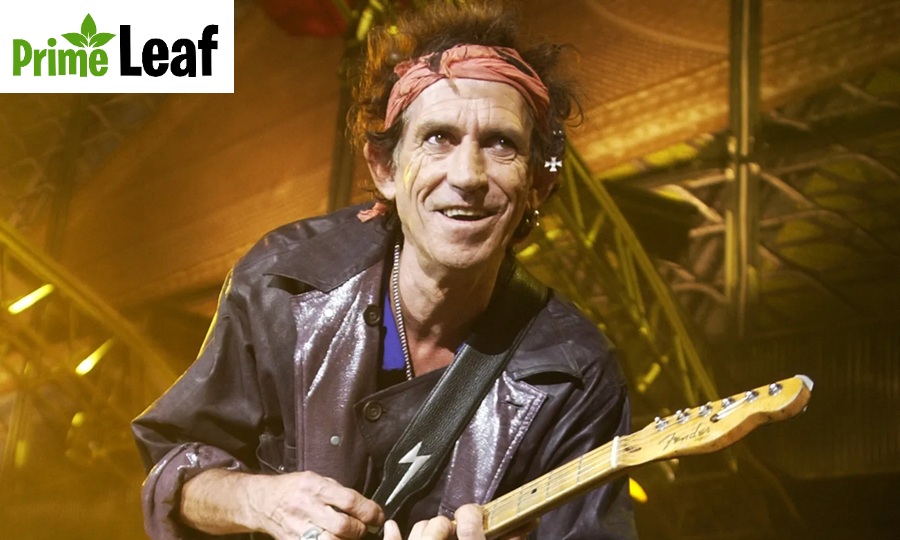

Who Is Keith Richards?
Keith Richards is an English musician, songwriter, guitarist, and record producer who has spent more than six decades as the creative backbone of the Rolling Stones — the band that has sold over 240 million records, performed more than 2,000 concerts worldwide, and generated billions of dollars in touring revenue. He is the co-architect of the Jagger/Richards songwriting partnership — one of the most commercially successful and creatively enduring collaborations in music history — and the inventor of guitar riffs so fundamental to rock and roll that they have become part of the atmosphere.
If you’re here for the quick answer: Keith Richards is 82 years old, born December 18, 1943, in Dartford, Kent. He has an estimated net worth of $600 million, has been married to model Patti Hansen since 1983, has five children, owns properties in Connecticut, Sussex, and the Turks and Caicos, and is actively recording the Rolling Stones’ 25th studio album at Metropolis Studios in London as of early 2026. He is very much alive — a fact that continues to surprise approximately everyone who knew him in the 1970s.
Quick Facts – Keith Richards
| Detail | Info |
|---|---|
| Full Name | Keith Richards |
| Date of Birth | December 18, 1943 |
| Place of Birth | Dartford, Kent, England |
| Nationality | British |
| Height | 5’10” (178 cm) |
| Occupation | Musician, songwriter, guitarist, record producer |
| Years Active | 1960 – Present |
| Band | The Rolling Stones (1962–present) |
| Known For | Rolling Stones co-founder; Jagger/Richards songwriting; open G tuning; Satisfaction riff |
| Partner (historical) | Anita Pallenberg (1967–1980) |
| Wife | Patti Hansen (m. December 18, 1983) |
| Children | 5 — Marlon, Angela, Tara (deceased), Alexandra, Theodora |
| Net Worth | $600 million |
| Guitar Ranking | Rolling Stone magazine — 4th greatest guitarist of all time |
| Hall of Fame | Rock and Roll Hall of Fame (1989) |
| Properties | Redlands (Sussex); Weston, Connecticut; Parrot Cay (Turks and Caicos) |
Early Life – Dartford, the Choir Boy and the Grandfather’s Guitar
Keith Richards was born on December 18, 1943, at Livingston Hospital in Dartford, Kent — a working-class town in the commuter belt southeast of London where ambition and circumstance were not always aligned.
His father Herbert — known as Bert — was a factory worker who had been wounded during the Normandy invasion. His mother Doris was the musical one, the one who played records and paid attention to what her son was drawn to. She introduced him to jazz. She noticed when he gravitated toward the radio.
But it was his maternal grandfather, Augustus Theodore “Gus” Dupree — a jazz musician who played multiple instruments and performed into old age — who gave Keith his first guitar. The moment Gus handed over that instrument sits at the origin point of everything that followed. Keith later wrote a children’s book about it: Gus & Me: The Story of My Granddad and My First Guitar, published in 2014. The dedication in that book tells you more about who Keith Richards is than any of the drug arrest headlines combined.
As a choirboy at Dartford Technical School, he sang in a trio of boy sopranos handpicked by the choirmaster — performing at Westminster Abbey for Queen Elizabeth II. The choirboy who would later be arrested for drug possession at Redlands Estate and spend his life as one of rock’s most notorious figures once sang for the monarch in one of England’s most sacred buildings.
He attended Dartford Technical High School, where he and a classmate named Michael Phillip Jagger first met as neighbours and occasional childhood friends. The Richards family moved away when Keith was around ten. They didn’t reconnect properly until 1961, when Keith spotted Mick on a train platform at Dartford Station — Mick carrying a stack of imported American blues records, Keith carrying everything he needed to understand exactly who he was looking at.
The Formation of the Rolling Stones
The train platform reunion led Keith to Mick’s flat, to their mutual friend Dick Taylor — later of the Pretty Things — and eventually to a rambling collective of musicians that coalesced around Blues Incorporated founder Alexis Korner’s circle.
By 1962, Keith Richards, Mick Jagger, Brian Jones, Charlie Watts, Bill Wyman, and Ian Stewart had formed the core of what would become the Rolling Stones. Their manager, Andrew Loog Oldham — sharp, young, and possessed of an instinct for image management that bordered on genius — positioned them as the dangerous alternative to the Beatles. Where the Fab Four were charming and palatable, the Stones were raw, confrontational, and faintly threatening.
Oldham also advised Keith to drop the ‘s’ from his surname, believing “Keith Richard” sounded more pop. He complied for more than a decade before asserting his legal name again in 1978.
He and Jagger were locked in a room by Oldham and told not to come out until they had written a song. The manager understood something the musicians hadn’t yet fully articulated: the real money in music is in publishing, and the way to own publishing is to write your own material. That locked-room session launched the Jagger/Richards songwriting partnership — one of the most commercially dominant collaborations in rock history.
The Songwriting Partnership – The Glimmer Twins

Since the mid-1960s, Keith Richards and Mick Jagger have written virtually every Rolling Stones original under the credit “Jagger/Richards.” They are collectively known as the Glimmer Twins — a production pseudonym adopted in the 1970s that captured their symbiotic creative relationship.
Rolling Stone magazine lists fourteen Jagger/Richards compositions on its 500 Greatest Songs of All Time — a figure that places them among the most represented songwriting partnerships in the publication’s entire canon.
Selected Jagger/Richards Classics
| Song | Year | Significance |
|---|---|---|
| (I Can’t Get No) Satisfaction | 1965 | Riff written in sleep; became defining rock anthem |
| Paint It Black | 1966 | Number 1 worldwide; Richards plays all guitar parts |
| Jumpin’ Jack Flash | 1968 | One of rock’s most covered songs |
| Gimme Shelter | 1969 | Considered one of the greatest rock recordings ever made |
| Wild Horses | 1971 | Covered by hundreds of artists |
| Brown Sugar | 1971 | Open G tuning showcase |
| Tumbling Dice | 1972 | Exile on Main St. centrepiece |
| Angie | 1973 | One of their greatest ballads |
| Start Me Up | 1981 | Microsoft licensed it for Windows 95 launch |
| Sympathy for the Devil | 1968 | Richards plays all guitar parts |
The partnership has not always been harmonious. The relationship between Jagger and Richards has been one of the great creative tensions in music — mutual respect curdling periodically into genuine resentment, separating and reconvening across decades of shared history. In his memoir Life, Keith described Mick with a frankness that generated considerable tabloid coverage. The friendship survived it, as it has survived everything else.
The Guitar – Open G and the Sound of Rock

Keith Richards is not the fastest guitarist. He is not the most technically intricate. He would be the first to tell you this himself.
What he is, is the most influential rhythm guitarist in rock history — the architect of a sound so distinctive that it has become the foundational texture of an entire genre.
His signature contribution is the use of open G tuning — specifically, a five-string version in which the lowest string is removed entirely. The tuning is GDGBD, and it produces the ringing, syncopated chord work that defines songs like Honky Tonk Women, Brown Sugar, and Start Me Up. He credits banjo tuning as his inspiration for discovering it.
Rolling Stone magazine ranked him the fourth greatest guitarist of all time — behind Jimi Hendrix, Eric Clapton, and Jimmy Page, ahead of virtually everyone else. The magazine separately described him as the creator of “rock’s greatest single body of riffs.”
The Telecaster is his instrument of choice. Several of his signature Telecasters — including the legendary “Micawber” — are tuned to open G with the low string removed and have appeared on more iconic recordings than most musicians produce in a lifetime.
The Drug Years – The Most Famous Survivor in Rock
Any honest account of Keith Richards’ life and career has to spend real time on the drug years — not because they define him, but because pretending they didn’t happen would be dishonest, and because what he survived them to produce is genuinely remarkable.
From the late 1960s through the early 1980s, Richards maintained a heroin habit that was well-documented, openly acknowledged, and widely assumed to be fatal. He was arrested multiple times across multiple countries. The 1967 Redlands police raid — during which Mick Jagger and Richards were arrested, and Marianne Faithfull’s presence in a fur rug was reported in terms that said more about 1967 tabloid journalism than about anything else — became one of the defining media events of the decade.
The most significant legal moment came in Canada in 1977, when he was charged with possession for the purpose of trafficking heroin — an offence that carried a potential life sentence. He received a suspended sentence on the condition that he perform a benefit concert for the blind. He performed the concert. The judge received a letter from a blind girl saying how much the concert had meant to her. The outcome became one of the more extraordinary footnotes in legal history.
He quit heroin in the early 1980s — around the time he married Patti Hansen. The drug use that was supposed to kill him didn’t. The constitution that kept him alive, apparently, is genuinely extraordinary. His doctor once told him that his blood count was “totally normal” after years of what would have hospitalised most people permanently.
“I was never addicted to heroin,” he told Rolling Stone magazine once. “I was addicted to drugs in general. There is a difference.”
Exile on Main St. – The Greatest Album They Ever Made
In 1971–72, the Rolling Stones decamped to Villa Nellcôte — Richards’ rented mansion in the south of France, where the French tax exile had driven them — and recorded what is widely considered one of the greatest albums in rock history.
Exile on Main St. is not a polished record. It sounds like it was made in a basement by people who hadn’t slept properly in weeks — because it was, and they hadn’t. The recording conditions at Nellcôte were deliberately chaotic, with musicians drifting in and out, sessions starting at midnight and ending at dawn, the whole thing held together by Richards’ insistence on capturing something raw and immediate rather than refined and careful.
The result was an album that sounds better every decade — a record that captures a specific moment in time and mood that has never been replicated, only imitated.
Solo Career and the X-Pensive Winos
Away from the Stones, Richards has pursued a solo career that has earned its own critical respect independent of his band.
| Album | Year | Notes |
|---|---|---|
| Talk Is Cheap | 1988 | Solo debut; critically acclaimed; formed X-Pensive Winos |
| Main Offender | 1992 | Second solo album |
| Crosseyed Heart | 2015 | Third solo album; 23 years after second |
Talk Is Cheap was released during a period of significant tension with Jagger — both had embarked on solo projects, and the relationship was at one of its lower points. The album received strong reviews and demonstrated that Richards could write and perform at a high level outside the Stones’ structural support.
He co-founded the X-Pensive Winos with drummer Steve Jordan in 1987 as a touring and recording band for his solo work. The project has been intermittent rather than sustained — the Stones always reassert their gravitational pull eventually.
Pirates of the Caribbean – Captain Teague
In 2007, Keith Richards appeared as Captain Edward Teague — father of Captain Jack Sparrow — in Pirates of the Caribbean: At World’s End. He reprised the role in Pirates of the Caribbean: On Stranger Tides in 2011.
The casting was not accidental. Johnny Depp had openly stated that his Jack Sparrow character was partly modelled on Richards — the walk, the manner, the general air of someone who has survived things that should have been fatal. Having the original appear as the father was a meta-joke that worked completely.
Richards has described the experience with characteristic directness: “I didn’t have much to do except look weird.”
Hackney Diamonds and the 25th Studio Album
In October 2023, the Rolling Stones released Hackney Diamonds — their first album of original material in eighteen years. The album received strong critical reviews, with particular praise for its energy and the quality of its songwriting.
More significantly for what comes next: the Stones subsequently opted out of a planned European tour to focus on recording their 25th studio album. Richards, Jagger, and Ronnie Wood have been working at London’s Metropolis Studios with producer Andrew Watt, reportedly laying down 13 tracks. The decision to prioritise new music over touring — at a combined age that defies straightforward categorisation — is a genuine statement of intent from a band that refuses to become a nostalgia act.
Personal Life – Anita, Patti and Five Children
Keith Richards’ romantic life has two distinct chapters.
His relationship with Italian actress and model Anita Pallenberg from 1967 to 1980 was one of rock’s great tumultuous partnerships — passionate, creative, drug-fuelled, and ultimately impossible to sustain. They had three children together: Marlon (born 1969), Angela (born 1972), and Tara — who died in 1976 at ten weeks old. The loss of Tara has been one of the few subjects Keith has spoken about with unguarded grief.
In 1983, he married Patti Hansen — an American model — on his 40th birthday. He has described the marriage as the point at which his life actually began to make sense. They have two daughters together: Alexandra (born 1983) and Theodora (born 1985).
He received the Connecticut Governor’s Award of Excellence in March 2026 — recognising his decades of contributions to music and philanthropy, including sustained support for local institutions like SPHERE and the Prospector Theater in his adopted home state.
Net Worth – $600 Million and Still Counting
| Source | Contribution |
|---|---|
| Rolling Stones touring revenue | Primary — billions generated across 60 years |
| Jagger/Richards songwriting royalties | Ongoing — 14 songs on Rolling Stone’s 500 Greatest list |
| Solo albums and X-Pensive Winos | Supplementary |
| Record production (Aretha Franklin, Ronnie Spector) | Moderate |
| Mindless Records | Small but symbolic |
| Acting (Pirates of the Caribbean) | Supplementary |
| Real estate (Redlands, Connecticut, Parrot Cay) | Significant asset base |
| Total Estimated Net Worth | $600 million |
The Times of London’s annual Rich List placed his wealth at £440 million in June 2025 — a figure that rose £25 million from the previous year, suggesting the royalty and licensing streams from six decades of Rolling Stones material continue to generate serious income.
Conclusion
Keith Richards has been pronounced dead, figuratively if not literally, approximately once per decade since the 1970s. He was supposed to be destroyed by heroin. He was supposed to be destroyed by the 1977 Canada drug charge. He was supposed to be destroyed by the fall from a coconut tree in 2006. He was supposed to be destroyed by six decades of everything else.
He is 82 years old, recording a new album in London with the Rolling Stones, recently honoured by the Governor of Connecticut, married to the same woman for over forty years, and in possession of the most recognisable guitar sound in the history of rock music.
The riff from Satisfaction, played on a guitar he’d written lyrics about in his sleep, changed the sound of popular music in 1965 and has not stopped resonating since. The open G tuning on Honky Tonk Women, Brown Sugar, and Start Me Up created a vocabulary that guitarists are still learning. The weaving guitar interplay with Ronnie Wood that defines the Stones’ live sound is still being performed on stages worldwide.
He once said: “I was always on a different road from everybody else. I didn’t know where I was going, but I sure knew how I was going to get there.”
He got there. He’s still going.