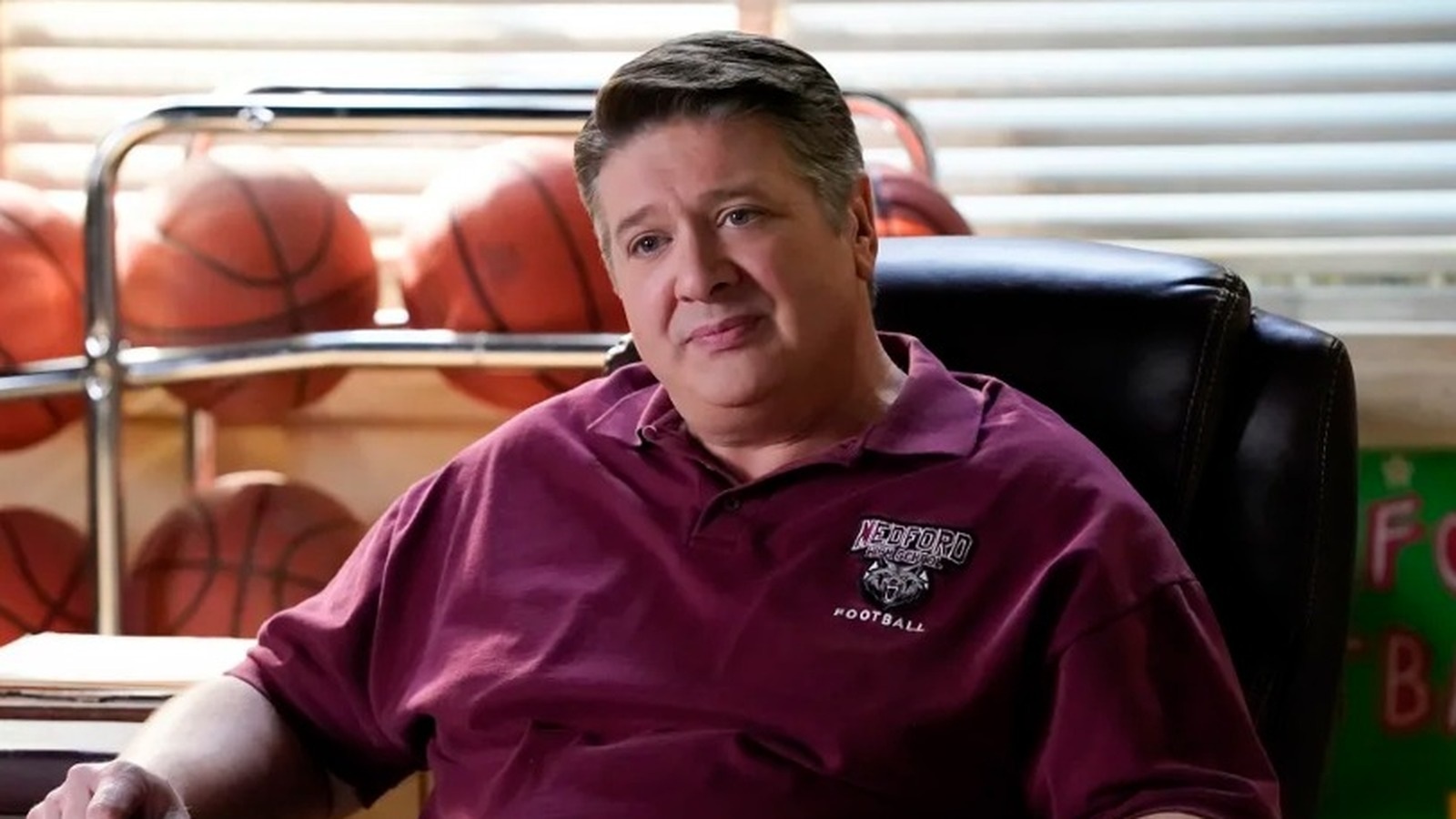

Lance Barber is an American actor best known for playing George Cooper Sr., the warm-hearted and complicated father at the centre of CBS’s hit comedy Young Sheldon. Born on June 5, 1973, in Kalamazoo, Michigan, Barber built his career the slow and steady way — through years of supporting roles, guest appearances, and stage work before landing the role that would define his public profile and introduce him to millions of viewers worldwide.
If you are searching for a quick answer about who Lance Barber is, here it is: he is a Chicago-trained character actor whose career spans nearly two decades of television and film, culminating in one of the most emotionally layered performances in recent American sitcom history. His portrayal of George Cooper is notable precisely because it subverts expectations — turning a character originally sketched as a background figure in The Big Bang Theory into a fully realised, deeply human presence.
| Detail | Information |
|---|---|
| Full Name | Lance Barber |
| Date of Birth | June 5, 1973 |
| Birthplace | Kalamazoo, Michigan, USA |
| Nationality | American |
| Profession | Actor |
| Known For | Young Sheldon (George Cooper Sr.) |
| Spouse | Aliza Barber |
| Married | 2012 |
| Children | Two |
| Training | Second City, Chicago |
What makes his story compelling beyond the credits is how long the road was before Young Sheldon came along. Barber spent years doing exactly what most working actors do — taking whatever roles came, building his craft in improvisational theatre, and trusting that consistency would eventually open bigger doors. It did, but not quickly or easily.
He is also, by all accounts, a deeply private individual off screen. Married to chef Aliza Barber since 2012, he has kept his family life away from the media spotlight with a consistency that is increasingly rare for actors at his level of visibility. This combination — public talent, private life — makes him a genuinely interesting figure to understand.
Early Life and the Road to Acting
Lance Barber grew up in Kalamazoo, Michigan, a mid-sized city with a strong arts and music culture that has produced a notable number of creative professionals over the years. Details about his childhood and family background are not extensively documented in the public domain, which is consistent with his general approach to personal privacy.
What is known is that his path into acting ran through Chicago rather than the more conventional Hollywood route. He became associated with The Second City, the legendary improvisational comedy institution that has trained some of the most significant comedic talents in American entertainment history. Alumni of Second City include figures who have shaped Saturday Night Live, film comedy, and television for decades — and training there instils a particular kind of performance discipline that values ensemble work, listening, and spontaneity over showboating.
This background is visible in how Barber performs on screen. He is a reactive actor as much as a proactive one — someone whose most effective moments often come in response to what another actor does rather than in solo spotlight sequences. This quality is invaluable in ensemble comedy and drama, and it explains why directors and writers consistently found him useful across a wide range of projects before his leading role arrived.
Building a Career: The Years Before Young Sheldon
Before George Cooper Sr. made him a household name, Lance Barber accumulated an impressive and varied list of credits across television and film. He was the kind of actor that audiences recognised without always being able to name — a reliable presence in supporting and guest roles who consistently elevated the material he was given.
His television work included appearances in shows spanning multiple genres. He appeared in It’s Always Sunny in Philadelphia, the long-running FX comedy, in a recurring role that demonstrated his capacity for broad comedic performance. He also appeared in The Big Bang Theory — the very show that Young Sheldon spun off from — playing a different character entirely, which created an interesting footnote in his career timeline.
Other credits included Criminal Minds, where he showed a more dramatic range, and a number of other network and cable productions that kept him consistently working through the 2000s and early 2010s. Film work added further texture to his resume, with appearances in features that gave him experience outside the television format.
Throughout this period, he continued to develop his craft rather than simply accumulating credits. There is a difference between an actor who works constantly and one who grows constantly, and Barber appears to fall into the latter category. The depth he brought to George Cooper did not arrive fully formed — it was built through years of smaller performances in which he learned how to inhabit characters quickly and authentically.
Young Sheldon: The Role That Changed Everything
When CBS launched Young Sheldon in 2017 as a prequel to The Big Bang Theory, the premise seemed straightforward enough: a nostalgic look at the childhood of beloved physicist Sheldon Cooper, set in 1980s Texas. The focus, as the title suggested, was on young Sheldon himself — his genius, his social awkwardness, his family’s efforts to understand and accommodate him.
What nobody quite anticipated was how compelling the parent characters would become. Lance Barber‘s George Cooper Sr. arrived on screen carrying a somewhat unfair burden — in The Big Bang Theory, adult Sheldon had described his father in unflattering terms, painting a picture of a man defined by personal failings. Young Sheldon had the opportunity to either confirm or complicate that portrait.
Barber and the show’s writers chose complication, and the results were remarkable. George Cooper as rendered in Young Sheldon is a man of real warmth, genuine intelligence, and profound decency — someone struggling with the gap between his aspirations and his circumstances, trying to be a good father to children who are each complicated in their own ways, and navigating a marriage under real strain with more grace than he is ever given credit for.
The performance earned Barber significant critical recognition and a devoted audience. Viewers who came to the show expecting light nostalgic comedy found themselves genuinely moved by George’s story, and many have described his character as one of the most human and sympathetic figures in recent American television.
What Made His Performance Stand Out
| Performance Quality | How It Showed Up on Screen |
|---|---|
| Emotional Authenticity | Vulnerable without being weak |
| Comic Timing | Precise but never forced |
| Ensemble Chemistry | Elevated every scene partner |
| Physical Presence | Grounded, unpretentious, real |
| Character Consistency | Coherent across seven seasons |
| Dramatic Range | Equally effective in heavy and light scenes |
The technical elements of Barber’s performance are worth examining because they illuminate why the role worked as well as it did. His physical presence — broad, unhurried, grounded — communicated George’s character before he spoke a word. He moved like someone who had worked hard all his life and carried that effort in his body without complaint.
His comic timing, honed through years of improvisational training, allowed him to find the humour in domestic situations without ever undercutting the emotional weight of the scene. This is a difficult balance to strike in family comedy-drama. Too much emphasis on the jokes and the relationships feel hollow; too much gravity and the comedy collapses. Barber navigated this territory with consistency across seven seasons.

Perhaps most impressively, he maintained the character’s essential integrity even as the show introduced increasingly difficult storylines in later seasons. George’s personal struggles, his marriage difficulties, and the circumstances of his eventual death — handled with unusual sensitivity for a primetime comedy — required Barber to carry emotional weight that most sitcom actors are never asked to manage.
Personal Life: A Study in Deliberate Privacy
Off screen, Lance Barber presents a fascinating contrast to the visibility his career has brought him. He and his wife Aliza, a professional chef, have maintained a private family life with a consistency that speaks to genuine conviction rather than simple media shyness.
They married in 2012 and have two children whose names and details are not publicly available — a deliberate choice that reflects thoughtful parenting in an environment where celebrity adjacency can expose children to unwanted attention. Lance has spoken about his family in interviews warmly but without detail, drawing a clear line between his professional public self and his personal domestic life.
This approach has earned him respect among peers and observers who recognise how rare it is for actors at his level of recognition to maintain genuine separation between career and family. It also reinforces the sense of a person whose values are consistent whether the cameras are rolling or not.
His Chicago roots remain a visible part of his identity. The Second City sensibility — collaborative, grounded, resistant to ego — seems to have stayed with him through the years of increasing success. Colleagues consistently describe him in terms that emphasise his generosity as a scene partner and his lack of the competitive territoriality that can make ensemble television productions difficult.
Legacy and What Comes Next
Young Sheldon concluded its run in 2024 after seven seasons, leaving behind a body of work that will be assessed more generously as time passes. The show was not always taken seriously by critics who preferred to view it as light nostalgic entertainment, but the depth of the audience’s emotional response — particularly around George Cooper’s storyline — suggests something more substantial was happening.
For Lance Barber, the conclusion of Young Sheldon represents both an ending and an opening. Seven seasons of a successful network comedy establishes an actor’s credibility and commercial viability in ways that years of supporting roles cannot fully replicate. He enters whatever comes next with a demonstrated range, a loyal audience, and the craft foundation to take on more complex material.
What that next chapter looks like remains to be seen. If his trajectory so far is any guide, he will approach it with the same patience and seriousness that has defined his career from its earliest days — building carefully, choosing deliberately, and consistently doing more with the material than anyone might have expected.
Conclusion
The story of Lance Barber is ultimately one about the value of patience, craft, and genuine investment in the work itself over the rewards that work might eventually bring. From improvisational stages in Chicago to the emotional centrepiece of one of American television’s most beloved recent comedies, he has built something durable and real — a body of work and a reputation that reflects who he actually is rather than who fame might have encouraged him to become.