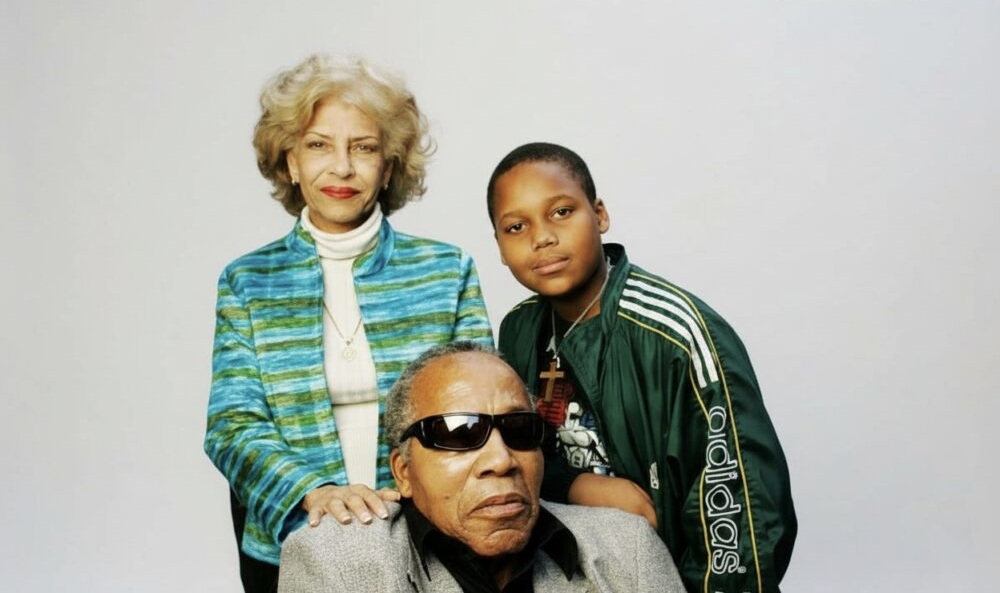

Julianna Farrait is a Puerto Rican-born woman best known as the wife of Frank Lucas, the Harlem heroin kingpin whose story was dramatized in the 2007 Oscar-nominated film American Gangster. Born in 1941 in San Juan, Puerto Rico, she married Lucas in 1967 and became an active participant in one of the most brazen drug empires in American history — serving multiple prison sentences, surviving the witness protection program, and remaining loyal to her husband until his death in 2019.
Quick Facts — Wiki-Style Profile
| Detail | Information |
|---|---|
| Full Name | Julianna Farrait |
| Also Known As | Julie Lucas, Julie Farrait |
| Date of Birth | c. 1941 |
| Birthplace | San Juan, Puerto Rico |
| Nationality | American (Puerto Rican heritage) |
| Religion | Christian |
| Spouse | Frank Lucas (m. 1967 – his death, 2019) |
| Children | Francine Lucas-Sinclair (biological); 6 stepchildren |
| Known For | Wife of Frank Lucas; drug convictions; American Gangster inspiration |
| Film Portrayal | Lymari Nadal as “Eva” in American Gangster (2007) |
| Prison Sentences | Multiple, including 5-year sentence (2012) |
| Frank Lucas Death | May 30, 2019 (age 88) |
| Status | Believed deceased (prior to Frank Lucas, per NYT reports) |
San Juan to Harlem: A Life Transformed by One Flight
Julianna Farrait grew up in San Juan, Puerto Rico, in a modest, close-knit family that emphasized hard work, faith, and community. Her early years were by all accounts ordinary — she was popular at school, known for her natural beauty and confident personality, and eventually won her school’s homecoming queen title. That last detail matters, because the film American Gangster portrayed her character, renamed “Eva,” as a former Miss Puerto Rico — a claim that is factually incorrect. No records place her on any Miss Puerto Rico winners list. She was a homecoming queen, not a pageant title holder, and the distinction speaks to how her story has been both romanticized and distorted by popular culture.
She admitted in interviews that she had always been attracted to danger. She was drawn to confidence, boldness, and the kind of certainty that money and power project. Those instincts were about to be tested.
The moment that changed everything came on a routine flight from Puerto Rico to New York. She and Frank Lucas exchanged glances throughout the journey. “Every time I turned around to check her out, she was smiling at me,” Lucas later wrote in his autobiography, Original Gangster. “I didn’t need any more of a hint.” She later recalled her own side of that encounter to the Village Voice in 2007: “The first time I met Frank, I was completely taken back by his confidence and coolness. He was a very self-assured man, which I found very attractive. And I still do.”
They married on January 1, 1967, at a justice of the peace in San Juan, surrounded by her family and friends. She had no idea — or perhaps had some idea — of the full scale of what Frank Lucas was building. Either way, she stepped into it with open eyes and an appetite for the life it offered.
Inside the Empire: Luxury, Power, and Complicity
The world Julianna entered after marrying Lucas was staggering in its excess. At the peak of his operations, Frank Lucas claimed to be earning $1 million a day from his “Blue Magic” heroin — a supremely pure product he imported directly from Southeast Asia, cutting out the Italian mob as middlemen entirely. Whether or not the $1 million figure holds up to scrutiny, what’s undeniable is that the Lucases lived like royalty.
She wore designer clothing, traveled frequently, and became known as one of the most stylishly dressed women in their social circle. Frank reportedly bought her an antique cream-colored Mercedes with a pure leather interior when she gave birth to their daughter Francine. She reciprocated with gifts of her own — most famously, a full-length chinchilla fur coat and matching hat she purchased for Frank, which he then wore to the Muhammad Ali vs. Joe Frazier fight at Madison Square Garden in 1971. That coat nearly brought the empire down: it was so ostentatious, so out of place on a man who was supposed to be invisible, that it caught the attention of federal investigators.
She wasn’t a passive beneficiary of this wealth. She was an active participant. Many who knew the couple described her as fiercely loyal but also genuinely invested in the operation. Together they were called — sometimes admiringly, sometimes critically — the “Black Bonnie and Clyde.”
A Timeline of Key Events
| Year | Event |
|---|---|
| 1941 | Born in San Juan, Puerto Rico |
| c. 1960s | Meets Frank Lucas on a flight from Puerto Rico to New York |
| 1967 | Marries Frank Lucas in San Juan, Puerto Rico |
| 1971 | Buys Frank the infamous chinchilla coat worn to the Ali-Frazier fight |
| 1975 | Frank Lucas arrested; family enters federal witness protection program |
| 1975–1977 | Lives in Albuquerque, New Mexico, under witness protection |
| 1977 | Moves to Puerto Rico with daughter Francine |
| c. 1984 | Arrested in Las Vegas during FBI drug sting operation |
| 1985 | Daughter Francine Lucas-Sinclair born (per some sources) |
| 2010 | Arrested in Puerto Rico for attempting to sell 2 kg of cocaine |
| 2012 | Sentenced to 5 years in prison by Manhattan federal court |
| 2019 | Present at Frank Lucas’s funeral; Frank dies May 30, age 88 |
Prison, Witness Protection, and the Las Vegas Arrest
The empire collapsed in 1975. Frank Lucas was arrested at his New Jersey home, and the authorities seized more than $500,000 in cash. The fallout was swift and brutal. To protect Frank’s family from potential retaliation, federal authorities placed Julianna, their daughter Francine, and one of Frank’s other children into the federal witness protection program in Albuquerque, New Mexico — for a full year.
Life in Albuquerque was a stunning reversal of fortune. The woman who had worn chinchilla and driven a custom Mercedes was now living in poverty, with some days passing with little more than crackers in the cupboard. Francine was given a new last name — Walters — and the family existed in the shadows of American anonymity.
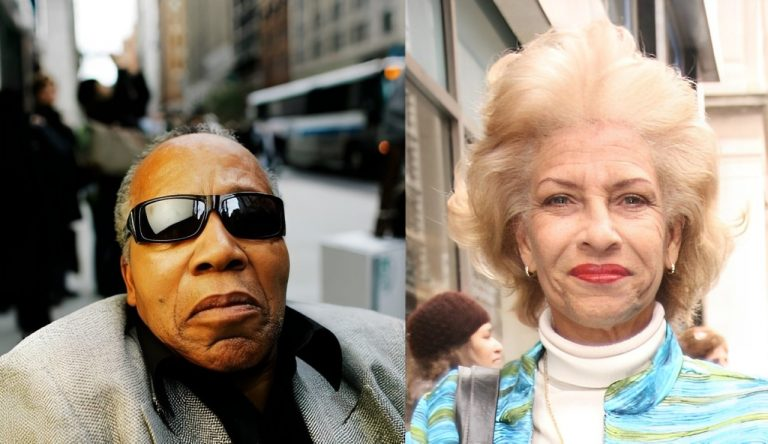
After leaving witness protection, Julianna took Francine to Puerto Rico to live with her parents. Frank was released from prison two years later, and the family returned to New Jersey. Then history repeated itself. Unable to find legitimate employment, Frank slipped back into dealing — and Julianna helped him. The FBI was watching. When she traveled to the Stardust Hotel-Casino in Las Vegas to complete a drug transaction, federal agents arrested her on the spot. She served approximately four and a half years in prison for that conviction.
The impact on their daughter Francine was profound and lasting. Watching her mother arrested, and living through the chaos of witness protection, led Francine to eventually launch Yellow Brick Road — a nonprofit website providing resources to children of imprisoned parents. The wreckage of her parents’ choices became the foundation of her life’s work.
The 2010 Arrest: History Repeating
If the Las Vegas arrest was the second act, the 2010 arrest in Puerto Rico was a stunning third. By then, Julianna Farrait was nearly 70 years old. Federal agents had been surveilling her since February 2009, building a case as she allegedly moved back into narcotics activity.
On May 19, 2010, she allegedly met an undercover DEA informant in a hotel room in the Isla Verde area of Puerto Rico and offered to sell 2 kilograms of cocaine. A previously recorded conversation was played in court in which she allegedly told the informant she had drugs to sell and mentioned another suspect who had an additional 8 kilograms available for prospective buyers. During the actual arrest, she reportedly threw suitcases containing large sums of money out of a hotel window.
She was brought before a Manhattan federal court in 2012 and sentenced to five years in prison. Her plea to the judge was heartbreaking in its simplicity: “I want to apologize to my husband. My husband is 81 years old, and I would like to spend what time he has with him.” The judge denied the request, telling her to make better choices and live a clean life.
She likely completed her sentence around 2017. What followed was a quiet return to private life — and to Frank’s side.
The Woman Behind “Eva”: Truth vs. Hollywood
The character of “Eva” in American Gangster — portrayed by Puerto Rican actress Lymari Nadal — is based on Julianna but is not Julianna. The film upgrades her title from homecoming queen to Miss Puerto Rico, makes her love story more cinematic, and largely omits the Las Vegas arrest and the full scope of her criminal involvement. Hollywood needed a compelling romantic foil for Denzel Washington’s Frank Lucas, and so “Eva” was softened, simplified, and beautified into a symbol of loyalty rather than a fully realized picture of complicity.
The real Julianna was more complicated — and more interesting. She wasn’t just the woman who stood by her man. She was the woman who kept returning to the crime long after the lessons should have been learned, who threw cash out a hotel window when the DEA came knocking, who at 70 years old was still willing to broker a cocaine deal in a Puerto Rican resort hotel.
Legacy, Loss, and a Life That Defied Easy Definition
Frank Lucas died on May 30, 2019, at the age of 88, of natural causes. Reports initially circulated that Julianna had predeceased him — a claim even the New York Times referenced in his obituary. But photographs from his funeral in New Jersey on June 11, 2019, showed Julianna and Frank Lucas Jr. standing together to pay their respects. She had outlasted the rumors, if not, perhaps, much more time after.
Julianna Farrait‘s life is one of the most layered stories to emerge from the American drug trade of the 1970s. She was a homecoming queen from San Juan who became a partner in a heroin empire. She was a mother who put her daughter through the trauma of witness protection. She was a woman who served multiple prison sentences and kept going back. She was, by every account, fiercely and enduringly devoted to Frank Lucas — for better and, by almost any measure, significantly for worse.
Her story doesn’t fit neatly into the role of victim or villain. It sits in the uncomfortable space between the two, which is exactly why it continues to fascinate — and why the name Julianna Farrait still carries so much weight more than half a century after that fateful flight from San Juan to New York.