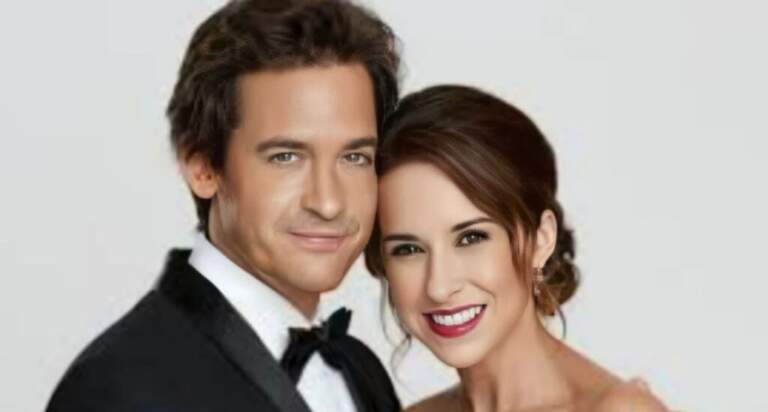


If you are searching for Marcus Leithold, here is your direct, verified answer: Marcus Leithold is an American former actor and personal trainer born in Butler, Pennsylvania, best known publicly as the first husband of actress Teri Hatcher. He appeared in two 1980s B-movie action films — Deadly Prey (1987) and Death Chase (1988) — before leaving Hollywood entirely and returning to a career in personal fitness training. He married Teri Hatcher on June 4, 1988, and their divorce was finalized on June 2, 1989 — just two days before their first wedding anniversary, making it one of the shortest celebrity-adjacent marriages on record. In the nearly four decades since, Marcus has maintained a level of privacy so complete that virtually nothing about his life post-divorce has entered the public record.
The second thing worth knowing about Marcus Leithold upfront is that his story is genuinely interesting precisely because of what he chose not to do. He had a brief window into Hollywood visibility — two films, a marriage to a woman who would go on to win a Golden Globe and become one of television’s most recognized faces — and he walked away from all of it without drama, without interviews, and without any apparent regret. What he chose instead — a fitness career, a private life, quiet discipline — is the story this article tells fully and honestly.
Marcus Leithold — Quick Facts
| Detail | Information |
|---|---|
| Full Name | Marcus Leithold (also credited as Markus Leithold on IMDb) |
| Birth Year | Approximately early-to-mid 1960s |
| Birthplace | Butler, Pennsylvania, USA |
| Nationality | American |
| Profession | Former actor; personal trainer |
| Known For | First husband of Teri Hatcher; Deadly Prey (1987); Death Chase (1988) |
| Marriage | Teri Hatcher — June 4, 1988 |
| Divorce | June 2, 1989 — approximately 8–9 months |
| Physical Description | Brown hair, grey eyes, athletic build |
| Faith | Christian |
| Estimated Net Worth | Approximately $2 million (primarily from personal training) |
| Social Media | None public |
| Current Status | Living privately in the United States |
Early Life — Butler, Pennsylvania
Marcus Leithold was born and raised in Butler, Pennsylvania — a small city in western Pennsylvania’s Butler County, approximately 35 miles north of Pittsburgh.
Butler is the kind of American town that produces people with a specific kind of character — grounded, practical, not given to self-promotion, more comfortable with results than with recognition.
What is known about his early life:
| Detail | Information |
|---|---|
| Birthplace | Butler, Pennsylvania |
| Birth Era | Early-to-mid 1960s |
| Family | Parents’ names not publicly documented |
| Education | No public records |
| Early Interest | Physical fitness and athletic training |
| Community | Small-town, close-knit, conservative values |
His interest in fitness and physical training developed early — the kind of passion that becomes a life’s work rather than simply a job.
Butler gave him something that Hollywood briefly interrupted and ultimately could not replace — a clear sense of what mattered to him and what did not.
He left Pennsylvania for the opportunities that drew ambitious young people westward in the 1980s. But the values he carried from Butler appear to have remained intact throughout.
The Fitness Foundation — Personal Training Career
Before Hollywood touched his life — and after it retreated — Marcus’s primary professional identity was as a personal trainer.
What personal training in the 1980s looked like:
| Aspect | Detail |
|---|---|
| Industry context | Fitness boom of the 1980s — gym culture exploding nationally |
| Client base | High-profile clients in Los Angeles and beyond |
| Skills | Strength training, conditioning, nutrition guidance |
| Personality fit | Results-oriented, disciplined, service-focused |
| Career span | From before Hollywood to present day |
His athletic build — evident in both his film appearances — was not manufactured for cameras. It was the natural result of a life organized around physical discipline.
Personal training suited everything about Marcus that Hollywood did not — it rewarded consistency over visibility, genuine expertise over performance, and the quiet satisfaction of helping people achieve concrete results.
His estimated net worth of approximately $2 million reflects decades of serious professional practice rather than any single dramatic financial event.
The 1980s Hollywood Chapter — Brief But Real
To understand how Marcus ended up in two 1980s action films, you need to understand the specific ecosystem that produced them.
The B-movie action film boom:
The 1980s produced an extraordinary volume of low-budget action films — driven by the home video market, the proliferation of VHS rental stores, and an audience with an apparently unlimited appetite for survival games, mercenary plots, and muscular protagonists.
These films did not require the Hollywood infrastructure of major studio productions. They needed:
- Athletic men who could move convincingly on camera
- Willingness to work for modest pay
- Physical presence that read as threatening or heroic on screen
- Availability for quick production schedules
Marcus Leithold had all of these qualities. His fitness background gave him the physical credibility these roles demanded. His presence in Los Angeles’s social and fitness scene placed him in proximity to the people making these films.
He tried it. He appeared in two films. Then he stopped.
Deadly Prey (1987) — His Film Debut
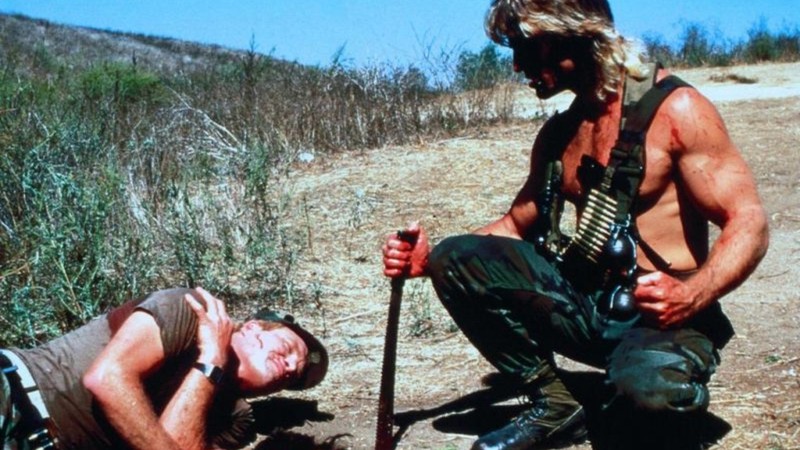
Deadly Prey is a 1987 American action film directed by David A. Prior — one of the more prolific directors of low-budget 1980s action cinema.
Film overview:
| Detail | Information |
|---|---|
| Title | Deadly Prey |
| Year | 1987 |
| Director | David A. Prior |
| Genre | Action, survival thriller |
| Plot | Mercenaries kidnap civilians and hunt them in the wilderness for training |
| Marcus’s Role | Soldier — physical, combat-oriented role |
| Cult Status | Genuine cult following among B-movie enthusiasts |
The film centers on a man kidnapped to serve as prey for a group of mercenary soldiers training in the wilderness — a premise that drew obvious comparisons to The Most Dangerous Game and gave the film its enduring cult appeal.
Marcus’s role as a soldier suited him precisely. The role required physical credibility and screen presence rather than dramatic range — qualities his fitness background provided naturally.
Deadly Prey developed a genuine cult following in subsequent decades — partly for its earnest commitment to its own absurdity, partly because it delivered exactly what its title promised. For fans of 1980s B-movie action, it is a legitimate piece of the genre’s history.
Marcus’s contribution was real, if brief.
Death Chase (1988) — His Second and Final Film

Death Chase is a 1988 action film that arrived one year after Deadly Prey and represented Marcus’s second and final screen credit before departing Hollywood entirely.
Film overview:
| Detail | Information |
|---|---|
| Title | Death Chase |
| Year | 1988 |
| Genre | Action |
| Marcus’s Role | Game Player |
| Significance | Final acting credit before complete retirement from film |
The “Game Player” credit in Death Chase is consistent with the survival-game themes that ran through Deadly Prey — suggesting Marcus was being cast in a specific physical type rather than developing a versatile acting career.
After Death Chase, he did not pursue further acting work.
The decision appears to have been clean and final — no reported attempts at additional auditions, no documented frustration with the industry, no public commentary about why he stopped. He simply stopped.
IMDb lists a credit for a film called Fighter (2025), which would represent a return to screen after nearly four decades if accurate. The details of this project remain unclear and may reflect a different individual with a similar name — a common IMDb ambiguity for private figures with minimal credits.
Filmography
| Film | Year | Role | Director | Notes |
|---|---|---|---|---|
| Deadly Prey | 1987 | Soldier | David A. Prior | Cult B-movie; film debut |
| Death Chase | 1988 | Game Player | David A. Prior | Final confirmed acting credit |
| Fighter | 2025 | TBC | Unknown | IMDb credit — details unconfirmed |
How Marcus Met Teri Hatcher

The late 1980s Los Angeles fitness and entertainment scene was a world where these two people would naturally intersect.
The context:
| Detail | Information |
|---|---|
| Setting | Los Angeles social and fitness scene, late 1980s |
| Teri’s status | Rising actress — Penny Parker on MacGyver |
| Marcus’s status | Personal trainer and minor film actor |
| Connection | Fitness industry and Hollywood social overlap |
| Timeline | Met and progressed to marriage relatively quickly |
Teri was 23 when they married. Marcus was approximately 24 to 26 depending on his exact birth year. Neither was yet the person the world would later know — Teri’s breakout was still five years away with Lois & Clark, and Marcus’s Hollywood chapter had barely begun and was already winding down.
They met in the shared space where fitness culture and entertainment industry social life overlapped — a world that the late 1980s Los Angeles scene produced in abundance.
What drew them together has never been publicly articulated by either party with any specificity. What ended their marriage has been captured in a single, memorable detail that Teri later shared publicly.
Who Is Teri Hatcher? — Essential Context
Understanding Marcus’s world requires understanding the woman whose later fame became the primary lens through which most people encounter his name.
Teri Hatcher was born December 8, 1964, in Sunnyvale, California. Her father Owen Walker Hatcher Jr. was a nuclear physicist and her mother Esther was a computer programmer — a household that valued education and professional achievement.
Teri Hatcher Career Highlights
| Year | Project | Role | Achievement |
|---|---|---|---|
| 1985 | MacGyver | Penny Parker | First major recurring television role |
| 1993–1997 | Lois & Clark: The New Adventures of Superman | Lois Lane | Career breakthrough — international recognition |
| 1997 | Tomorrow Never Dies | Paris Carver | Bond girl — global visibility |
| 2004–2012 | Desperate Housewives | Susan Mayer | Golden Globe — Best Actress in a Musical or Comedy Series |
| 2006 | Burnt Toast (book) | Author | Personal memoir |
| 2002 | Reveals childhood abuse | — | Uncle Richard Hayes Stone convicted |
The woman Marcus married in 1988 was not yet any of this. She was Penny Parker from MacGyver — a recurring guest role that had given her visibility but not yet stardom.
The woman who emerged from their brief marriage went on to become one of the most recognized television actresses of her generation.
The Marriage — June 4, 1988
Marcus Leithold and Teri Hatcher married on June 4, 1988.
The ceremony:
- Private, low-key — consistent with both their personalities at the time
- No industry spectacle — neither was yet famous enough to attract significant attention
- Teri was 23; Marcus was approximately 24–26
- The marriage that followed lasted less than a year
The detail that Teri later shared publicly about their marriage has become the most frequently cited fact about it:
By the time they separated, their wedding photos had not yet been developed.
In the pre-digital era, this meant the marriage collapsed before they had even completed the ordinary domestic ritual of collecting and reviewing their wedding photographs.
It is a small detail that contains an enormous amount of information about the speed and completeness of the marriage’s failure.
The Divorce — June 2, 1989
The divorce was finalized on June 2, 1989 — two days before their first wedding anniversary.
The facts:
| Detail | Information |
|---|---|
| Marriage date | June 4, 1988 |
| Divorce finalized | June 2, 1989 |
| Duration | Approximately 8–9 months |
| Official reason | Not publicly documented in detail |
| Public drama | None — both moved forward quietly |
| Children | None from this marriage |
| Financial settlement | Not publicly disclosed |
Neither Marcus nor Teri has discussed the specific reasons for the divorce in any significant public forum.
What is observable is the outcome:
- Teri moved forward into one of the most successful television careers of her generation
- Marcus moved completely away from public life and back to his fitness career
There was no apparent acrimony. No interviews. No competing narratives. Two young people whose brief marriage did not work, who parted, and who each built their subsequent lives without weaponizing the experience.
Marriage and Divorce Timeline
| Date | Event | Notes |
|---|---|---|
| Late 1987 / Early 1988 | Marcus and Teri meet | Los Angeles fitness and entertainment social scene |
| June 4, 1988 | Wedding ceremony | Private; low-key |
| Late 1988 | Separation begins | Wedding photos not yet developed |
| June 2, 1989 | Divorce finalized | Two days before first anniversary |
| 1989 onward | Both move forward separately | No public contact documented |
Life After Teri — The Deliberate Disappearance
Following the divorce, Marcus Leithold did something that is far simpler to describe than it is to actually accomplish:
He disappeared completely from public life and never returned.
What that has meant in practice:
| Category | Detail |
|---|---|
| Media interviews | None — ever |
| Social media | No Instagram, Facebook, Twitter, TikTok |
| Public statements about Teri | None |
| Hollywood attempts | None confirmed after Death Chase (1988) |
| Known relationships | None publicly confirmed |
| Children | None publicly confirmed |
| Current location | Unknown — living privately in United States |
His Christian faith — documented as a genuine part of his personal values — may have contributed to the clarity of his post-divorce choices.
A faith-centered life and a Hollywood-adjacent public life are not inherently incompatible, but the choice to prioritize the former over the latter is consistent with what everything else known about Marcus suggests about his values.
He was never trying to be famous. He tried it briefly. It did not suit him. He stopped.
Teri Hatcher’s Marriages — The Full Picture
Marcus was the first of Teri Hatcher’s two marriages — and the shortest.
| Husband | Marriage Date | Divorce Date | Duration | Children |
|---|---|---|---|---|
| Marcus Leithold | June 4, 1988 | June 2, 1989 | ~8–9 months | None |
| Jon Tenney | May 1994 | April 2003 | ~9 years | Emerson Rose Tenney (b. 1997) |
Jon Tenney — actor known for The Closer and various television and film roles — was Teri’s second husband and the father of her daughter Emerson Rose, born in 1997.
Their nine-year marriage ended in 2003 — the year before Desperate Housewives launched Teri to the peak of her public career.
As of 2026, Teri has spoken openly about embracing single life — describing it not as absence but as a chosen state that gives her freedom and focus.
Marcus’s brief chapter was the first. Jon Tenney’s longer one was the second. Neither produced the permanent partnership that Teri has described wanting.
Teri Hatcher in Her Own Words on Marriage
Teri has been candid in interviews about her relationship history — including her own acknowledgment that the Marcus marriage was so brief it barely registered as a marriage in practical terms.
The wedding photos detail is perhaps the most humanly honest thing she has shared about it — not recriminating, not analytical, just a concrete image of how quickly and completely something that seemed like a beginning turned out to be barely a pause.
Marcus Leithold in 2026 — Where He Is Now
As of 2026, Marcus Leithold is approximately 60 years old.
What is known:
| Detail | Status |
|---|---|
| Approximate age | Early-to-mid 60s |
| Location | Somewhere in United States — not publicly confirmed |
| Career | Personal training likely continued |
| Social media | None public |
| Relationships | None publicly confirmed |
| Children | None publicly confirmed |
| Public presence | Complete privacy maintained for ~37 years post-divorce |
The Fighter (2025) IMDb credit remains unverified. If accurate, it would represent an extraordinary return to screen after nearly four decades of complete absence from the industry. If inaccurate — a misattribution or database error — it simply confirms that Marcus has maintained his privacy with the same consistency for nearly four decades.
Either way, what is remarkable is the duration and completeness of his private life.
He has now been private for approximately four times longer than his entire Hollywood chapter lasted. The fitness career, the faith, the preference for results over recognition — these have been his life for the vast majority of his adult existence.
Frequently Asked Questions
| Question | Answer |
|---|---|
| Who is Marcus Leithold? | Former actor, personal trainer, first husband of Teri Hatcher |
| How old is he in 2026? | Approximately early-to-mid 60s |
| How long was he married to Teri Hatcher? | Approximately 8–9 months — June 1988 to June 1989 |
| Why did they divorce? | Specific reasons not publicly documented; marriage was very brief |
| Does he have children? | None publicly confirmed |
| What films was he in? | Deadly Prey (1987) and Death Chase (1988) |
| What is his net worth? | Approximately $2 million — primarily from personal training |
| Where is he now? | Living privately in the United States — exact location unknown |
| Does he have social media? | No verified public accounts |
| Did he remarry after Teri? | Not publicly confirmed |
What Marcus Leithold’s Story Teaches
It would be easy to frame Marcus Leithold’s story as one of missed opportunity — a man who brushed against Hollywood fame, married a woman who would become a Golden Globe winner, and then retreated into anonymity.
That framing misses something important.
The more accurate reading:
- He tried something, determined it did not suit him, and stopped — which requires self-awareness that is genuinely uncommon
- He built a career on genuine service and discipline rather than visibility — which produces a different but equally valid kind of professional satisfaction
- He handled the end of a brief marriage without drama or public grievance — which reflects emotional maturity rather than defeat
- He has maintained privacy for nearly four decades without apparent difficulty — which suggests that privacy was always his natural state rather than a retreat from something he genuinely wanted
The 1980s Hollywood chapter was a detour from a life that was always going to be organized around fitness, faith, and privacy. The detour produced two films and an eight-month marriage. The life it temporarily interrupted has continued uninterrupted ever since.
That is not a cautionary tale. It is a story about a person who knew himself clearly enough to recognize when something was not right for him — and acted on that recognition without drama or delay.
Conclusion
Marcus Leithold is, in the most accurate sense, a private person whose brief public chapter has given him a permanent entry in celebrity reference databases that he almost certainly has never consulted.
He appeared in two films that found their audience among B-movie enthusiasts. He married a woman who became one of television’s most celebrated actresses. He divorced before their wedding photos were developed. And then he built the rest of his life — approximately 37 years and counting — in deliberate, complete, unswerving privacy.
His fitness career gave him purpose and income. His Christian faith gave him grounding. His Butler, Pennsylvania roots gave him a baseline understanding of what a life built on substance rather than spectacle looks like.
Marcus Leithold chose that life clearly and early. He has lived it consistently ever since — which is, in its quiet way, one of the more admirable acts of self-determination in the orbit of Hollywood celebrity.