

Who Were Aretha Franklin’s Siblings?
Aretha Franklin had five siblings: four from her parents’ union and two half-siblings from her father’s other relationships. They were Erma Franklin (older sister), Cecil Franklin (older brother), Carolyn Franklin (younger sister), Vaughn Franklin (half-brother), and Carol Ellan Kelley (half-sister). Three of the four full siblings — Erma, Carolyn, and Cecil — were directly involved in Aretha’s career in meaningful ways, forming the tight inner circle that supported the Queen of Soul through her greatest triumphs and her most difficult personal periods.
If you’re here for the quick answer: Aretha had five siblings in total. Her sisters Erma and Carolyn were accomplished musicians in their own right — both contributing backing vocals to her biggest songs, including Respect, and Carolyn writing two of her most celebrated compositions, Ain’t No Way and Angel. Her brother Cecil became her personal manager after her divorce from Ted White. All five siblings predeceased Aretha, leaving her the last surviving member of the family before her own death in August 2018.
The Franklin Family at a Glance
| Sibling | Birth Year | Relationship | Career | Death |
|---|---|---|---|---|
| Erma Franklin | 1938 | Full sister (older) | Singer, community worker | 2002 (throat cancer, age 64) |
| Cecil Franklin | 1940 | Full brother (older) | Pastor, Aretha’s manager | 1989 (lung cancer, age 49) |
| Carolyn Franklin | 1944 | Full sister (younger) | Singer, songwriter | 1988 (breast cancer, age 43) |
| Vaughn Franklin | c.1935 | Half-brother | Limited public record | Late 2002 |
| Carol Ellan Kelley | 1940 | Half-sister | Private life | 2019 (age 78) |
The Foundation – C.L. Franklin and the Church
To understand the Franklin siblings, you have to understand where they came from — and that means starting with their father.
Reverend Clarence LaVaughn Franklin — known universally as C.L. Franklin — was one of the most celebrated preachers in American history. He was the pastor of New Bethel Baptist Church in Detroit, Michigan, a man known as the “Million Dollar Voice” who regularly drew crowds of thousands and whose sermons were recorded and distributed on Chess Records as commercially released albums.
He was also deeply flawed, complex, and complicated in ways the family navigated with varying degrees of difficulty across their entire lives.
Their mother, Barbara Siggers Franklin, was a pianist and vocalist who passed her musical gifts directly to her children before leaving the family home in 1948 — not abandoning them as some historical accounts incorrectly stated, but separating from C.L. due to his chronic infidelity. She died of a heart attack in 1952 at just 34 years old, leaving four children without their mother at a formative stage.
Aretha later wrote of losing her mother: “I cannot describe the pain, nor will I try.”
The four full siblings — Erma, Cecil, Aretha, and Carolyn — were raised primarily by their father in Detroit, with extended family and trusted family friends helping care for them. The New Bethel Baptist Church became the center of their world. Music was not an extracurricular activity in the Franklin household. It was the air they breathed.
The church exposed them to gospel greats — Mahalia Jackson, Clara Ward, James Cleveland all passed through — and to jazz, blues, and R&B performers who came to visit their famous father. Dizzy Gillespie, Art Tatum, Dinah Washington, Sam Cooke — these were household visitors, not distant idols.
What that environment produced was a family of musicians of extraordinary natural ability, all formed by the same traditions, all shaped by the same losses.
Erma Franklin – The Elder Sister Who Deserved More

Erma Franklin was born in Shelby, Mississippi, in 1938 — four years before Aretha — and made her singing debut at age five in Buffalo, New York, where the family was living when C.L. was pastoring a church there.
She was, by many accounts, the most naturally gifted singer of the three Franklin sisters. Music journalist Bettye LaVette, who knew all three sisters well, described Erma as the most reserved and demure of the girls — which is perhaps why her voice, when it opened up in performance, carried such extraordinary emotional weight.
She signed with Brunswick Records and released her debut album Her Name is Erma in 1962. She recorded Soul Sister in 1969. But it was a single called Piece of My Heart — recorded in 1967 — that came closest to giving her the commercial breakthrough she deserved.
Erma’s original version of Piece of My Heart was the first. She recorded it, she performed it, she owned it. Then Janis Joplin covered it with Big Brother and the Holding Company in 1968, and Joplin’s version became one of the defining tracks of the entire era. Erma’s name became a footnote to Joplin’s success — a deeply frustrating outcome that she handled with characteristic grace in public, even as the industry continued to associate the song primarily with Joplin.
She was nominated for a Grammy Award for the track — recognition that the industry knew she had created something significant, even if the commercial rewards went elsewhere.
When Aretha signed with Atlantic Records in 1966 and began the most productive period of her career, Erma was there. She provided backing vocals on some of the most celebrated recordings in soul music history — including Respect, (You Make Me Feel Like) A Natural Woman, and Baby I Love You. The harmonies she and Carolyn built beneath Aretha’s lead vocal were so distinctive that disc jockeys and critics coined a specific term for them: the Franklin Sound.
Beyond music, Erma gave 25 years of her life to the Boysville Holy Cross Community Center in Detroit — working as a development officer and fundraiser to support homeless people and disadvantaged minority children. When Oprah Winfrey asked her on her show what it was like to be Aretha Franklin’s sister, Erma answered with the kind of warmth and dignity that defined everything she did publicly.
She died of throat cancer in September 2002 at the age of 64 — a loss that hit the music world harder than many mainstream obituaries captured.
Cecil Franklin – The Brother Who Stepped Up
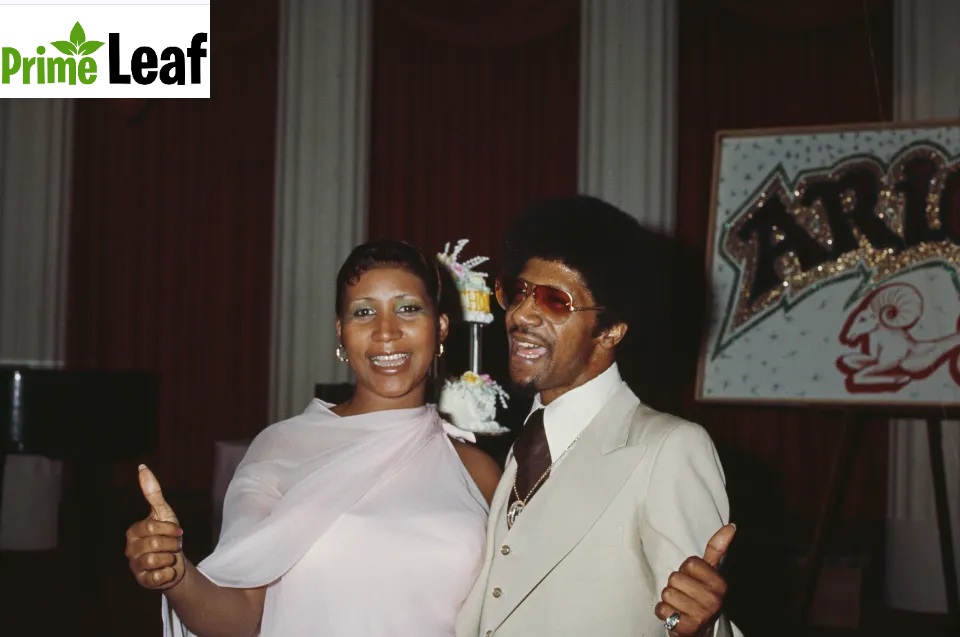
Cecil Franklin was born in Memphis, Tennessee, around 1940 — two years before Aretha — and grew up as the only full brother among the four siblings.
He was academically exceptional. He graduated as valedictorian of Morehouse College — one of America’s most prestigious historically Black colleges — before returning to Detroit to serve as assistant pastor at New Bethel Baptist Church alongside his father.
The music world knew Cecil primarily through his role as Aretha’s personal manager — a position he took on after her deeply difficult marriage to Ted White ended in the late 1960s. Ted White had served as both her husband and manager, and the combination had proven toxic. When Aretha needed someone she could absolutely trust, she turned to her brother.
Cecil maintained that position until his death. He was deeply embedded in her professional world — negotiating contracts, managing relationships with record labels, protecting her interests in ways that only someone with complete personal loyalty could do effectively.
He was also active in the broader civil rights movement. Aretha’s official website noted that Cecil was prominent in Dr. King’s Southern Christian Leadership Conference and the Rainbow Coalition — continuing the family tradition of social activism that C.L. Franklin had established through his role as architect of the 1963 Freedom March in Detroit.
Cecil died on December 26, 1989, of complications from lung cancer. He was 49 years old. His death was one of the first of several devastating losses Aretha would endure in rapid succession across the late 1980s and early 1990s.
Carolyn Franklin – The Songwriter Who Wrote Two of Aretha’s Greatest Songs

Carolyn Ann Franklin was born on May 13, 1944, in Memphis — the youngest of the four full siblings and, at 43, the first to die.
She followed Erma and Aretha into music in the early 1960s, recording for RCA Records from 1969 and developing a performing career that, despite genuine talent, never found the commercial breakthrough she deserved.
“People won’t let me out of Aretha’s shadow,” she said in one of the few interviews she gave about her solo career, “and I think that’s wrong.”
She was right. Because Carolyn Franklin was not a lesser version of Aretha. She was something different and equally valuable — one of the finest songwriters in soul music of her era.
Carolyn’s Songs for Aretha
| Song | Year | Achievement |
|---|---|---|
| Ain’t No Way | 1968 | R&B Top 10; Billboard Hot 100 Top 20 |
| Angel | 1973 | Top 20 hit; featured Carolyn and Erma on backing vocals |
| Baby, Baby, Baby | — | Co-written |
| Ain’t Nobody (Gonna Turn Me Around) | — | Written by Carolyn |
Ain’t No Way was originally a B-side — buried on the flip of a single that the label thought was the real product. Radio DJs disagreed. They flipped it, played Ain’t No Way, and the song climbed to the top of the R&B charts and into the top 20 on the Hot 100. It has since been recognised as one of the great vocal performances of Aretha’s career — powered by a song Carolyn wrote.
Angel followed in 1973 — a ballad of such emotional delicacy that Aretha credited Carolyn specifically in the song’s opening monologue before the first note played. Carolyn and Erma both sang on the track. All three Franklin sisters on a single recording — the Franklin Sound at its most complete.
Carolyn retired from the music industry in 1976, citing exhaustion and the difficulty of operating perpetually in her sister’s shadow. She returned periodically for special appearances — singing background with Aretha in The Blues Brothers in 1980, appearing with both sisters in concert through the early 1980s.
After their father was shot in 1979, Carolyn moved back to Detroit. She enrolled in law school with the intention of becoming an entertainment lawyer — a natural evolution for someone who had spent two decades watching the industry from the inside.
She didn’t make it. She was diagnosed with metastatic breast cancer and died on April 25, 1988, at the age of 43.
Aretha lost her youngest sibling — her sometime collaborator, her sometime backing singer, the woman who wrote two of the songs most closely associated with her name — before Carolyn had reached 44.
Vaughn Franklin – The Half-Brother
Vaughn Franklin was C.L. Franklin’s son from a previous relationship before his marriage to Barbara Siggers. He was adopted by C.L. and did not learn until 1951 that C.L. was not his biological father.
His public record is limited. He served in the military at some point during his life. He died in late 2002 — within weeks of Erma’s death in September of that year — making 2002 one of the most devastating single years of loss in Aretha Franklin’s personal life.
Carol Ellan Kelley – The Half-Sister and the Troubling Origin
Carol Ellan Kelley — born Carol Ellan Jennings in 1940 in Memphis — was the daughter of C.L. Franklin and a 12-year-old girl named Mildred Jennings, who was a member of C.L.’s congregation at New Salem Baptist Church in Memphis at the time.
This detail — a beloved and celebrated preacher fathering a child with a 12-year-old parishioner — sits at the heart of the complicated legacy of C.L. Franklin. He was, as one biography put it, “unorthodox on every level” — simultaneously one of the most powerful voices for civil rights and racial justice in American history, and someone who abused his position and his congregation in ways that would be clearly recognised as predatory today.
Carol Ellan grew up largely removed from the Franklin family’s public life, settling in Seattle. She was the last of C.L. Franklin’s children to outlive him and died in 2019 at the age of 78 — nine months after Aretha’s own death in August 2018.
The Franklin Sound – What They Created Together
The term “Franklin Sound” was coined by radio disc jockeys and music critics to describe the specific harmonic quality that Erma and Carolyn’s backing vocals brought to Aretha’s Atlantic recordings.
It wasn’t manufactured. The three sisters had been singing together since childhood — in the church choir, at home, in performances for their father’s congregation. The particular way their voices blended — rooted in gospel harmonic tradition, shaped by the same musical upbringing and the same emotional experiences — was something that no hired session singers could replicate.
Songs Featuring the Franklin Sound
| Song | Year | Siblings Involved |
|---|---|---|
| Respect | 1967 | Erma and Carolyn (backing vocals) |
| (You Make Me Feel Like) A Natural Woman | 1967 | Erma and Carolyn |
| Baby I Love You | 1967 | Erma and Carolyn |
| Do Right Woman, Do Right Man | 1967 | Erma and Carolyn |
| Ain’t No Way | 1968 | Written by Carolyn; Erma on backing |
| Day Dreaming | 1972 | Carolyn (backing vocals) |
| Angel | 1973 | Carolyn (written by) and Erma (backing) |
The Blues Brothers – On Screen Together
In 1980, Aretha, Erma, and Carolyn all appeared in The Blues Brothers — John Landis’s musical comedy film. Aretha’s famous scene, performing Think in the diner where her character works, is one of the most celebrated musical sequences in American film history.
Carolyn had retired from the music industry four years earlier. She came back for this. Both she and Erma appeared as background singers alongside Aretha — the three Franklin sisters on screen together, all still singing, all still connected by the sound they had built together since childhood.
It was one of the last times all three performed together publicly. Carolyn died eight years later. The Blues Brothers scene preserves something irreplaceable.
The Losses – A Final Chapter Written in Grief
The sequence of deaths in the Franklin family across a relatively short period is difficult to absorb.
Carolyn died in April 1988 at 43. Cecil died in December 1989 at 49. Their father C.L. Franklin — who had been in a coma since being shot by intruders in 1979 — died in July 1984. Erma and Vaughn both died in 2002.
By the time Aretha Franklin died of pancreatic cancer on August 16, 2018, she had outlived both parents, all three full siblings, and her half-brother. Carol Ellan Kelley survived her by less than a year.
Carolyn and Erma’s niece, Sabrina Owens, who later became administrator of Aretha’s estate, described her aunts with devastating simplicity: “They were my mother figures — so central to my life as a child and teenager.”
The Biopic – How Respect Portrayed Them
The 2021 biographical film Respect, starring Jennifer Hudson as Aretha, gave mainstream audiences perhaps their most sustained look at the Franklin siblings as characters rather than footnotes.
| Character | Portrayed By | Film Focus |
|---|---|---|
| Erma Franklin | Saycon Sengbloh | Sisterly support, professional collaboration |
| Carolyn Franklin | Hailey Kilgore | Songwriting, family dynamics |
| Cecil Franklin | Courtney B. Vance (in Genius: Aretha) | Management, church role |
The National Geographic series Genius: Aretha provided additional depth — portraying the sibling relationships with particular attention to the tensions and loyalties that defined them.
Conclusion
The history of Aretha Franklin’s siblings is a history of extraordinary talent operating perpetually in the shadow of someone even more extraordinary — and doing so, for the most part, with grace, loyalty, and genuine love.
Erma recorded Piece of My Heart before Janis Joplin made it famous. Carolyn wrote Ain’t No Way and Angel — two songs that belong in any serious discussion of the greatest compositions in soul music history. Cecil protected his sister’s professional interests with the kind of absolute trust that only family can provide. All three gave significant portions of their careers to elevating Aretha’s work rather than competing with it.
They were not footnotes. They were architects — of the Franklin Sound, of Aretha’s career infrastructure, of a family musical legacy that stretched from a church in Memphis to Madison Square Garden.
The church in Detroit that C.L. Franklin built is where all of them started. It’s also where most of them were buried.
They sang together as children. They sang together on Respect and A Natural Woman and Angel. They sang together on screen in The Blues Brothers.
The Queen of Soul did not build her crown alone.