

Who Is Mickey Rourke?
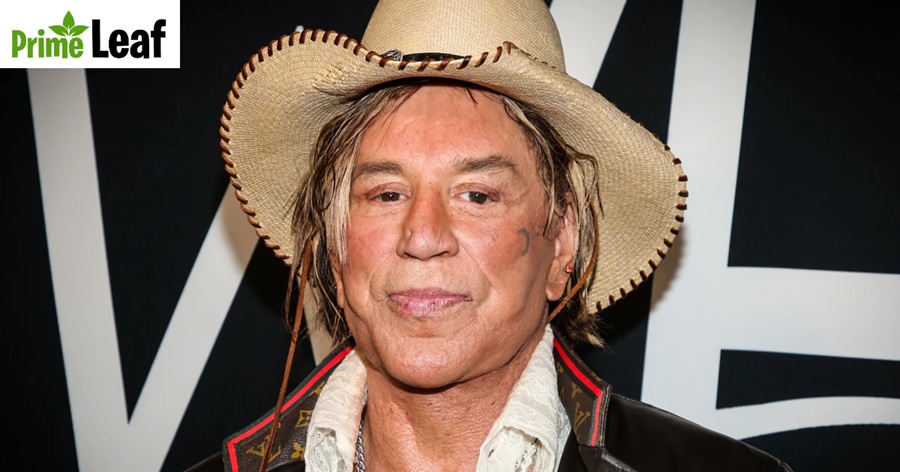
Mickey Rourke is an American actor, former professional boxer, and one of the most compelling — and complicated — figures in Hollywood history. Born Philip Andre Rourke Jr. in Schenectady, New York, he rose from an abusive childhood in Miami to become one of the most electrifying actors of the 1980s, walked away from stardom to box professionally, destroyed his face in the ring, came back to deliver one of the most celebrated performances of his generation in The Wrestler, and has spent the years since navigating a life that has never once been predictable or safe.
If you’re here for the quick answer: Mickey Rourke is 73 years old, has an estimated net worth of approximately $5 million following significant financial difficulties including a 2026 eviction from his Los Angeles home, has been married twice — to Debra Feuer and Carré Otis — has no biological children, and is currently single. His films have grossed nearly $2 billion worldwide. He is one of the greatest actors of his generation and one of the most self-destructive. Both things are true simultaneously.
Quick Facts – Mickey Rourke
| Detail | Info |
|---|---|
| Full Name | Philip Andre Rourke Jr. |
| Stage Name | Mickey Rourke |
| Date of Birth | September 16, 1952 |
| Place of Birth | Schenectady, New York, USA |
| Raised | Miami Beach, Florida |
| Nationality | American |
| Ancestry | Irish and French |
| Religion | Catholic (practising) |
| Height | 5’11” (180 cm) |
| Occupation | Actor, former professional boxer |
| Years Active | 1979 – Present |
| Known For | Diner, 9½ Weeks, Angel Heart, The Wrestler, Sin City, Iron Man 2 |
| First Wife | Debra Feuer (m. 1981, div. 1989) |
| Second Wife | Carré Otis (m. 1992, div. 1998) |
| Children | None biological |
| Boxing Record | 6 wins, 9 losses, 2 draws (professional) |
| Awards | Golden Globe, BAFTA (Best Actor — The Wrestler); Academy Award nomination |
| Estimated Net Worth | ~$5 million |
Early Life – Miami, an Abusive Stepfather, and a Boxing Gym
Philip Andre Rourke Jr. was born on September 16, 1952, in Schenectady, New York, into a Catholic family of Irish and French descent. His father left the family when Mickey was approximately six years old — a departure that shaped the rest of his life in ways he has discussed with remarkable rawness in interviews across several decades.
His mother eventually remarried a Miami Beach police officer named Eugene Addis, moving the family to South Florida. What followed was a childhood defined by physical abuse — Rourke has spoken openly about his stepfather’s violence toward both him and his mother. He told The Guardian that the anger from those years consumed him for most of his adult life.
“I was angry with her for my whole life for what she did,” he said of his mother. “Because she turned her back to it and she was supposed to be responsible for me and Joe. She didn’t. She let it happen. And it happened for a decade.”
He graduated from Miami Beach Senior High School in 1971. The boxing gym came first, before anything else did. At 12 years old he walked into the Boys Club of Miami seeking self-defence training, and something clicked immediately. He trained at the legendary 5th Street Gym in Miami Beach — the same gym where Muhammad Ali and other greats prepared — and compiled a record that various sources describe differently, but which included significant victories and at least two serious concussions, including one from sparring with former World Welterweight Champion Luis Rodriguez.
Acting came almost accidentally. A friend at the University of Miami told him about a play whose lead had quit. Rourke took the role in Deathwatch. He was immediately captivated. Borrowing $400 from his sister, he moved to New York, worked odd jobs, and began studying acting seriously — eventually earning selection to the prestigious Actors Studio on his first audition, in what host James Lipton later disclosed Elia Kazan had called “the best audition in thirty years.”
The 1980s – One of Hollywood’s Greatest Actors
The 1980s were Mickey Rourke’s decade. Fully and completely. He entered it as a promise and left it as a legend, delivering a run of performances that few actors of any era have matched.
His first real notice came in Body Heat (1981) — a supporting role that Roger Ebert called his “breakthrough performance.” Then came Diner (1982), Barry Levinson’s ensemble drama in which Rourke played the suave gambler “Boogie” Sheftell alongside Kevin Bacon, Daniel Stern, and Steve Guttenberg. The National Society of Film Critics named him Best Supporting Actor.
What followed was a defining run:
| Film | Year | Role | Significance |
|---|---|---|---|
| Diner | 1982 | Boogie Sheftell | National Society of Film Critics – Best Supporting Actor |
| Rumble Fish | 1983 | Motorcycle Boy | Francis Ford Coppola collaboration |
| The Pope of Greenwich Village | 1984 | Charlie | Critically acclaimed ensemble performance |
| Year of the Dragon | 1985 | Stanley White | Michael Cimino collaboration |
| 9½ Weeks | 1986 | John | Sex symbol status; international hit |
| Angel Heart | 1987 | Harry Angel | One of his most complex performances |
| Barfly | 1987 | Henry Chinaski | Playing Charles Bukowski’s alter ego |
| Johnny Handsome | 1989 | John Sedley | Walter Hill collaboration |
His performance in Barfly — playing Charles Bukowski’s thinly veiled alter ego, a drunk poet who finds brief beauty in the gutter — is considered by many critics to be among the finest acting of the decade. Bukowski himself reportedly wept watching it.
He was, by any measure, one of the three or four most interesting actors in the world during this period. Directors competed for him. Studios paid him accordingly. The career trajectory was pointing toward the kind of sustained legacy that Marlon Brando and Robert De Niro had built.
Then he walked away from it.
The Boxing Years – The Decision That Changed Everything

In 1991, at the height of his fame and with the kind of opportunities most actors spend entire careers chasing, Mickey Rourke chose boxing over Hollywood.
This was not a publicity stunt or a midlife crisis dressed up as sport. Rourke genuinely boxed professionally for nearly a decade, compiling a record of 6 wins, 9 losses, and 2 draws. He trained seriously, competed legitimately, and absorbed punishment that would have hospitalised most people without professional boxing backgrounds.
The consequences were physical and permanent. Multiple facial fractures, a broken nose repaired imperfectly, damage to his cheekbones and jaw — the face that had made him a sex symbol in the 1980s was substantially reconstructed through a combination of boxing injuries and subsequent surgeries that did not always achieve what was intended.
He has been remarkably honest about this. The surgery, he has said, was not vanity — it was damage repair that went wrong. The medical reality of what boxing at professional level does to the human face is not cosmetic. Rourke lived it.
He retired from boxing in 1994 and returned to acting. The Hollywood he came back to was not the Hollywood he had left.
The Wilderness Years – Difficult Roles and a Diminished Career
Through the mid to late 1990s and into the early 2000s, Rourke worked steadily but not at the level his talent warranted. The combination of his changed appearance, his reputation for being difficult on set, a 1994 domestic violence charge, and the simple reality that Hollywood has a short institutional memory for talent it once celebrated all contributed to a career operating well below its potential.
He appeared in The Rainmaker (1997), Buffalo ’66 (1998), Animal Factory (2000), The Pledge (2001), Once Upon a Time in Mexico (2003), and Man on Fire (2004) — supporting roles, character work, the kind of CV that says an actor is still in the game without suggesting where the game might take them.
The industry had largely moved on. He hadn’t stopped being talented. The system had stopped caring.
Sin City and The Wrestler – The Greatest Comeback
In 2005, Robert Rodriguez cast Mickey Rourke as Marv in Sin City — the grotesque, violent, deeply loyal killing machine at the centre of Frank Miller’s noir universe. The film was stylised to within an inch of its life, and Rourke’s performance was the beating heart underneath all the style.
The reaction was significant. Hollywood remembered. This was not the diminished actor of the wilderness years. This was the man who had made Barfly.
Three years later came The Wrestler.
Darren Aronofsky cast Rourke as Randy “The Ram” Robinson — an ageing professional wrestler long past his commercial peak, his body destroyed by years of performance, trying to reconnect with the daughter he abandoned while navigating the only world he has ever known how to inhabit.
The parallels to Rourke’s own life were not accidental. They were the point.
He won the Golden Globe Award for Best Actor and the BAFTA Award for Best Actor. He was nominated for the Academy Award for Best Actor. The performance that was supposed to be his career resurrection was, in many respects, the finest work of a career already full of extraordinary work.
Bruce Springsteen wrote the title song specifically for the film after watching Rourke’s performance. That is the level of impact The Wrestler had.
Iron Man 2 and The Expendables – Commercial Returns
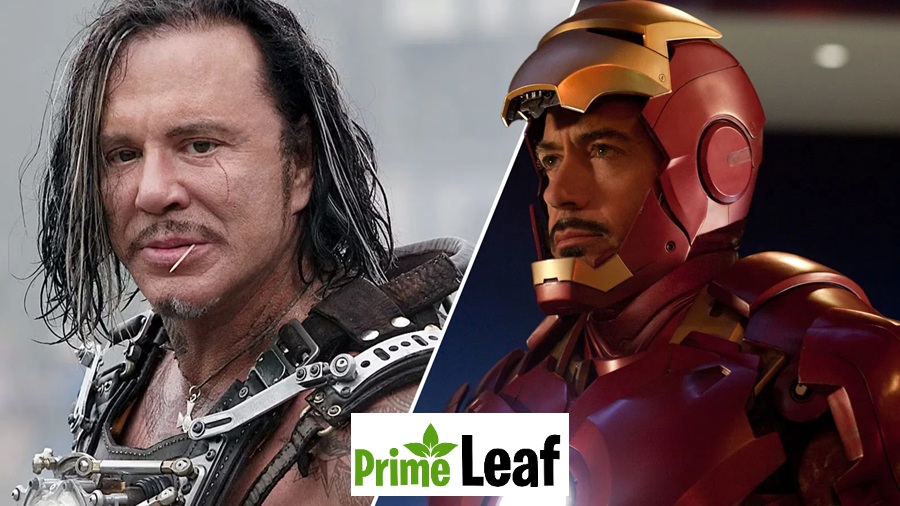
Following The Wrestler, Rourke returned to mainstream commercial films.
In Iron Man 2 (2010), he played Ivan Vanko — the Russian physicist turned armoured villain. His salary was reportedly $250,000 after negotiations that nearly fell apart over pay. He brought the same intensity to the role that he brings to everything, though the MCU format left limited room for the kind of interior character work that defines his best performances.
The Expendables (2010) followed — Sylvester Stallone’s ensemble action franchise that assembled a generation of action stars. Rourke’s role as Tool, the retired mercenary tattoo artist, was brief but memorable.
Celebrity Big Brother – The Chapter That Didn’t Go Well
In April 2025, Rourke entered the UK’s Celebrity Big Brother as a housemate — alongside Patsy Palmer, Daley Thompson, and JoJo Siwa.
It went badly.
He was given a formal warning for making openly disparaging remarks about housemate JoJo Siwa. He was removed from the house on April 12 for “inappropriate language and instances of unacceptable behaviour” — an unwanted sexual remark toward housemate Ella Wise and an aggressive verbal confrontation with Chris Hughes cited as the final reasons.
He had been promised £500,000. Following his early removal, he received £50,000. He announced plans to sue ITV.
The 2026 Eviction – The Financial Crisis
In early 2026, Rourke’s financial situation became a major news story.
He was evicted from a Spanish-style bungalow in Los Angeles on March 9, 2026, after falling approximately $59,100 behind on rent — approximately $7,000 per month. A default eviction ruling was entered after he failed to respond to the court complaint within the required timeframe.
His manager launched a GoFundMe campaign without his knowledge or consent — and reached its fundraising goal within two days. Rourke rejected the charity publicly and with considerable vehemence, saying he would not accept a single dollar from it.
“I won’t accept a dime in charity,” he stated.
His manager’s description of his situation was unusually candid: “At the height of his success, he stepped away from Hollywood in search of truth and authenticity, choosing risk over comfort. Boxing — real and punishing — left lasting physical and emotional scars, and the industry that once celebrated him moved on quickly.”
Rourke’s position on the eviction itself was characteristically combative. He alleged the property had severe water damage, mold, rodent infestations, and plumbing failures that had been ignored by the landlord — and that he stopped paying rent as a result.
Personal Life – Two Marriages and a Great Love of Dogs
Rourke married actress Debra Feuer in 1981. They divorced in 1989. He married model Carré Otis in 1992 — a relationship that was passionate and volatile in equal measure. They divorced in 1998. He was in a relationship with Ukrainian-German model Anastassija Makarenko from 2009 to 2015. He has been single since.
He has no biological children. He has, famously, an enormous and genuine love for his dogs — a devotion that has been a consistent theme throughout decades of interviews. His Chihuahuas in particular have been described by people who know him well as his most reliable emotional relationships. He once said his dogs were the only ones who hadn’t judged him.
He remains a practising Catholic — a faith that has clearly provided genuine structure during periods of his life when very little else did.
Net Worth – The Honest Picture
| Source | Contribution |
|---|---|
| 1980s film career (peak salaries) | Historically significant — largely spent |
| The Wrestler, Sin City, Iron Man 2 | Comeback earnings |
| Film residuals (ongoing) | Estimated $1.2–1.5M annually |
| Professional boxing (1991–1994) | Supplementary |
| Celebrity Big Brother fee | £50,000 (£500,000 agreed) |
| Estimated Current Net Worth | ~$5 million |
The gap between what he earned over a career that grossed nearly $2 billion at the box office and what he currently has is one of the starkest illustrations in Hollywood of how completely money can disappear — through surgeries, legal costs, lifestyle, the 2023 actors’ strike borrowing, and the accumulated cost of a life lived without financial caution.
Legacy – What He Actually Was
Here is the thing about Mickey Rourke that gets lost in the eviction headlines and Celebrity Big Brother controversies: the man was genuinely extraordinary.
Not occasionally extraordinary. Not promising. Not nearly great.
He was one of the finest film actors of his generation — capable of inhabiting characters with a physical and emotional specificity that the most technically trained performers spent their whole careers reaching for. Barfly, Angel Heart, The Pope of Greenwich Village, The Wrestler — these are not good performances in average films. These are great performances in films that exist partly because of him.
The self-destruction was real. The difficult behaviour was real. The financial recklessness was real. None of that changes what he put on screen when he was doing it right.
Conclusion
Mickey Rourke is 73 years old, recently evicted from his Los Angeles home, rejecting charity with the same combative energy he has brought to every chapter of his life, and still very much himself.
He boxed when he should have been acting. He took roles that interested him when he should have taken roles that paid him. He was difficult when being easy would have saved his career. He refused help when accepting it would have solved his immediate problems.
And he delivered performances that film schools will still be studying decades from now.
The contradiction between the career he deserved and the career he chose is not a tragedy. It is entirely consistent with who he is — someone who always valued authenticity over comfort and paid for that preference with everything except the work itself.
The work remains.