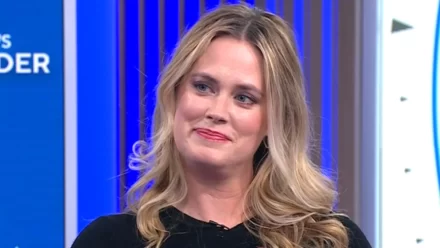


She was the girl every American teenager wanted to be. Blonde, poised, and effortlessly wholesome, Marcia Brady set the gold standard for the all-American girl across five seasons on ABC. The face behind her, Maureen McCormick, paid a price for that perfection that nobody watching at home could have imagined — addiction, eating disorders, a devastating family secret, and years of professional struggle. This is the story Marcia Brady never got to tell.
Early Life
Maureen Denise McCormick was born August 5, 1956, in Encino, California, the youngest of four children and the only girl, raised Catholic alongside three older brothers. Her father Richard was a teacher; her mother Irene a homemaker. By outward appearances, it was a stable, ordinary household. Beneath it was a secret that would define Maureen’s adult life: her mother had contracted syphilis through childhood sexual abuse at the hands of her own father. Left untreated, it caused neurological damage and progressive mental deterioration. Maureen grew up absorbing the instability without understanding its source — a wound she would spend decades trying to name.
At age six, she won a local beauty pageant — Baby Miss San Fernando Valley — and her parents enrolled her in acting and singing lessons. By her early teens she was appearing in commercials and landing guest spots on shows including The Farmer’s Daughter and I Dream of Jeannie. She was a working child actress before The Brady Bunch ever came calling.
| Field | Details |
|---|---|
| Full Name | Maureen Denise McCormick |
| Born | August 5, 1956 — Encino, California |
| Nationality | American |
| Heritage | Irish and German — raised Catholic |
| Father | Richard McCormick — teacher |
| Mother | Irene McCormick — homemaker |
| Siblings | Three older brothers — Michael, Dennis, Kevin |
| Known For | Marcia Brady — The Brady Bunch (ABC, 1969–1974) |
| Husband | Michael Cummings (m. March 16, 1985 — present) |
| Daughter | Natalie Michelle Cummings (b. May 19, 1989) |
| Career | Actress; Singer; Author; Designer; TV Host |
| Brady Bunch | 1969–1974 — ABC; plus multiple spin-offs and reunions |
| Broadway | Grease (Betty Rizzo, 1994); Peter Pan (Wendy, 1983) |
| Music | When You Get a Little Lonely (1995) — country album |
| Memoir | Here’s the Story: Surviving Marcia Brady (2009) — NYT #4 |
| Struggles | Cocaine addiction; Quaaludes; bulimia; depression |
| Reality TV | Dancing with the Stars S23; A Very Brady Renovation (HGTV) |
| Special Olympics | Global Ambassador — 2020 |
| Net Worth | ~$4 million estimated |
The Brady Bunch
In 1969, producer Sherwood Schwartz cast twelve-year-old Maureen as Marcia Brady, the eldest daughter in his blended-family sitcom for ABC. The show ran five seasons, ending in 1974, and generated 117 episodes. It was never a critical darling — but it was a cultural institution, and reruns made it immortal.
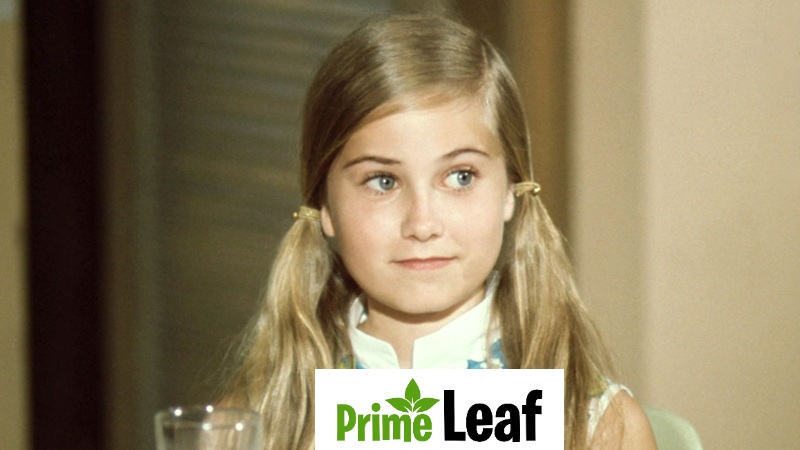
Marcia was everything the era idealized: pretty, popular, capable, kind. McCormick played her with a naturalness that made the character feel real rather than saccharine. Off-camera, she developed genuine friendships with her castmates. She also developed a crush on co-star Barry Williams, who played her stepbrother Greg — a mutual attraction both have openly discussed as adults, navigated carefully within the surreal circumstances of playing siblings on television five days a week.
What the audience didn’t see was a teenager carrying significant personal weight while performing cheerfulness for a living.
Post-Brady Struggle and The Dark Years
When The Brady Bunch ended in 1974, McCormick was seventeen and already typecast in a way that would prove nearly impossible to escape. Marcia Brady was too beloved, too specific, too culturally embedded. Casting directors saw the character, not the actress. Serious dramatic work didn’t come. The television landscape had moved on. She hadn’t.
What followed was a decade of professional drift and personal crisis. McCormick has been candid in interviews and in her memoir about sliding into cocaine addiction, Quaalude use, and bulimia during this period — coping mechanisms for an identity built entirely around a character she could no longer play and a childhood she had never fully processed. She has described trading sexual favors for drugs, a admission that cost her considerable courage to make publicly. The girl-next-door image that had defined her became a cage and then a source of shame.
She also auditioned for the role of Marion Ravenwood in Raiders of the Lost Ark in 1981. She didn’t get it — the role went to Karen Allen — and while a single lost audition rarely defines a career, it represents the kind of near-miss that punctuated an era when a genuine dramatic breakthrough remained just out of reach.
Recovery and Marriage
Michael Cummings, a contractor and businessman, came into McCormick’s life in the early 1980s. They married on March 16, 1985. By her account, the relationship was stabilizing in the most literal sense — Cummings did not use drugs, did not orbit the entertainment industry’s more corrosive social circles, and offered her something she had lacked for years: consistency.
Recovery from addiction is rarely a single moment, and McCormick has never presented hers as a clean before-and-after story. But marriage marked the beginning of a genuine reorientation. On May 19, 1989, the couple welcomed their only child, daughter Natalie Michelle Cummings. They remain married today — over four decades together.
Broadway
McCormick’s most artistically stretching work came on Broadway. In 1983 she played Wendy in Peter Pan, and in 1994 she took on Betty Rizzo in a revival of Grease — a deliberately counter-programmed choice, playing the cynical, sexually experienced bad girl as far from Marcia Brady as the American musical theater canon could take her. She has spoken about how much Rizzo meant to her: a chance to be seen as something other than wholesome, to inhabit a character whose edge and complexity had nothing to do with her most famous role.
Music Career
In 1995, McCormick released a country album, When You Get a Little Lonely, through an independent label. It did not chart significantly or generate mainstream attention, but it represented a genuine creative effort rather than a celebrity novelty project. Country music’s embrace of personal narrative and emotional directness suited her; the album’s modest reception reflected the industry’s difficulty knowing what to do with a former child star rather than any failure of sincerity on her part.
Memoir: Here’s the Story (2009)
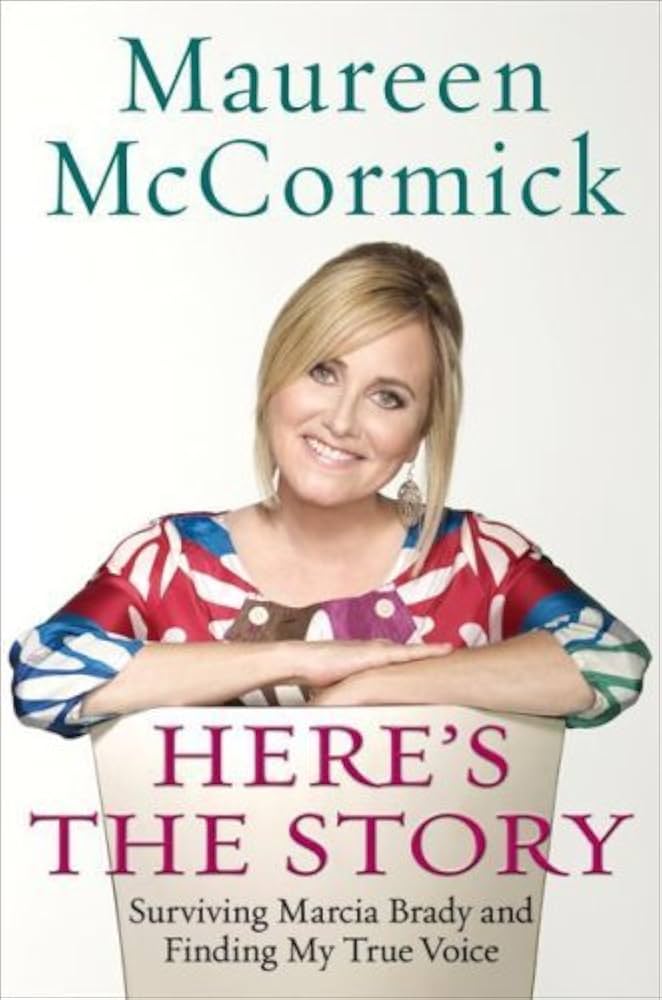
Published in 2009, Here’s the Story: Surviving Marcia Brady and Finding My True Voice became a New York Times bestseller, peaking at number four. It is the document that most completely defines who Maureen McCormick actually is — and it was not an easy book to write or to publish.
The memoir disclosed her cocaine and Quaalude addiction in detail. It addressed her bulimia, her depression, and her mother’s secret history with syphilis. It discussed the sexual abuse within her family history. It addressed the Barry Williams crush with the candor of an adult looking back at a genuinely complicated situation. It was the kind of book that a woman writes when she has decided that the cost of continuing to protect a carefully managed image is higher than the cost of full disclosure. Critics and readers responded to its honesty. It remains the definitive account of her life.
A Very Brady Renovation
In 2019, HGTV produced A Very Brady Renovation, reuniting all six Brady Bunch siblings — McCormick, Barry Williams, Christopher Knight, Mike Lookinland, Eve Plumb, and Susan Olsen — to renovate the iconic Studio City house used as the exterior shot throughout the original series. The show was a ratings success for the network and a genuine piece of television nostalgia done with more craft than most reunion projects.
McCormick has spoken candidly about the complex emotions of returning to that world — the warmth of the cast relationships alongside the awareness of how much the show’s shadow had cost each of them professionally and personally. The renovation itself was completed and the house preserved as a cultural landmark.
Dancing with the Stars
McCormick competed in Season 23 of Dancing with the Stars in 2016, partnered with professional dancer Artem Chigvintsev. She was eliminated in week six. The experience was notable less for her competitive result than for her willingness, at sixty years old, to take on something physically demanding and emotionally exposed in front of a national television audience. She has described it as genuinely frightening and genuinely worthwhile.
Special Olympics Ambassador
In 2020, McCormick was named a Global Ambassador for the Special Olympics — a role that reflects a long-standing personal commitment to disability advocacy rather than celebrity cause adoption. She has been involved in Special Olympics events for years, and the ambassadorship formalized a relationship built on actual engagement rather than branding.
Family
Michael Cummings and Natalie McCormick Cummings remain the anchors of Maureen’s life by her own consistent account. Natalie, born in 1989, has largely stayed out of public life — a choice her mother has respected and protected. McCormick has described her marriage and motherhood as the achievements she is most proud of, a framing that is neither false modesty nor performance, but the genuine reckoning of someone who came close to losing everything and didn’t.
Legacy
Maureen McCormick’s legacy operates on two levels. The first is Marcia Brady — inescapable, permanent, a character so embedded in American popular culture that the phrase “Marcia, Marcia, Marcia” requires no footnote. The second is what she built in spite of it and because of it: a record of survival, honesty, and reinvention that belongs entirely to her.
She is one of the more complete examples of what child stardom in the American entertainment industry actually costs, and one of the more honest voices about that cost. The memoir, the Broadway work, the advocacy — taken together, they constitute a career and a life that substantially exceed the six years she spent on a soundstage in Burbank.
Conclusion
Maureen McCormick is not Marcia Brady. She never entirely escaped her, and she has made her peace with that. What she built around and beyond that character — the marriage, the child, the sobriety, the honesty — is the more interesting story. It always was.
FAQs
What is Maureen McCormick best known for? Playing Marcia Brady on The Brady Bunch (ABC, 1969–1974), a role that remains one of the most recognizable in American television history.
Did Maureen McCormick struggle after The Brady Bunch? Yes. She has openly discussed cocaine addiction, Quaalude use, and bulimia during the late 1970s and 1980s, as well as professional difficulties stemming from typecasting.
Who is Maureen McCormick married to? Michael Cummings, a businessman. They married March 16, 1985 and remain together.
What did her memoir reveal? Her 2009 book Here’s the Story disclosed her addiction history, eating disorder, her mother’s syphilis and its origins in familial sexual abuse, and her adolescent feelings for co-star Barry Williams.
Did she work on Broadway? Yes — she played Wendy in Peter Pan (1983) and Betty Rizzo in Grease (1994).
What is she doing now? She remains active in advocacy, most notably as a Global Ambassador for the Special Olympics, and makes periodic television appearances.