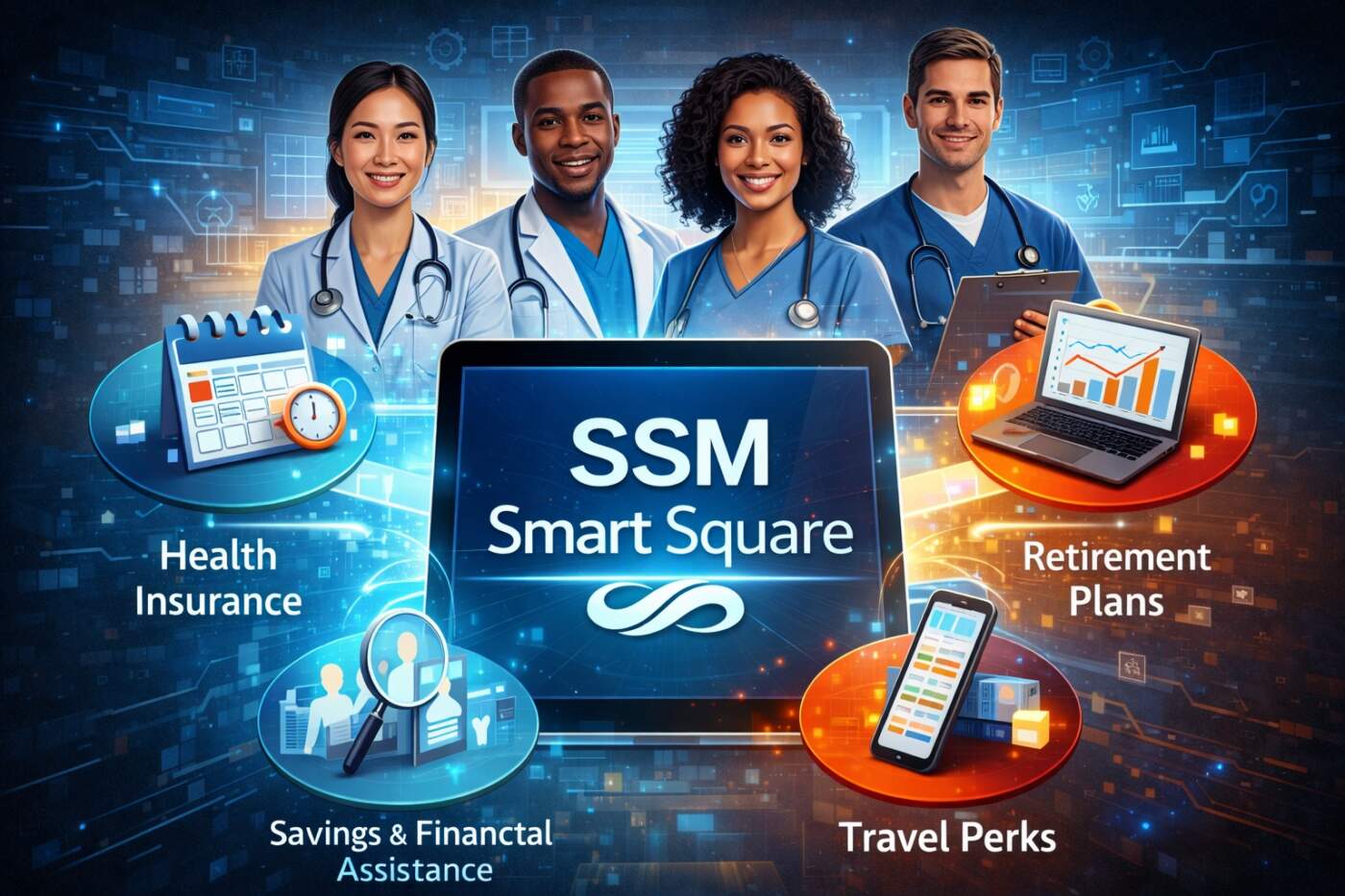

If you are an SSM Health employee trying to understand what SSM Smart Square is and what it does, here is your direct answer: SSM Smart Square is the official web-based workforce scheduling and management portal used exclusively by SSM Health’s employees, nurses, physicians, and administrative staff across its hospital network spanning Illinois, Missouri, Oklahoma, and Wisconsin. Built on the Avantas platform — a workforce intelligence solution developed by AMN Healthcare — it gives every authorized team member the ability to view their schedules, request time off, swap shifts, track attendance, and communicate with their department, all from a single secure online environment. For managers and administrators, it goes further still, providing predictive staffing analytics, coverage reporting, payroll integration, and the full operational toolkit needed to keep one of the Midwest’s largest Catholic health systems properly staffed around the clock.
What makes SSM Smart Square more than just a scheduling calendar is the scale of the problem it is solving. SSM Health employs more than 40,000 team members across 23 hospitals and nearly 500 physician offices. Coordinating the schedules of nurses working rotating shifts, physicians managing multiple clinic locations, support staff spread across dozens of facilities, and floating staff who cover different units week to week is an enormously complex logistical challenge. Getting it wrong does not just cause inconvenience — in a healthcare environment, staffing gaps directly affect patient safety and care quality. Smart Square is the platform that keeps that coordination running, and understanding how to use it well is one of the most practical things any SSM Health employee can do.
What Is SSM Health? A Brief Background
To fully appreciate why SSM Smart Square exists and why it is built the way it is, it helps to understand the organization behind it.
SSM Health is a Catholic, non-profit health system with roots going back to 1872, when the Franciscan Sisters of Mary began providing healthcare to the sick and poor in St. Louis, Missouri. That founding mission — care rooted in the healing ministry of Jesus Christ — continues to shape the organization’s values and operational priorities to this day. SSM Health made history in 2002 when it became the first healthcare organization in the United States to receive the Malcolm Baldrige National Quality Award, the nation’s highest presidential honor for organizational excellence. It remains one of the most respected regional health systems in the country.
Today SSM Health operates 23 hospitals, more than 490 physician offices and other outpatient care sites, a pharmacy benefit management company, and a health plan in Wisconsin. Its footprint covers Illinois, Missouri, Oklahoma, and Wisconsin, and its workforce of more than 40,000 employees includes physicians, nurses, technicians, therapists, administrative professionals, and support staff. Managing scheduling and workforce operations at this scale, across multiple states, multiple facility types, and a workforce that includes full-time, part-time, per diem, and float staff simultaneously, is precisely the challenge that SSM Smart Square was built to meet.
Quick Reference: SSM Smart Square at a Glance
| Detail | Information |
|---|---|
| Portal Name | SSM Smart Square |
| Platform Developer | Avantas (AMN Healthcare subsidiary) |
| Parent Organization | SSM Health |
| Access Type | Authorized SSM Health employees only |
| States Covered | Illinois, Missouri, Oklahoma, Wisconsin |
| Hospitals Served | 23 hospitals across the network |
| Employees Served | 40,000+ team members |
| Primary Functions | Scheduling, time-off requests, shift swaps, attendance, analytics |
| Mobile App | SSM QuickLink (iOS and Android) |
| System Integrations | Kronos, PeopleSoft, Lawson |
| Manager Tools | Predictive analytics, coverage reports, roster management |
| Support | SSM IT Help Desk — 24/7 availability |
What Is SSM Smart Square Built On?
SSM Smart Square runs on the Avantas workforce management platform, developed by Avantas — a company specializing in healthcare workforce intelligence that operates as a subsidiary of AMN Healthcare, one of the largest healthcare staffing and workforce solutions companies in the United States. Avantas designed its platform specifically for the complexities of healthcare scheduling, which is categorically different from scheduling in most other industries.
Healthcare scheduling has to account for regulatory requirements around nurse-to-patient ratios, certifications and competencies required for specific unit assignments, on-call obligations, union rules where applicable, rotating shift patterns, float pool management across multiple units, and real-time adjustments driven by unpredictable patient volume. A generic scheduling tool cannot handle all of that. Avantas was built specifically to handle it, and SSM Health’s deployment of the platform — branded as SSM Smart Square — is configured to reflect the specific operational structure, policies, and workflows of SSM Health’s facilities.
This is also why access to the portal is strictly controlled. There is no self-registration option. You cannot create an account by visiting the website and filling out a form. Every account is provisioned by SSM Health’s IT or HR department and is tied to your employee record in the organization’s HR system. Your login credentials are provided to you through your onboarding process or, for existing employees gaining access for the first time, through your department manager or unit scheduler.
How to Access SSM Smart Square for the First Time
New employees typically receive their SSM Smart Square login credentials — a username and temporary password — during onboarding, either directly from HR or from their department manager or unit scheduler. Before your first login, there are a few things worth knowing.
First, use the login URL provided to you by SSM Health directly rather than relying on search engine results. The correct portal address is provided through official SSM channels, and using an incorrect or outdated URL is one of the most common reasons new users run into access problems before they even get started. Bookmark the correct URL immediately after your first successful login.
Second, have your temporary password ready and be prepared to change it immediately upon first login. SSM Smart Square follows enterprise security standards that require password changes on first access, and your new password will need to meet defined complexity requirements — typically a minimum length, a mix of uppercase and lowercase letters, at least one number, and at least one special character.
Third, ensure you are on a stable internet connection during your first login. If you are accessing the portal from home, a reliable broadband connection is preferable to a mobile data connection, particularly if you are completing initial setup steps that involve loading detailed schedule views or configuration screens.
If your credentials do not work on your first attempt, the correct first step is to contact your unit scheduler or department manager rather than your IT help desk. In many cases, access issues for new employees are related to timing — your employee record may not yet have fully propagated through the HR system — and a quick confirmation from your manager can resolve the issue faster than a help desk ticket.
Step-by-Step Login Guide
Logging into SSM Smart Square once your account is active is a straightforward process. Navigate to the portal URL provided by SSM Health using a current, updated web browser. Chrome and Firefox offer the most consistent experience with the platform, though it is also accessible via Edge and Safari. Enter your SSM Health username in the first field and your password in the second, then click the sign-in button.
After successful authentication, you will land on your personal dashboard. The dashboard is your home base within the platform — it shows your upcoming scheduled shifts, any pending notifications, open shift opportunities in your unit, and quick links to the most commonly used features. The layout is designed to surface the most time-sensitive information first, so shifts happening in the next 24 to 48 hours and any unread messages or pending requests will typically appear prominently.
For mobile access, SSM Health offers the SSM QuickLink app, available for both iOS and Android devices. The app provides access to your schedule, shift swap requests, time-off requests, and notifications from your mobile device, making it particularly useful for employees who want to check their schedule or respond to open shift alerts without sitting down at a computer. Download the app from the App Store or Google Play Store, enter your SSM Health credentials, and you will have mobile access to the core features of the portal.
Login Troubleshooting Guide
| Issue | Likely Cause | Solution |
|---|---|---|
| Username or password not recognized | Credentials entered incorrectly or account not yet active | Double-check credentials; contact unit scheduler if account not yet active |
| Account locked after failed attempts | Multiple incorrect password entries triggered security lockout | Wait 30 minutes or contact IT Help Desk to unlock |
| Forgot password | Password expired or misremembered | Use the forgot password link; contact IT Help Desk if no recovery email on file |
| Page not loading or timing out | Browser compatibility issue or slow internet connection | Clear cache and cookies; switch to Chrome or Firefox; check internet connection |
| Access denied message after login | Role permissions not yet configured or employment status issue | Contact department manager or HR to verify account permissions |
| Mobile app not syncing schedule | App version outdated or cached data issue | Update app; log out and log back in; check internet connection |
| Two-factor authentication code not received | Phone number on file is outdated | Contact HR to update contact information before retrying |
| Schedule not showing correct shifts | Schedule not yet published for upcoming period | Check with unit scheduler — schedule may not yet be released |
Key Features — Employee Side
Schedule Viewing
The schedule view is the feature most employees interact with most frequently. SSM Smart Square offers multiple viewing modes — a single-day view for detailed daily information, a weekly view for the current scheduling period, and a four-week view that gives a broader picture of upcoming assignments. The four-week view is particularly useful for planning purposes, allowing employees to see their full schedule cycle at a glance and identify periods where they may want to request time off or pick up additional shifts.
Shift Swap Requests
Shift swaps are one of the most practically valuable features in the portal for frontline clinical staff. Rather than relying on text messages, phone calls, and informal arrangements that may or may not get properly documented, Smart Square provides a structured shift swap process. You identify the shift you need coverage for, post it as available for swap within your unit, and eligible colleagues who are available and credentialed for your unit can claim it. Once both parties confirm and a manager approves, the swap is documented in the system and automatically reflected in the schedule and timekeeping records.
This process matters beyond convenience. In a healthcare environment, shift coverage is a compliance matter. Proper documentation of who is working when, and what credentials they hold, is not optional — it is a regulatory requirement. The shift swap workflow in Smart Square creates that documentation automatically, which protects both the employee and the organization.
Time-Off Requests
Time-off requests are submitted directly through the portal, where they are routed to your manager for approval and tracked from submission through final decision. You can see the status of any pending request — submitted, under review, approved, or declined — without needing to follow up separately. Approved time off is automatically reflected in your schedule, and the system maintains a running record of your time-off balance so you can see how much PTO you have available before submitting a request.
Attendance and Timesheet Tracking
Smart Square tracks clock-in and clock-out times, meal breaks, and shift differentials, feeding that data into SSM Health’s integrated timekeeping system. Employees can review their time punches within the portal to verify that their hours are recorded accurately before the payroll processing window closes. Catching a missed punch or an incorrect clock-out time through the portal is significantly easier than resolving a payroll discrepancy after the fact, making regular timesheet review a genuinely worthwhile habit.
Notifications and Messaging
The notification system keeps employees informed about schedule changes, open shift opportunities, manager messages, and request status updates in real time. Notifications can be pushed to mobile devices through the SSM QuickLink app, which means you do not need to be actively logged into the portal to stay informed about changes that affect your schedule. Direct messaging functionality allows employees to communicate with their manager or unit scheduler through the platform, creating a documented communication trail for scheduling-related conversations.
Key Features — Manager and Administrator Side
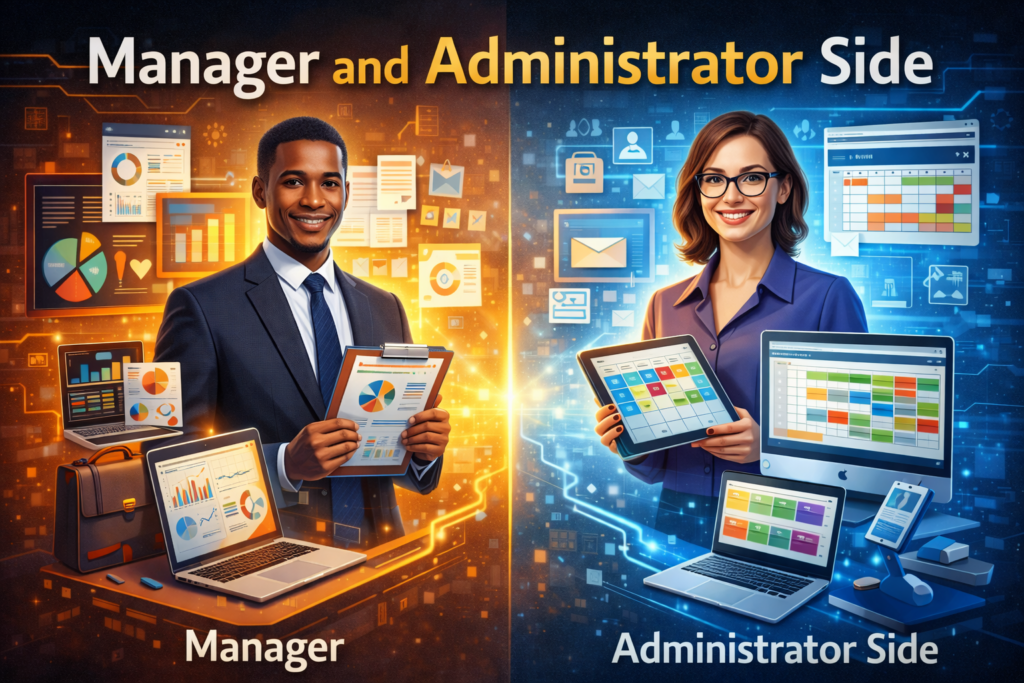
For department managers, unit schedulers, and HR administrators, SSM Smart Square provides a substantially more powerful set of tools than the employee-facing features described above.
Roster creation and management allows managers to build and maintain unit-specific staff lists, clone rosters from previous scheduling periods to save time, and make targeted adjustments without rebuilding schedules from scratch each cycle. The platform’s predictive analytics engine — one of the more sophisticated features of the Avantas platform — analyzes historical patient volume data to forecast staffing demand by unit, shift, and day of week, helping managers anticipate shortages before they occur rather than scrambling to fill gaps at the last minute.
Coverage reports give managers real-time visibility into staffing levels across their unit or department, flagging shifts that are understaffed against the required ratio and identifying periods where the schedule has surplus coverage that could be redeployed. Attendance tracking and audit logs provide a complete historical record of who worked when, including any schedule deviations, late arrivals, or early departures, which is essential for both operational management and compliance documentation.
Role-based access control allows the organization to define precisely what each user type can see and do within the system. A staff nurse can view and manage their own schedule but cannot see other employees’ pay information. A unit scheduler can edit schedules for their unit but cannot access another department’s roster. An administrator has broader visibility and configuration capabilities. This layered permission structure ensures that sensitive data is only accessible to those with a legitimate operational need for it.
Features Overview Table
| Feature | Who Uses It | What It Does | Access Location |
|---|---|---|---|
| Schedule View (day/week/4-week) | All employees | View current and upcoming shift assignments | Dashboard → My Schedule |
| Shift Swap Request | Clinical and operational staff | Post and claim shift swaps within unit | Schedule → Swap Shift |
| Time-Off Request | All employees | Submit and track PTO and leave requests | Dashboard → Request Time Off |
| Timesheet Review | All employees | Verify clock-in/out records before payroll closes | My Time → Timesheet |
| Open Shift Alerts | All employees | See and claim available shifts in your unit | Dashboard → Open Shifts |
| Predictive Analytics | Managers, administrators | Forecast staffing demand by shift and day | Manager Dashboard → Analytics |
| Coverage Reports | Managers, schedulers | Real-time staffing level visibility | Reports → Coverage |
| Roster Management | Managers, schedulers | Build, edit, and clone unit schedules | Schedule Manager → Roster |
| Direct Messaging | All employees, managers | Communicate about scheduling within platform | Messages tab |
| Audit Logs | Administrators, HR | Full attendance and schedule change history | Admin → Audit Log |
System Integrations — Why They Matter More Than You Think
One of the most important things to understand about SSM Smart Square is that it does not operate in isolation. It is integrated with three other major enterprise systems that SSM Health uses to manage its workforce: Kronos for timekeeping, PeopleSoft for HR data management, and Lawson for payroll processing.
What this means in practical terms is that the data you generate in Smart Square — your clock-in and clock-out times, your approved shift swaps, your time-off records — flows automatically into these connected systems. When payroll is processed, it draws on the timekeeping data that originates in Smart Square. This is why accuracy in the portal matters directly to your paycheck. A missed clock-out in Smart Square does not just create an incomplete record in a scheduling system — it creates a gap in the timekeeping data that feeds payroll, which can result in an underpayment that takes time and effort to correct.
The integration also means that changes in your employment record — a change in your position, a change in your base pay rate, a change in your unit assignment — made in PeopleSoft will be reflected in your Smart Square profile. This keeps the scheduling system aligned with the HR system of record, ensuring that you are only scheduled for shifts and units that match your current role and credentials.
Mobile Access — SSM Smart Square in Your Pocket
The SSM QuickLink mobile app brings the core features of Smart Square to iOS and Android devices, which is a meaningful practical benefit for employees who are frequently moving between locations or who want the ability to check and manage their schedule without being tied to a computer.
Through the app, employees can view their schedule in all available formats, submit and track time-off requests, respond to open shift opportunities, receive real-time push notifications about schedule changes and manager messages, and review their timesheet. The mobile experience is optimized for the features that employees need most frequently on the go, while more complex administrative functions — detailed roster management, advanced analytics, batch approval processing — remain best handled through the full desktop experience.
For clinical staff who are often in motion throughout their shift and may not have regular access to a desktop computer during working hours, the mobile app is particularly valuable as a way to stay informed about schedule updates and respond to urgent coverage requests in real time.
Tips for Getting the Most Out of SSM Smart Square
A few practical habits will help you extract genuine value from the platform rather than only visiting it when something urgent comes up.
Check your schedule after every scheduling cycle update, not just at the start of the period. Schedule adjustments happen throughout the cycle, and catching a change early gives you time to address it through proper channels rather than discovering it the day before it affects you. Submit time-off requests as early as possible — the further in advance a request is submitted, the more flexibility a manager has in accommodating it. Review your timesheet regularly during each pay period rather than waiting until the last day before payroll closes, because catching and correcting errors is much easier in the middle of a period than at the end.
If you are a manager or scheduler, invest time in learning the roster cloning and auto-fill features early — they will save you significant time each scheduling cycle once you are comfortable with them. And regardless of your role, keep your contact information and notification preferences current so that schedule alerts and manager messages reach you reliably.
How to Get Support
When something goes wrong with SSM Smart Square — a login problem, a schedule discrepancy, a missing timesheet entry — knowing who to contact and what information to have ready will get your issue resolved faster.
The SSM IT Help Desk is available 24 hours a day, seven days a week, and handles account lockouts, password resets, and technical access issues. For shift-specific problems — a swap that is not showing correctly, a schedule that does not reflect an approved change — your unit scheduler is the right first contact. For issues related to your account permissions or employment status, your department manager or HR representative is the appropriate route. When contacting support, have your employee ID, the specific issue description, and any error messages you have encountered ready to share — this information allows the support team to resolve your issue without back-and-forth delays.
Conclusion
SSM Smart Square is far more than a digital calendar. It is the operational infrastructure that keeps one of the Midwest’s largest and most respected health systems properly staffed, compliantly scheduled, and accurately paid — shift by shift, day by day, across 23 hospitals and tens of thousands of employees. For every SSM Health team member, from a newly hired nurse navigating her first scheduling cycle to a department manager balancing coverage across a complex unit roster, the portal is a daily working tool whose value compounds the more thoroughly it is understood and used. Taking the time to explore every section of SSM Smart Square, keep your profile current, and build the habits that keep your schedule and timesheet accurate is one of the most practical investments any SSM Health employee can make in their own professional life.