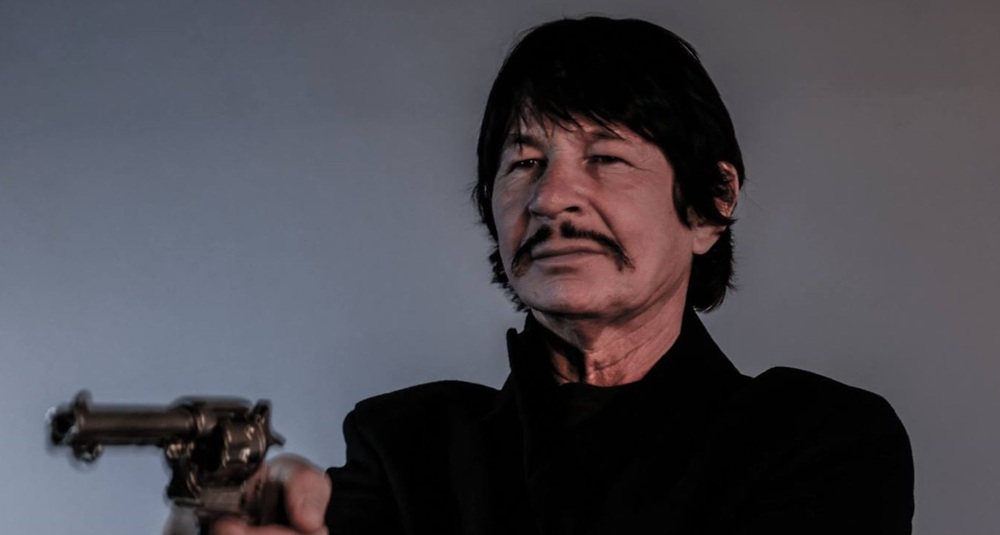

Robert Bronzi — whose real name is Robert Kovacs — is a Hungarian actor, stuntman, acrobat, horse trainer, and former military serviceman who has built one of the most unlikely careers in modern cinema entirely on the basis of his extraordinary physical resemblance to the late Hollywood action legend Charles Bronson. Born outside of Budapest in 1956, raised as the son of a coal miner, he initially pursued a career in carpentry before fate intervened in the form of a friend who pointed out his striking resemblance to Charles Bronson.
He is not a conventionally trained Hollywood actor. He does not have an agent, a publicist, or a studio behind him. What he has — and what no amount of money or industry connection can manufacture — is a face so uncannily similar to one of cinema’s most iconic presences that a director once mistook his photograph for a film still of the actual Charles Bronson.
| Key Facts: Robert Bronzi | Details |
|---|---|
| Real Name | Robert Kovacs |
| Stage Name | Robert Bronzi |
| Date of Birth | 1956 |
| Birthplace | Outside Budapest, Hungary |
| Father’s Occupation | Coal miner |
| Early Career | Carpenter, horse trainer, military service |
| Training | Maria Mezey Theatre School, Budapest; stuntman; acrobat; Judo |
| Languages | Hungarian, English, Spanish |
| Known For | Uncanny resemblance to Charles Bronson |
| Film Debut | From Hell to the Wild West (2017) |
| Director Partner | Rene Perez |
| Film Genre | B-movie action, Western, horror thriller |
Bronzi has known about — and taken advantage of — his Bronson-esque looks since he was in his twenties. “A dear friend of mine, who I worked with as a horse breeder, always said, ‘You look like Bronson,'” Bronzi told the New York Post. “So I styled my hair like Charles Bronson and grew a mustache like him. Then everyone said, ‘You look like him.'”
What followed from that simple act of self-reinvention — combing his hair differently, growing a mustache — was a career trajectory so improbable that it almost demands its own film. A coal miner’s son from Hungary, performing Wild West stunt shows in Spain, gets spotted by an American director, crosses the Atlantic, and becomes the star of his own micro-genre of action films. Robert Bronzi is a literal genre unto himself.
From Budapest to Spain: The Wild West Years
Before Hollywood — or even the idea of Hollywood — entered the picture, Robert Bronzi spent years building a set of skills that would prove unexpectedly useful when the cameras finally started rolling. He worked as a carpenter, horse trainer, musician, and former military service member, and trained professionally as an actor at the Maria Mezey Theatre School in Budapest, as well as qualifying as a stuntman, acrobat, and Judo player.
That combination of skills — physical, performative, and genuinely dangerous — made him a natural fit for the Wild West stunt show circuit that operates across European theme parks and tourist destinations. He performed at major venues including Fort Bravo in Almeria, Spain; Port Aventura on the Costa Dorada; and Rancho Texas Park in the Canary Islands.
These shows — full of gunfights, horseback stunts, acrobatics, and theatrical performance — gave Bronzi something that conventional acting training alone rarely delivers: comfort in front of a crowd, physical confidence, and the ability to execute dangerous sequences without hesitation. Charles Bronson himself had been physically imposing on screen. Bronzi, built from years of stunt work and horse training, could deliver that same physical credibility organically.
| Robert Bronzi’s Pre-Film Skills | Details |
|---|---|
| Stunt Work | Acrobatics, horseback riding, combat sequences |
| Performance Venues | Fort Bravo (Spain), Port Aventura, Canary Islands |
| Martial Arts | Judo — competitive level |
| Theatre Training | Maria Mezey Theatre School, Budapest |
| Horse Skills | Professional horse trainer and breeder |
| Physical Build | Lean, weathered — naturally Bronson-esque |
The Discovery: A Photograph on a Bar Wall
The story of how Robert Bronzi was discovered reads like something from the B-movies he would later star in — implausible, slightly absurd, and entirely real. Director Rene Perez spotted a photograph of Bronzi on the wall of a bar in Spain and thought it was a still of Charles Bronson from some mystery movie.
Perez is a prolific Puerto Rican B-movie director whose filmography covers action, horror, and Western genres. While Perez was in Spain directing an episode of a TV show, he spotted Bronzi at one of the stuntman’s Wild West shows. Perez was not the first person to tell Bronzi who he looked like — he had already been working as a Charles Bronson impersonator before the director ever approached him.
The path from discovery to actual film was not immediate. No producers wanted Perez to cast the Hungarian actor. Perez allegedly had to sneak Bronzi into one of his films just to show producers how much he looked like Bronson. That act of directorial stubbornness — sneaking an unknown Hungarian stuntman into a movie to prove a point — is what launched the entire Robert Bronzi phenomenon.
The Voice Problem and the Dubbing Solution
One of the most fascinating practical challenges of turning Robert Bronzi into a screen presence was the voice. Charles Bronson had a distinctive, gravelly, slow-burn American delivery that was as much a part of his persona as his face. Bronzi, as a Hungarian whose English is his second language, sounds nothing like that.
Apparently, the one part of Bronzi’s act that didn’t really work was his voice. Being Hungarian with English as a second language, Bronzi sounds quite different from Bronson. It’s so different, in fact, that for the first few movies of Bronzi’s career, Perez dubbed over his lines to make them sound more like Bronson’s voice.
This solution — using Bronzi’s face and body while replacing his voice entirely — was simultaneously creative and strange. It worked, after a fashion, but it also underscored the fundamental nature of the Bronzi proposition: this was always primarily a visual exercise.
Bronzi’s first film without Perez, Escape From Death Block 13, is his first with a director who let Bronzi use his real voice — even making his character Hungarian and giving him Bronzi’s actual last name (Kovacs) — in the first instance of a Bronzi character having a name at all. That creative decision was both practical and oddly dignified — acknowledging the real person behind the imitation rather than pretending the imitation was all there was.
The Films: A Bronson-sploitation Filmography
Robert Bronzi got his start in the 2017 horror Western From Hell to the Wild West, where he’s still credited as Robert Kovacs. In the movie, he plays Mr. Buchinski. The name was itself a nod — Charles Buchinski was Charles Bronson’s birth name.
What followed was a string of direct-to-video features that collectively created what film critics began calling “Bronson-sploitation” — a micro-genre built entirely around the concept of a Bronson lookalike in Bronson-type situations.
| Robert Bronzi Filmography | Year | Genre | Notes |
|---|---|---|---|
| From Hell to the Wild West | 2017 | Horror Western | Film debut; credited as Robert Kovacs |
| Death Kiss | 2018 | Action thriller | Riff on Death Wish franchise |
| Once Upon a Time in Deadwood | 2019 | Western | Best-reviewed Bronzi/Perez collaboration |
| Cry Havoc | 2020 | Horror action | Bronzi vs. slasher villain |
| Escape From Death Block 13 | 2021 | Prison thriller | First film without Perez; uses real voice |
| The Gardener | 2022 | Home invasion thriller | Lionsgate pickup; Gary Daniels co-stars |
| 12 to Midnight | 2023 | Action horror | Bronzi plays detective; werewolf subplot |
Once Upon a Time in Deadwood is the best of the Bronzi/Perez collaborations. The production values are still low, but the story is more substantial, with Michael Paré bringing charisma to his role as the villain.
The Gardener is a well-made British home invasion thriller with a couple of fascinating plot twists that Lionsgate picked up, featuring Robert Bronzi probably in his most respectably budgeted feature. The Lionsgate pickup was a meaningful moment — it represented the first time a genuine distribution company with mainstream reach put its name on a Bronzi project, a small but real step toward legitimacy.
Charles Bronson: The Man Being Imitated
To fully appreciate Robert Bronzi, you need to understand the enormity of what he is approximating. Charles Bronson was one of the defining action stars of the 1960s, 70s, and 80s — a working-class kid from Pennsylvania who became internationally famous for playing characters of immovable toughness and quiet menace.
Bronson appeared in classic ensembles like The Magnificent Seven, The Great Escape, and The Dirty Dozen, but it was only when he travelled to Europe that he became a leading man, cemented by his turn in Sergio Leone’s Once Upon a Time in the West. He returned to American films in the early 1970s and it was Death Wish that officially made him a movie star — casting him as an ordinary man who becomes a vigilante in New York after a vicious attack on his family.
Bronson died in 2003. The gap he left — that specific archetype of the weathered, laconic, physically imposing action hero — has never quite been filled. Robert Bronzi does not fill it, but he gestures toward it in a way that clearly resonates with a specific and devoted audience.
Why Robert Bronzi Works as a Cultural Phenomenon
The Robert Bronzi story would be easy to dismiss as a curiosity — a novelty act sustained by the B-movie market’s hunger for any recognisable face. And there is truth in that reading. But there is something more interesting underneath it.
As one observer put it: maybe we deeply miss that laconic action hero as a culture from the 1980s — and that explains the unlikely but compelling rise of Robert Bronzi. There is genuine nostalgia operating in the audience that seeks out his films — a desire not just for Bronson specifically, but for the type of cinema he represented. Uncomplicated. Physical. Morally clear.
Bronzi, with his leathery face, his stuntman’s physicality, and his improbable journey from Budapest to a Spanish bar wall to American screens, embodies something genuinely earned. He did not manufacture the resemblance. He simply leaned into what nature gave him — with a mustache and a comb — and built something from it.
Conclusion
Robert Bronzi is one of cinema’s most improbable success stories — a coal miner’s son from Hungary who trained as a carpenter, became a stuntman, performed Wild West shows across Europe, got spotted by a director who mistook his photograph for a dead Hollywood legend, and parlayed all of it into a genuine, sustained film career. His movies are not masterpieces. His acting is not conventional. But Robert Bronzi has done something that thousands of trained, connected, industry-backed hopefuls never manage: he found his face in the crowd, literally, and built a world around it.